If you could turn any movie into a TV series, which one would it be?
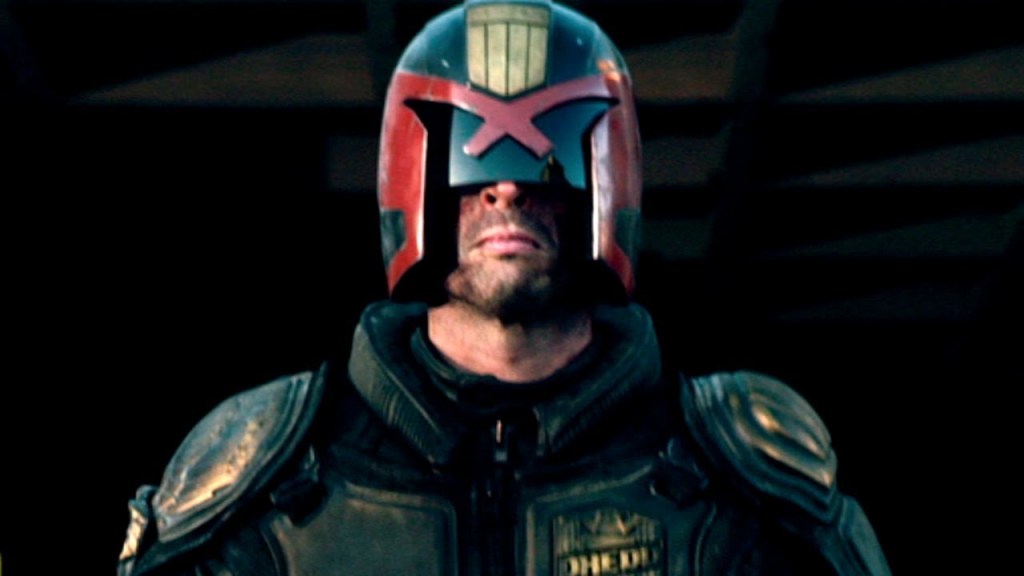
Few science-fiction films have created a world as distinctive and compelling as Dredd (2012). Although the film delivered an intense, action-packed interpretation of the iconic comic-book character, it arguably only scratched the surface of what its fictional setting has to offer. More than a decade after its release, the idea of bringing Dredd to television remains an exciting prospect, particularly because Mega-City One is a world rich enough to support years of storytelling.
Based on the British comic character Judge Dredd, created by writer John Wagner and artist Carlos Ezquerra, the 2012 film introduced audiences to a dystopian future in which much of humanity lives in enormous, overcrowded urban environments. Mega-City One, stretching along the eastern coast of what was once the United States, is a sprawling metropolis plagued by poverty, violence, corruption and organised crime.
Within this society, the Judges act as police officers, judges and executioners, exercising extraordinary authority in an attempt to maintain order. It is a system that raises interesting questions about justice, individual freedom and the dangers of allowing too much power to rest in the hands of a single institution.
A World Waiting to Be Explored
One of the strongest arguments for a television adaptation is the sheer scale of Mega-City One. The film largely concentrates on Peach Trees, a massive residential block controlled by criminal organisations. While this contained setting works exceptionally well for a feature film, it represents only a fraction of the wider world established in the comics.
A television series could explore different sectors of the city, introducing audiences to rival gangs, corrupt officials, dangerous criminals, political movements and communities struggling to survive in an increasingly oppressive environment.
Each episode could investigate a different crime or incident, allowing the series to balance individual stories with larger narratives developing across the city.
The possibilities are enormous. From organised crime and drug trafficking to technological disasters, public disorder and political conspiracies, Mega-City One provides an endless supply of potential storylines.
Judge Dredd: A Character Built for Episodic Television
Karl Urban’s portrayal of Judge Dredd was widely appreciated by fans, particularly for its restrained approach to the character. Rather than presenting Dredd as a conventional action hero, the film portrayed him as a disciplined, uncompromising law enforcement officer operating within an extreme system.
A television series could develop this approach further.
Following Dredd through different investigations would allow viewers to understand more about his methods, his relationships with fellow Judges and his increasingly complicated position within Mega-City One.
Importantly, the series would not need to make Dredd emotionally conventional or soften his personality. Much of the character’s appeal comes from his unwavering commitment to the law, even when the wider system around him becomes questionable.
The introduction of different Judges, including characters such as Judge Anderson, could also provide contrasting perspectives on the justice system and the society they are expected to protect.
The Citizens Behind the Dystopia
Perhaps the most interesting opportunity for television would be exploring the ordinary people living under the authority of the Judges.
The original film provides glimpses of life inside Mega-City One, but a longer series could examine the daily realities of its residents. Unemployment, overcrowding, poverty, crime and social inequality could become important elements of the wider narrative.
Not every citizen would necessarily be a criminal, and not every Judge would necessarily represent an uncomplicated idea of justice.
By presenting different perspectives, a series could create a much richer picture of the society Dredd inhabits.
This would also give the programme opportunities to explore the darker satirical elements of the original comic books, using exaggerated futuristic technology, bizarre social trends and institutional absurdities to comment on aspects of modern society.
Action, Dark Humour and Political Storytelling
A successful Dredd television series would need to preserve the qualities that made the 2012 film distinctive.
Its combination of brutal action, dark humour, futuristic technology and dystopian atmosphere provides a strong foundation. However, television would offer something a film cannot easily achieve: the opportunity to develop several interconnected stories over an extended period.
Individual episodes could feature self-contained investigations, while longer story arcs explore powerful criminal organisations, corruption within the Justice Department and political tensions threatening the stability of the city.
The balance between action and social commentary would be particularly important. The world of Judge Dredd has always offered more than straightforward crime-fighting stories. Beneath the violence and dark comedy lies a society that raises uncomfortable questions about authority, punishment and the meaning of justice.
A Television Series With Long-Term Potential
The commercial and creative potential of Dredd should not be underestimated. Science-fiction television continues to demonstrate that audiences are willing to invest in detailed fictional worlds, particularly when they contain memorable characters and distinctive settings.
A carefully produced series could attract existing fans of the comic books while introducing a new generation to Judge Dredd and Mega-City One.
It would also provide an opportunity to retain the visual identity and uncompromising atmosphere of the 2012 film rather than starting again with an entirely different interpretation.
The challenge would be maintaining the quality of the storytelling, practical world-building and visual effects without losing the gritty atmosphere that made the film stand out.
The Verdict
Dredd (2012) demonstrated that Judge Dredd could work exceptionally well on screen. What it did not demonstrate was the full potential of the world surrounding him.
Mega-City One is arguably the real star of the franchise: a sprawling, dangerous and often absurd metropolis containing countless stories waiting to be told.
A television series could explore its criminal underworld, political institutions, ordinary citizens and the complicated role of the Judges, all while retaining the action, dark humour and dystopian storytelling that define the franchise.
Rather than simply extending the events of the film, a series could build an entire television universe around the setting.
Judge Dredd deserves another opportunity on screen, and Mega-City One deserves considerably more time in the spotlight. Sometimes the most compelling reason to make a television series is that the world already exists, the characters are established, and there are simply too many stories to fit into a single film.






Leave a Reply