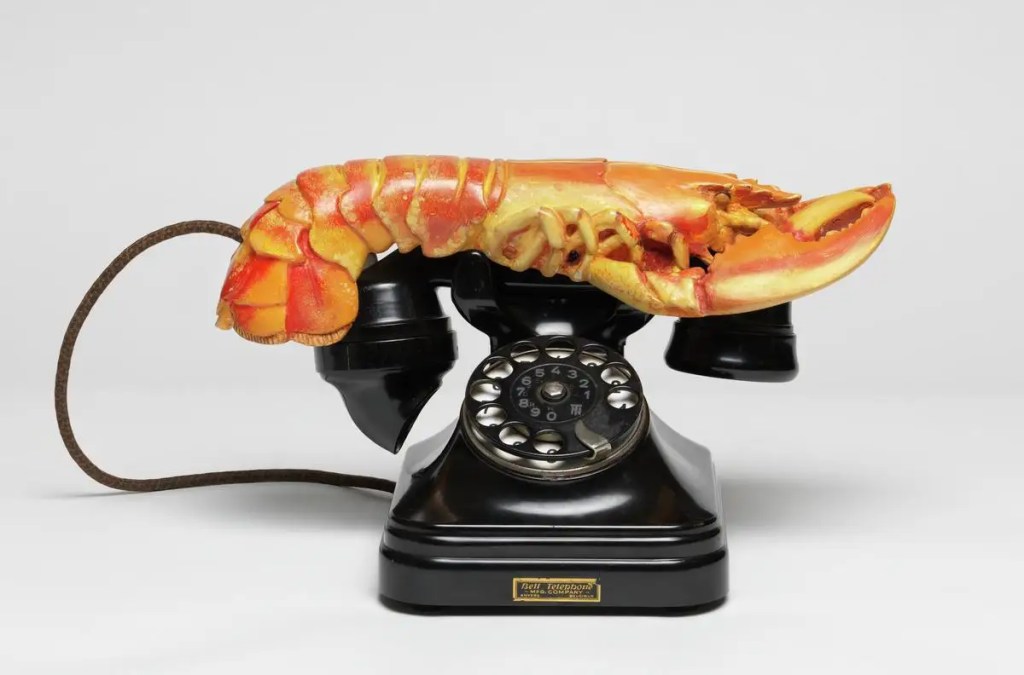
Lobster Telephone (1938)
Tate
© Salvador Dali, Gala-Salvador Dali Foundation/DACS, London 2026
A £30 million transformation will bring one of the UK’s most celebrated cultural destinations back to life, with an ambitious exhibition exploring the fascinating relationship between surrealism, theatre and performance.
Liverpool’s cultural landscape is preparing for an exciting new chapter as Tate Liverpool announces plans to reopen its doors in autumn 2027, following an extensive £30 million redevelopment.
Situated at the city’s iconic Royal Albert Dock, Tate Liverpool has played an important role in bringing modern and contemporary art to audiences across the North of England since opening in 1988. Its forthcoming reopening promises not only to restore a much-loved cultural destination but also to introduce visitors to an ambitious programme of exhibitions, artistic commissions and new public spaces.
Leading the reopening celebrations will be Surrealism: Staging Dream Worlds, an exhibition exploring the fascinating influence of surrealism on theatre, dance and live performance.
Running from autumn 2027 until spring 2028, the exhibition will bring together paintings, sculptures, costumes, masks, photographs and films from national and international collections. Featuring artists including Salvador Dalí, Eileen Agar and Man Ray, it will explore how surrealist artists challenged conventional ideas of creativity through theatrical imagination, unusual characters and extraordinary visual experiences.
The exhibition will examine surrealism’s relationship with performance from the 1920s through to the 1990s, highlighting how artists moved beyond traditional artistic boundaries to influence the worlds of theatre and dance.
Among the works and material featured will be Dorothea Tanning’s costume designs for the ballet The Witch, alongside photographs documenting influential performances, including Sheila Legge’s appearance as the Surrealist Phantom of Sex Appeal in 1936 and the multimedia happenings of Ted Joans.
Rather than simply presenting artworks within traditional gallery settings, the exhibition will draw inspiration from surrealism’s experimental approach to presentation. Visitors can expect a sequence of environments designed to reflect the movement’s ability to transport audiences into unfamiliar and imaginative worlds.
The choice of exhibition carries particular historical significance. When Tate Liverpool first opened in 1988, an exhibition of surrealist works from Tate’s collection inaugurated the gallery’s original exhibition spaces. Returning to the movement for its reopening creates a meaningful connection between the institution’s beginnings and its future.
Jemima Pyne, interim director of Tate Liverpool, welcomed the announcement, explaining that surrealism encourages people to see the world differently and offers an ideal opportunity to reopen the gallery by sparking imagination, surprising visitors and rewarding curiosity.
A New Chapter for Liverpool’s Artistic Heritage
The redevelopment, designed by 6a architects, represents a significant investment in the future of the gallery and its relationship with the surrounding city.
The transformed building will provide improved exhibition spaces, allowing Tate Liverpool to display a greater variety of works from its collection while accommodating major exhibitions. New public spaces will also provide opportunities for play, relaxation and learning, with views across the River Mersey helping to strengthen the connection between the gallery, the waterfront and the wider community.
The reopening programme will extend beyond surrealism, with two further significant artistic developments already announced.
Liverpool-born artist Chila Kumari Singh Burman will be celebrated through Chila Kumari Singh Burman: Demolish Serious Culture, the first major retrospective dedicated to her work. Known for her colourful, playful and politically engaged artistic practice, Burman’s work explores identity, culture and female empowerment.
The programme will also feature a major commission by artist Asad Raza for the gallery’s new Art Hall. Recognised for his immersive, multisensory and participatory installations, Raza’s work encourages audiences to engage with their surroundings and consider the relationship between humanity and the natural world.
Further exhibitions, new commissions and special events are also expected to form part of the reopening celebrations.
More Than an Art Gallery
Tate Liverpool’s return represents more than the completion of a major building project. Since its opening in 1988, the institution has contributed significantly to Liverpool’s cultural identity, helping establish the Royal Albert Dock as an important destination for art, creativity and tourism.
Its redevelopment provides an opportunity to build upon that legacy while making the gallery more accessible, welcoming and relevant to future generations.
Art has an important role in bringing communities together, encouraging conversation and allowing people to experience different perspectives. Institutions such as Tate Liverpool help make those experiences available to audiences from all backgrounds, whether they are established art enthusiasts or simply curious visitors discovering something new.
With its combination of internationally recognised artists, ambitious exhibitions and improved public facilities, the autumn 2027 reopening promises to be an important moment for Liverpool and the wider British arts scene.
The return of Tate Liverpool is a welcome reminder that cultural institutions are not simply places where art is displayed. They are spaces where ideas develop, creativity flourishes and communities connect.
As the gallery prepares to open its doors once again, Liverpool can look forward to welcoming visitors back to a revitalised cultural landmark, ready to inspire a new generation of artistic discovery.




Leave a Reply