The way people use their homes has changed significantly in recent years. Living rooms, bedrooms and kitchens are increasingly expected to perform several functions rather than serving a single, clearly defined purpose. As hybrid working, flexible schedules and changing household needs become part of everyday life, multi-purpose rooms are emerging as a practical approach to modern home design.
Rather than creating a separate room for every activity, homeowners are finding ways to make existing spaces work harder.
One Room, Several Functions
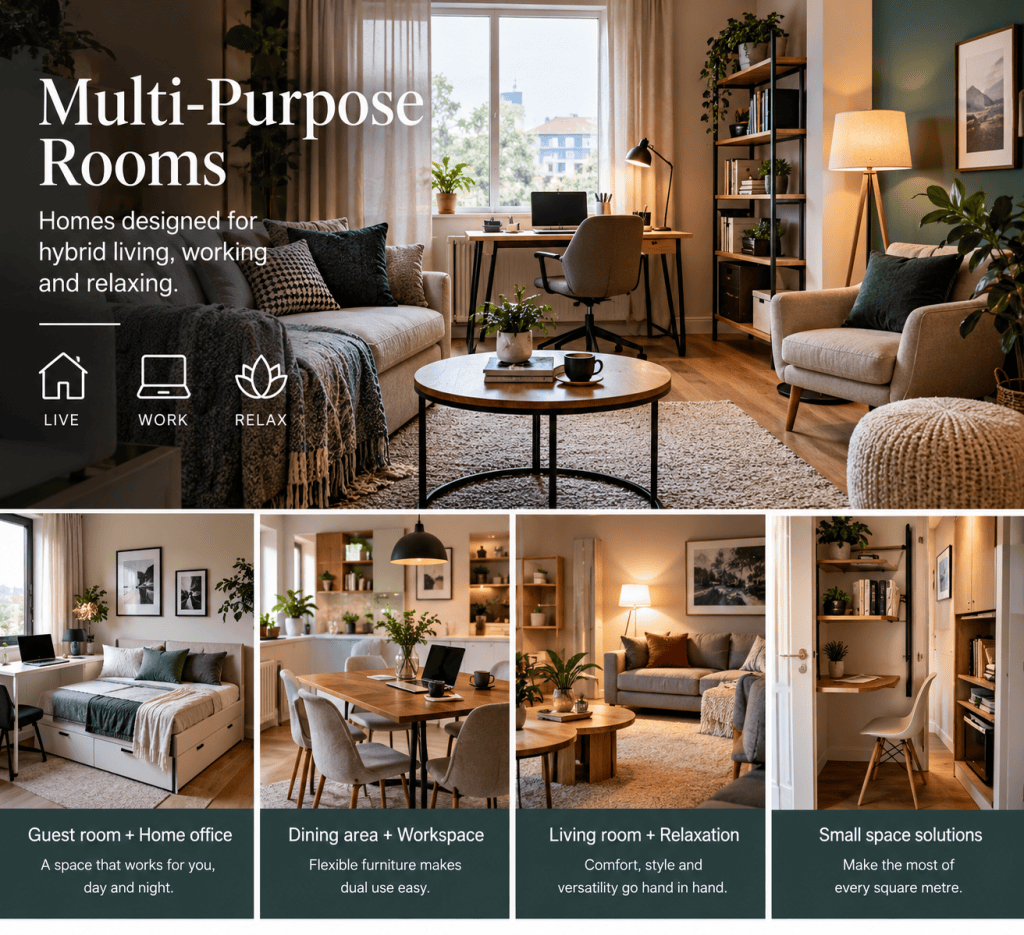
A multi-purpose room is designed to accommodate more than one activity. A spare bedroom might function as a home office during the day and a guest room at night. A dining area can double as a workspace, while a living room can incorporate a reading corner, exercise area or children’s study zone.
The concept is not necessarily about making a room feel crowded. Instead, good multi-purpose design focuses on flexibility, allowing different areas of a room to serve different purposes without compromising comfort.
The Rise of Hybrid Working
The growth of working from home and hybrid employment has been one of the major influences on flexible home design.
Not everyone has the space for a dedicated office. As a result, desks are increasingly being incorporated into bedrooms, living rooms, hallways and even under-stair spaces.
Furniture can help create separation. A compact desk, shelving unit or folding workstation can establish a working area without permanently changing the room’s primary purpose.
When the working day ends, the ability to close a door, put away equipment or simply clear a desk can also help restore the room to its original function.
Furniture That Works Harder
Flexible furniture is central to multi-purpose living.
Sofa beds, extendable dining tables, nesting tables, storage ottomans and folding desks can all provide additional functionality without requiring additional floor space.
Modular furniture is particularly useful because individual pieces can be rearranged as requirements change. This can be valuable for households whose needs evolve over time.
Storage is equally important. Built-in cupboards, wall shelving, baskets and furniture with concealed compartments can help prevent a multi-purpose room from becoming visually cluttered.
Creating Zones Without Walls
A multi-purpose room does not necessarily require physical walls to separate activities.
Rugs, lighting, furniture placement and changes in colour or texture can subtly establish different zones within the same space.
For example, a desk positioned near a window can become a dedicated work zone, while a comfortable chair and floor lamp can establish a separate reading area elsewhere in the room.
Open shelving can also provide a degree of separation while allowing natural light to continue through the space.
The Importance of Lighting
Lighting becomes particularly important when one room has several functions.
Bright, focused lighting can support reading or computer work, while softer ambient lighting can make the same room more relaxing in the evening.
Using several sources of light rather than relying exclusively on a single ceiling fixture can make it easier to change the atmosphere of a room throughout the day.
Natural light also remains an important consideration. Positioning desks, seating and other frequently used areas close to windows can make the space feel brighter and more comfortable.
Designing for Relaxation
Multi-purpose living should not mean that every available surface becomes a workspace.
One of the most important aspects of flexible design is maintaining an area where people can switch off.
Comfortable seating, soft furnishings, plants, books and warm lighting can help distinguish relaxation areas from work zones. Even in a relatively small room, creating visual separation can make the transition between activities feel more natural.
Technology and the Flexible Home
Technology has also contributed to the development of multi-purpose rooms.
Laptops, tablets, wireless devices and compact monitors allow people to work without permanently occupying an entire room with office equipment. Cable management and discreet storage can further help keep technology from dominating shared living spaces.
However, the continued presence of screens means that designing spaces for digital downtime has become increasingly important. Keeping entertainment and work equipment organised can help different activities coexist within the same room.
Making Small Homes Work Harder
Multi-purpose design can be particularly valuable in apartments and smaller homes where every square metre matters.
A compact dining table might function as both a workspace and a place for meals. A bedroom could incorporate a small study area, while a living room could accommodate exercise equipment that can be stored away when not in use.
The objective is not necessarily to maximise the number of functions a room can perform. Instead, it is about making the available space adaptable without sacrificing comfort.
A More Flexible Approach to Home Design
Multi-purpose rooms reflect a broader change in how people think about their homes. Rather than assigning one permanent function to every room, homeowners are increasingly looking for spaces that can adapt to different circumstances.
The result can be a home that feels more practical, flexible and responsive to everyday life.
As working patterns, household structures and lifestyles continue to evolve, adaptable rooms are likely to remain an important part of residential design. The modern home is no longer simply a collection of rooms with fixed purposes; it is increasingly a flexible environment capable of changing alongside the people who live in it.









Leave a Reply