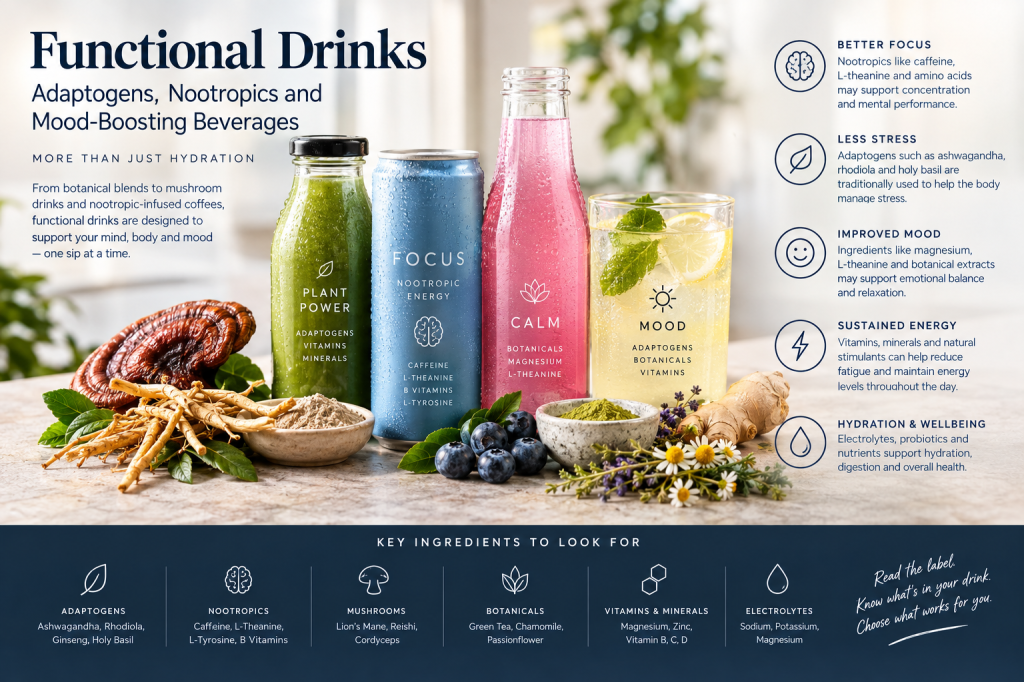
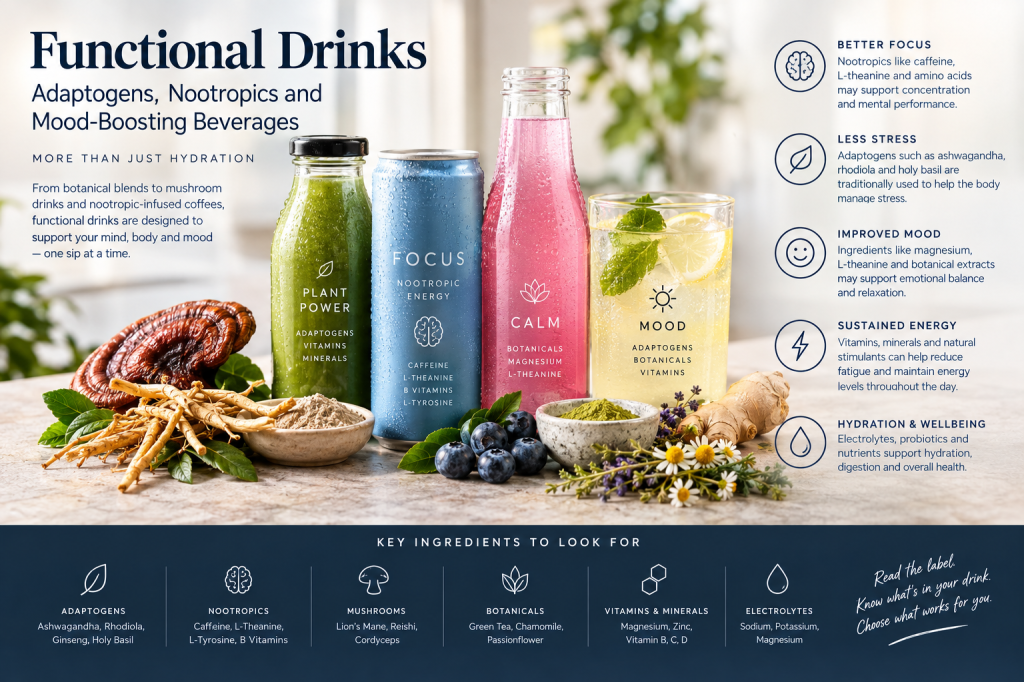
The drinks market has increasingly moved beyond simple refreshment. From botanical beverages and mushroom drinks to nootropic-infused coffees and sparkling waters containing vitamins and adaptogens, a growing category known as functional drinks is designed to offer benefits beyond hydration.
Functional beverages are generally marketed around a particular purpose, such as supporting energy, concentration, relaxation, digestion or general wellbeing. Their popularity reflects a wider consumer interest in products that combine convenience with ingredients associated with health and performance.
What Are Functional Drinks?
Functional drinks are beverages formulated with ingredients intended to provide a physiological or nutritional benefit in addition to basic hydration.
The category includes a wide range of products. Some contain familiar ingredients such as caffeine, electrolytes, vitamins and minerals, while others feature botanical extracts, amino acids, probiotics, adaptogens or compounds marketed for cognitive support.
However, the term “functional” does not automatically mean that a drink has been clinically proven to deliver the advertised effect. The evidence varies considerably depending on the ingredient, dosage and specific health claim.
Adaptogens Enter the Mainstream
Adaptogens are among the most recognisable ingredients in the modern functional-drinks market.
The term is commonly used to describe certain plants and fungi that are traditionally associated with helping the body respond to physical or psychological stress. Ingredients frequently marketed as adaptogens include ashwagandha, rhodiola, ginseng and holy basil.
Research into individual adaptogens is ongoing, and some studies have identified potentially useful effects. However, research quality varies, studies can be relatively small, and results cannot necessarily be applied to every product containing an ingredient.
This distinction is important because a beverage containing an adaptogenic ingredient is not automatically equivalent to a clinical intervention or a treatment for stress, anxiety or another medical condition.
The Rise of Nootropic Beverages
Nootropics are another major influence on the functional-drinks industry.
The term is generally used for substances marketed as supporting cognitive functions such as attention, alertness, memory or mental performance. Caffeine is perhaps the most established example, with substantial evidence demonstrating its ability to increase alertness and reduce perceived fatigue.
Newer products may combine caffeine with ingredients such as L-theanine, amino acids, botanical extracts or other compounds promoted for cognitive performance.
Some combinations have been studied individually or together, but evidence remains uneven across the wider nootropic market. Consumers should therefore look beyond phrases such as “brain boosting” or “focus formula” and examine the actual ingredients and quantities.
Drinks Designed Around Mood
Another growing category focuses specifically on mood.
These beverages may contain ingredients such as magnesium, L-theanine, botanical extracts or other compounds associated with relaxation or stress management. Others use flavour, carbonation and ritual as part of the experience, positioning the beverage as an alternative to alcohol or conventional soft drinks.
The appeal is partly cultural. Consumers are increasingly interested in beverages that fit particular moments of the day: an energising drink in the morning, a focus-oriented beverage during work and a relaxing alternative in the evening.
The concept effectively turns drinking into a form of lifestyle routine.
Mushrooms and Botanical Ingredients
Functional mushroom drinks have also attracted considerable attention.
Products may contain mushrooms such as lion’s mane, reishi or cordyceps, although the proposed benefits differ between species and products.
Lion’s mane, for example, has been investigated for possible neurological effects, while reishi has a long history of traditional use. Yet research involving isolated compounds, laboratory models or supplements should not automatically be interpreted as proof that a commercially available beverage will produce the same effect.
The same principle applies to botanical ingredients. Traditional use can provide an important starting point for research, but it is not equivalent to modern clinical evidence.
Are Functional Drinks Actually Effective?
The answer depends largely on the drink and its ingredients.
Some functional ingredients have relatively strong evidence behind particular effects. Caffeine, for example, is well established as a stimulant that can increase alertness. Electrolytes can also have a clear practical role in replacing fluids and minerals in appropriate circumstances.
Other ingredients have promising but incomplete evidence, while some marketing claims extend considerably further than the available research.
Dosage is another important consideration. A product may contain an ingredient that has been studied scientifically but at a substantially different dose from the amount present in the beverage.
Consumers should therefore consider what the ingredient is, how much is present and what evidence exists for the specific claimed benefit.
The Importance of Reading the Label
Functional beverages can sometimes contain several active ingredients in a single serving.
Reading the nutritional and ingredient information can help consumers identify caffeine levels, added sugar, artificial sweeteners, vitamins, herbal extracts and other active compounds.
Caffeine deserves particular attention. Consuming several caffeinated beverages throughout the day can significantly increase total caffeine intake, potentially contributing to problems such as sleep disruption, nervousness or palpitations in susceptible people.
“Natural” also does not necessarily mean risk-free. Botanical ingredients can have pharmacological effects and may interact with medicines or be unsuitable for some people.
A Growing Alternative to Alcohol and Sugary Drinks
One reason functional drinks have become increasingly visible is their position within the wider shift towards alternatives to traditional soft drinks and alcohol.
Consumers looking for drinks for social occasions without alcohol have helped create a market for sophisticated sparkling beverages, botanical drinks and products marketed around relaxation or focus.
Rather than simply imitating alcoholic beverages, some functional drinks attempt to establish their own identity around wellness, productivity and everyday rituals.
The Future of Functional Beverages
Functional drinks sit at the intersection of nutrition, technology, wellness and consumer culture.
The category is likely to continue evolving as manufacturers experiment with new ingredients, formulations and targeted products designed around specific occasions or perceived needs.
At the same time, scientific scrutiny will remain important. As the market grows, consumers are likely to become increasingly interested not only in attractive packaging and wellness terminology but also in ingredient transparency, dosage and credible evidence.
Functional beverages may offer useful ingredients in a convenient format, but they are not a substitute for a balanced diet, adequate sleep, physical activity or appropriate medical care.
The most informed approach is therefore a simple one: look beyond the marketing, understand what is actually in the drink and consider what the scientific evidence says about those ingredients.
Functional drinks may be changing what people expect from their beverages, but the real measure of their value will ultimately depend on the evidence behind the function.









Leave a Reply