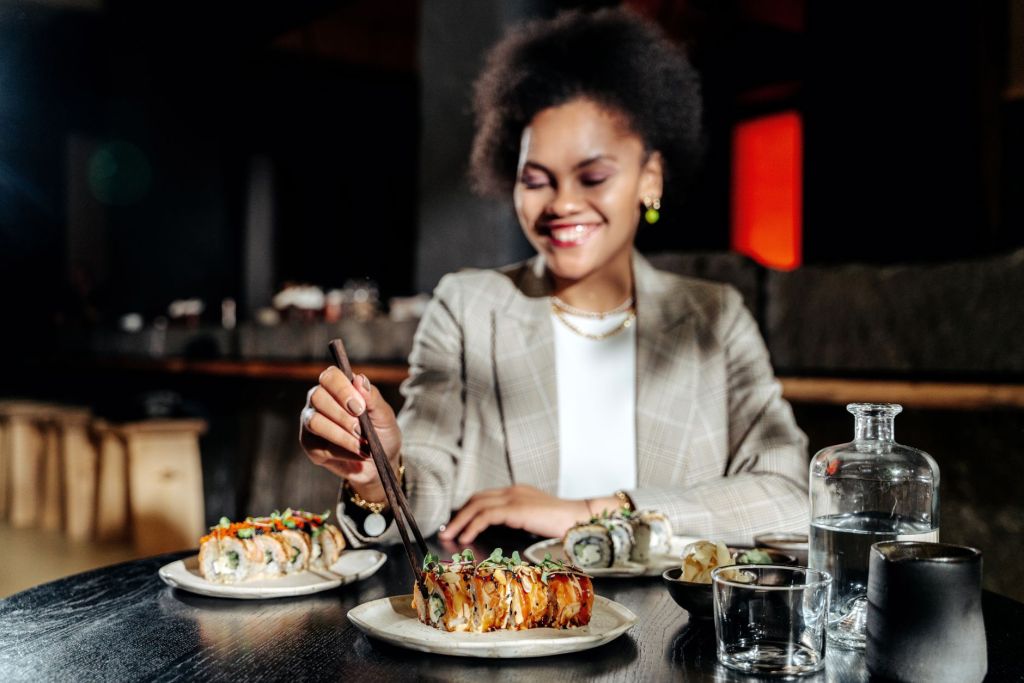
For generations, eating out has largely been associated with companionship. Restaurants have traditionally been places for dates, family occasions, business meetings and gatherings with friends. Yet a noticeable cultural shift is taking place: increasingly, people are choosing to sit down at a restaurant alone — and rather than seeing it as something awkward, they are treating it as an enjoyable and intentional experience.
Solo dining is becoming less about having nobody available to eat with and more about having the freedom to enjoy a meal on your own terms.
The Rise of the Table for One
Recent data suggests that solo dining is becoming an established part of restaurant culture. OpenTable reports that solo dining in the UK increased by 14% over a 12-month period, while its research with KAYAK found that 72% of surveyed UK consumers interested in solo travel planned to dine alone in the following year. Among Gen Z and Millennials, the figures were particularly high.
The change is also being reflected in academic research. A 2025 systematic review of 80 academic articles found that research into solo dining has grown rapidly, examining everything from why people choose to eat alone to how restaurants can accommodate them.
These developments suggest that eating alone is no longer simply an occasional necessity. For some consumers, it has become a deliberate lifestyle choice.
From Awkward Experience to Personal Ritual
One of the biggest changes surrounding solo dining is the way people perceive the experience.
Eating alone in a restaurant can once have carried a stigma. A person sitting by themselves might have worried that other diners were judging them or wondering why they were alone.
That attitude appears to be changing.
YouGov research published in the UK found that 64% of British adults said they would feel comfortable eating alone in a restaurant. The research also found substantial levels of comfort with other traditionally social activities being undertaken alone, including going to the cinema and attending a play.
Solo dining can therefore become an opportunity to remove the social expectations surrounding a meal. There is no need to coordinate schedules, negotiate restaurant choices or wait for somebody else to be available.
The diner chooses the restaurant, the table, the pace and the menu.
The Appeal of “Me Time”
For many people, the attraction is simply having uninterrupted personal time.
OpenTable’s UK research found that 39% of respondents would choose to dine alone when they needed a break from socialising, while 28% identified “me time” as their main reason for doing so.
This helps explain why solo dining is increasingly being described in terms of self-care.
A meal alone can provide a temporary pause from work, family responsibilities, social commitments and digital communication. Instead of viewing solitude as something that needs to be avoided, diners can deliberately create space for themselves.
That might mean sitting with a coffee and a book, enjoying a carefully prepared meal, listening to music or simply paying attention to the food.
Eating Alone Does Not Necessarily Mean Being Lonely
It is important not to equate solitude with loneliness.
Someone eating alone may be completely content with their own company. Conversely, somebody surrounded by other people can still experience loneliness.
Research into solo dining has explored precisely this distinction. Academic work has found that solo dining can involve both aloneness and forms of social connection. Diners may enjoy the independence of sitting alone while still feeling connected to the wider environment of a restaurant.
The restaurant itself can become part of the experience.
A solo diner may observe the kitchen, listen to the background conversation, interact briefly with staff or simply enjoy being in a public environment without having to participate in a conversation.
Restaurants Are Adapting
The growing popularity of solo dining is also influencing the hospitality industry.
Restaurants are increasingly considering how their layouts and services can accommodate individual customers. Bar seating, counters, smaller tables and communal areas can make dining alone feel more natural.
OpenTable’s research identifies finding an appropriate table as a significant barrier for some solo diners, with 50% of surveyed UK respondents identifying it as one of their biggest obstacles.
Restaurants therefore have an opportunity to make the experience feel intentional rather than treating a customer dining alone as an unusual exception.
A well-positioned table, friendly service and an atmosphere that welcomes individual diners can make a considerable difference.
Solo Dining and the Experience Economy
There is also a connection between solo dining and the wider growth of experience-led consumption.
People increasingly seek experiences rather than simply purchasing products. A solo restaurant visit can become a small personal event: dressing up for dinner, visiting somewhere new, ordering a favourite dish or trying a tasting menu.
Academic research into solo dining has identified aesthetic immersion as one element of the experience. Eating alone can allow diners to concentrate more closely on the food, surroundings and overall atmosphere.
The meal becomes less about the conversation happening across the table and more about experiencing the restaurant itself.
Technology Has Changed the Experience
Technology has also made solo dining more comfortable.
Smartphones provide an easy way to occupy the moments between courses, while digital menus and online reservations make booking a table for one increasingly straightforward.
However, solo dining does not necessarily have to involve a screen.
For some people, the attraction is precisely the opportunity to put the phone away and concentrate on the experience. A meal can become a rare period of uninterrupted attention.
The choice belongs entirely to the diner.
A Changing Definition of Independence
The growing acceptance of solo dining forms part of a broader cultural shift towards doing more activities independently.
Travelling alone, visiting cinemas alone, attending cultural events alone and enjoying hobbies independently are increasingly normalised.
Solo dining fits naturally into this changing definition of independence.
It does not mean rejecting relationships or social interaction. Instead, it recognises that enjoying your own company can coexist with having a busy social life.
The Table for One Is Becoming a Choice
The modern solo diner is not necessarily someone who could not find company.
They may be travelling for work, taking a break from a busy schedule, celebrating personal independence, exploring a new city or simply wanting to eat somewhere they have always wanted to try.
That distinction matters.
When eating alone becomes a choice rather than something people feel embarrassed about, the experience can take on an entirely different meaning.
A table for one can represent freedom, independence and personal time.
Conclusion
Solo dining is becoming an increasingly visible part of modern food culture. Research from the UK indicates growing interest, while restaurants are adapting their spaces and services to make individual diners feel more welcome.
Ultimately, the appeal is remarkably simple: you do not need to wait for somebody else to enjoy a good meal.
A restaurant reservation does not have to mean a table for two or four. Sometimes, it can simply mean taking yourself somewhere nice, ordering exactly what you want and enjoying the experience at your own pace.
The table for one is no longer necessarily a symbol of being alone.
For a growing number of diners, it is a symbol of being comfortable in their own company.









Leave a Reply