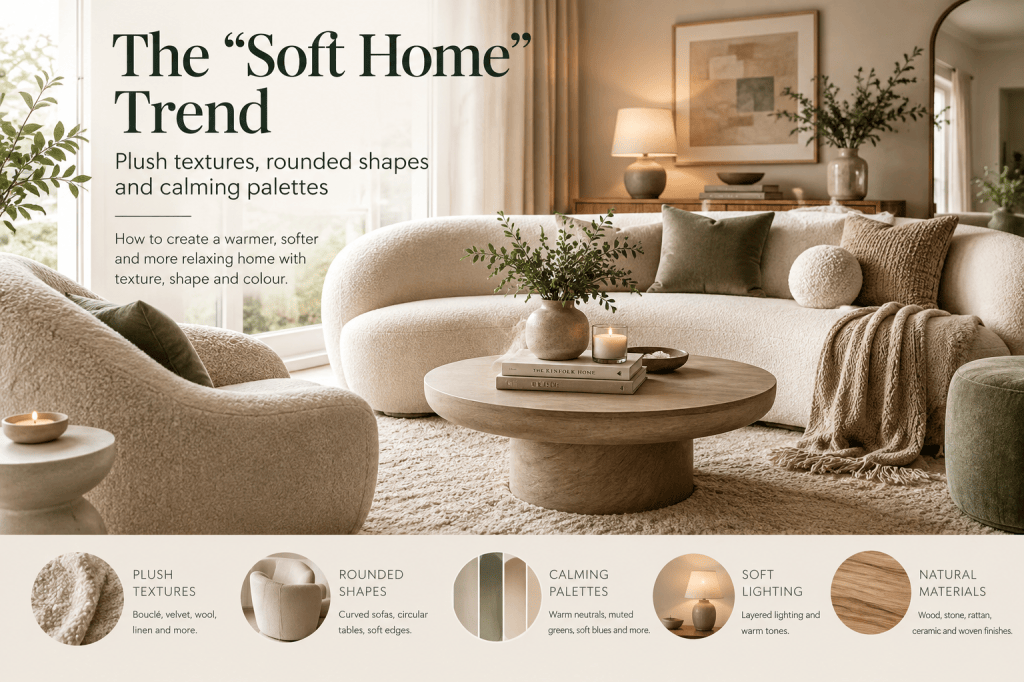
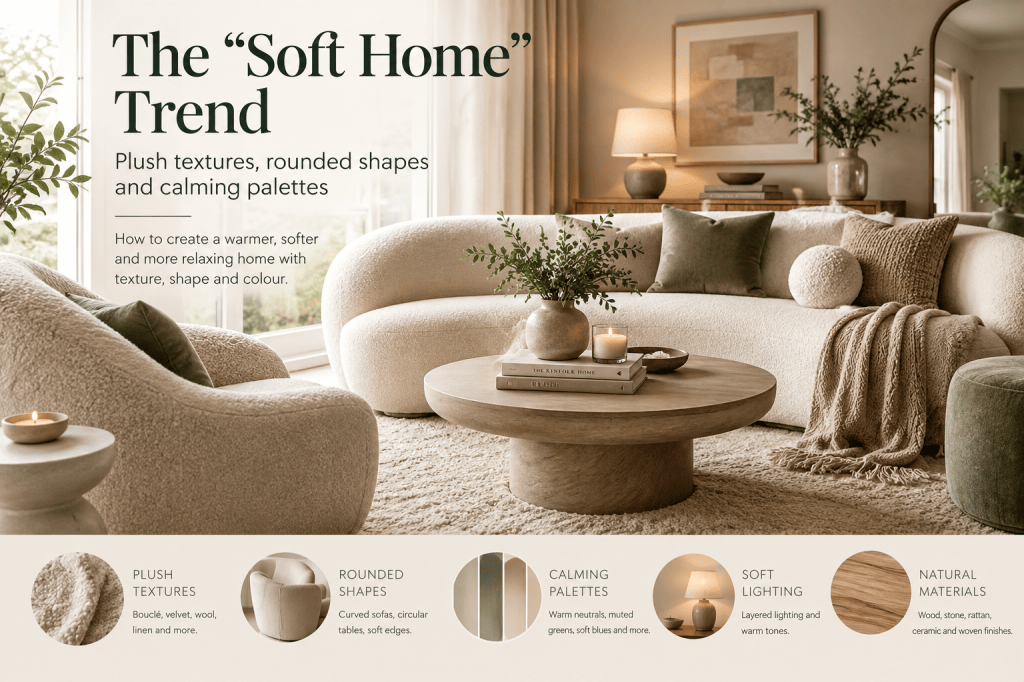
Home interiors are increasingly moving towards a softer, more tactile aesthetic, with plush fabrics, rounded furniture and calming colour palettes becoming prominent features of contemporary design. Often described as the “Soft Home” trend, the approach places comfort, texture and visual calm at the centre of interior styling.
Rather than following a single decorating style, Soft Home is more of a design direction. It can be incorporated into minimalist, contemporary, Scandinavian, modern classic and even more eclectic interiors.
What Is the Soft Home Trend?
The Soft Home aesthetic is based around creating interiors that feel comfortable, welcoming and visually gentle.
Sharp lines and heavily structured furniture are balanced — or replaced — by curved silhouettes, upholstered surfaces and materials that invite touch. Bouclé, velvet, wool, linen, brushed cotton and knitted textiles can all contribute to the look.
The emphasis is not necessarily on filling a room with soft furnishings. Instead, designers and homeowners can use carefully selected pieces to introduce softness without making a space appear cluttered.
Plush Textures Take Centre Stage
Texture is one of the defining characteristics of the trend.
Soft upholstery, chunky knitted throws, textured cushions, wool rugs and tactile curtains can add depth to an otherwise simple room. Materials such as bouclé have become particularly associated with contemporary interiors because of their distinctive looped texture and visually soft appearance.
Layering different textures can also prevent neutral interiors from looking flat. For example, a linen sofa could be combined with a wool rug, knitted throw and textured cushions.
The result is a room where interest comes from the contrast between materials rather than relying heavily on bold patterns or strong colours.
The Return of Rounded Shapes
Curved furniture is another important element of Soft Home design.
Rounded sofas, circular coffee tables, curved armchairs, oval mirrors and furniture with softened corners can replace some of the hard geometric lines traditionally associated with modern interiors.
Curves can also be introduced without replacing major pieces of furniture. A circular side table, rounded lamp or arched mirror can provide a subtle change to the overall shape language of a room.
The approach works particularly well when curved pieces are combined with a few straight-edged elements. Too many identical shapes can make an interior feel overly coordinated, whereas mixing curves with conventional furniture can create visual balance.
Calming Colour Palettes
Colour is equally important.
Soft Home interiors commonly favour understated shades such as warm white, cream, beige, taupe, oatmeal, sand, pale grey and muted earthy tones. These colours can create a relatively quiet visual backdrop for furniture and accessories.
However, the trend does not mean that every room has to be completely neutral.
Muted greens, dusty blues, soft terracotta and other subdued colours can be incorporated through cushions, artwork, rugs or individual pieces of furniture.
The important characteristic is generally the level of intensity rather than a strict list of acceptable colours.
Comfort Becomes Part of the Design
One reason the Soft Home aesthetic has attracted attention is its focus on comfort.
Modern interiors are increasingly expected to perform multiple functions. A living room might serve as a place for watching television, reading, working, socialising and relaxing.
Furniture that looks comfortable therefore has an important visual role as well as a practical one.
Deep seating, generously proportioned cushions, upholstered furniture and soft lighting can all contribute to an environment designed around relaxation.
Soft Lighting Completes the Look
Lighting can significantly influence how a soft interior feels.
Instead of depending entirely on a bright central ceiling fixture, layered lighting can introduce different levels of illumination throughout a room.
Table lamps, floor lamps, wall lights and smaller decorative lights can provide pools of illumination, while lampshades made from fabric or other diffusing materials can produce a softer appearance.
Warm-toned lighting is often used alongside neutral materials because it can enhance the perceived warmth of fabrics and natural finishes.
Natural Materials Add Balance
Although the Soft Home trend is strongly associated with upholstery and textiles, natural materials can prevent the look from becoming excessively plush.
Wood, stone, rattan, ceramic and woven materials can introduce contrast.
A curved upholstered chair positioned alongside a wooden side table, for example, combines softness with a harder natural material. Similarly, a wool rug can be paired with a timber floor to create a mixture of textures.
This balance is particularly useful for homeowners who want a comfortable interior without creating a heavily upholstered appearance.
How to Introduce the Trend Without Redecorating Everything
The Soft Home aesthetic does not require a complete interior renovation.
Small changes can have a noticeable effect. Replacing a few cushions, adding a textured throw, introducing a round coffee table or changing a harsh lampshade can begin to soften an existing room.
Rugs can also play an important role. A large textured rug can visually connect furniture while adding warmth and softness underfoot.
Another simple approach is to introduce one substantial curved piece rather than filling the entire room with rounded furniture.
Soft Does Not Have to Mean Bland
One misconception about the trend is that a soft interior must be completely beige.
In reality, softness can be created through texture, shape and lighting as much as colour.
A room with muted green walls, a curved sofa, natural wood furniture and layered textiles can still fit comfortably within the broader Soft Home aesthetic.
Likewise, stronger colours can be used selectively as accents without undermining the overall feeling of calm.
A Broader Shift Towards Comfort
The Soft Home trend reflects a wider interest in interiors that prioritise comfort and everyday usability.
Rather than treating the home purely as a space to display furniture and decorative objects, contemporary design increasingly considers how people actually experience their surroundings.
Texture, proportion, lighting, colour and furniture shape all contribute to that experience.
The Soft Home aesthetic is therefore less about following a rigid decorating formula and more about creating an environment that feels comfortable, approachable and lived-in.
Whether through a curved sofa, a textured rug, warm lighting or simply a calmer colour scheme, the principles can be adapted to almost any home.
Ultimately, the appeal of Soft Home design lies in its flexibility. It can be dramatic or understated, minimalist or layered, contemporary or traditional. At its heart is a simple design idea: creating a home that looks as comfortable as it feels.









Leave a Reply