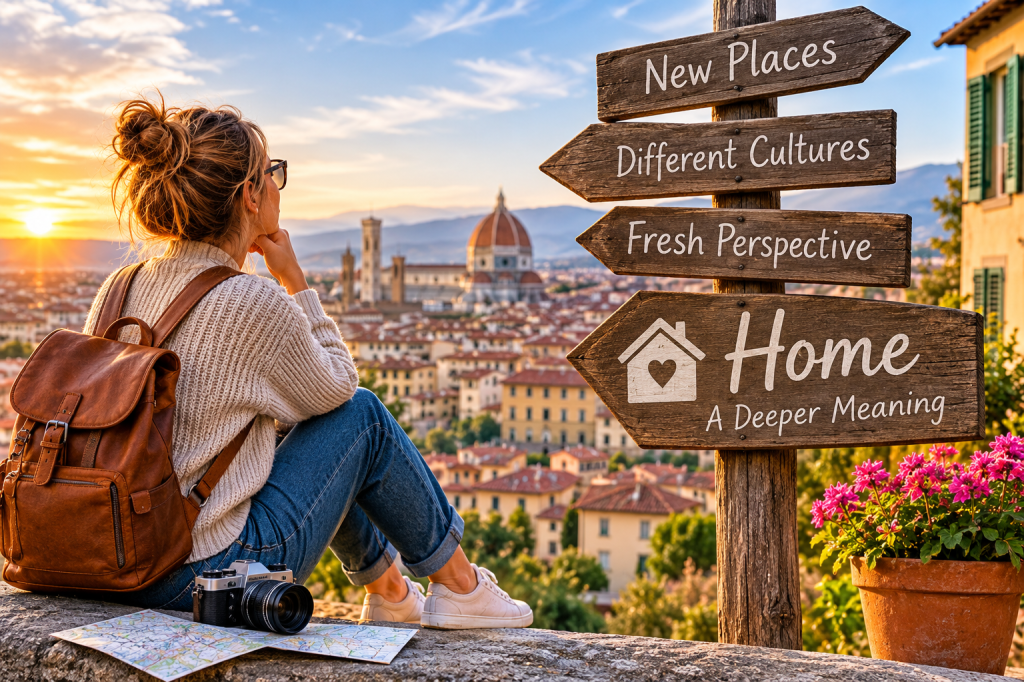
Travel is often described as an opportunity to explore new destinations, experience different cultures and escape the familiarity of everyday life. However, one of its most interesting effects can be the way it changes our understanding of home. Spending time in unfamiliar surroundings can influence how we view the places, people and routines we previously took for granted.
Sometimes, it takes travelling away from home to understand what home really means.
Seeing Familiar Things Differently
Everyday life can make us accustomed to our surroundings. Familiar streets, local shops, regular routines and even the changing seasons can become so ordinary that we rarely stop to appreciate them.
Travel interrupts this familiarity. Experiencing different cities, landscapes and communities can encourage people to look at their own surroundings from a fresh perspective.
For example, visiting a city with a slower pace of life may encourage someone to reconsider the speed at which they normally live. Experiencing a different approach to public spaces, food or social interaction can also highlight aspects of their own culture that previously went unnoticed.
This process is closely connected to cultural awareness and perspective-taking. Encountering different ways of living can challenge assumptions and encourage a greater appreciation of cultural differences.
Understanding What Home Really Means
Home is often associated with a physical building or a particular geographical location. However, the emotional meaning of home is considerably broader.
For many people, home represents familiarity, security, belonging and personal identity. It can be connected to family relationships, friendships, memories and the everyday experiences that create a sense of stability.
Travelling can make these connections more noticeable.
Being away from familiar surroundings may lead people to recognise how much they value certain aspects of home. Equally, some travellers discover that their understanding of home is not restricted to the place where they were born or raised.
A destination where someone feels comfortable, welcomed and connected can sometimes create an unexpected sense of belonging.
Appreciating the Comfort of Familiar Routines
One of the biggest contrasts people experience when travelling is the difference between unfamiliar environments and established routines.
Simple activities such as preparing breakfast, walking a familiar route, visiting a favourite café or spending an evening at home can take on a different significance after time away.
Research into wellbeing suggests that familiar routines can provide structure and predictability, both of which contribute to a sense of stability in everyday life.
Travel can therefore encourage people to appreciate the smaller details of domestic life that might otherwise be overlooked.
The experience of returning home can be just as meaningful as the journey itself.
Discovering Different Ways of Living
Exposure to different cultures can influence how people think about their lifestyles and priorities.
In some destinations, socialising and spending time with family may occupy a more prominent place in everyday life. Elsewhere, public transport, walkable neighbourhoods, outdoor living or communal spaces may be central to how communities function.
Observing these differences can encourage travellers to question whether their own routines and expectations are the only possible way of living.
This does not necessarily mean wanting to abandon everything familiar. Instead, travel can introduce new ideas that people choose to incorporate into their lives.
Someone might return home with a greater appreciation for outdoor activities, different food traditions, slower mornings or making more time for personal relationships.
When Travel Changes Our Definition of Belonging
For some people, travelling can change their relationship with the idea of belonging.
Living temporarily in another country or spending extended periods away from home can create connections with new communities, traditions and environments.
These experiences can demonstrate that belonging is not always determined by birthplace or nationality. It can also develop through shared experiences, relationships and a sense of connection with a particular place.
For individuals who travel regularly, home may gradually become less about one fixed location and more about the people and experiences that provide emotional security.
However, this experience is different for everyone. Some people become more attached to their hometown after travelling, while others discover a desire to explore opportunities elsewhere.
The Importance of Returning Home
Returning home after travelling can produce a mixture of emotions.
There may be excitement about seeing familiar people and returning to established routines, alongside a feeling of sadness that an experience has ended.
Some travellers experience what is commonly described as post-travel blues, a temporary feeling of disappointment or restlessness after returning from an enjoyable trip.
This can happen because the contrast between the excitement of travelling and the predictability of everyday life feels particularly noticeable.
However, returning home also provides an opportunity to reflect on what has been learned and decide which experiences might influence future choices.
A New Appreciation for Home
Perhaps the greatest lesson travel offers is that home does not always need to change for our relationship with it to change.
A familiar place can feel different when viewed through the perspective gained from experiencing somewhere new. Ordinary surroundings may become more interesting, everyday comforts more valuable and personal priorities clearer.
Travel can broaden our understanding of the world while simultaneously strengthening our appreciation for the things that make us feel grounded.
Ultimately, home is not simply somewhere we leave behind when we travel. It is something we continue to understand, redefine and appreciate through the experiences we have along the way.
Sometimes, the best way to discover what home means is to spend a little time away from it.



Leave a Reply