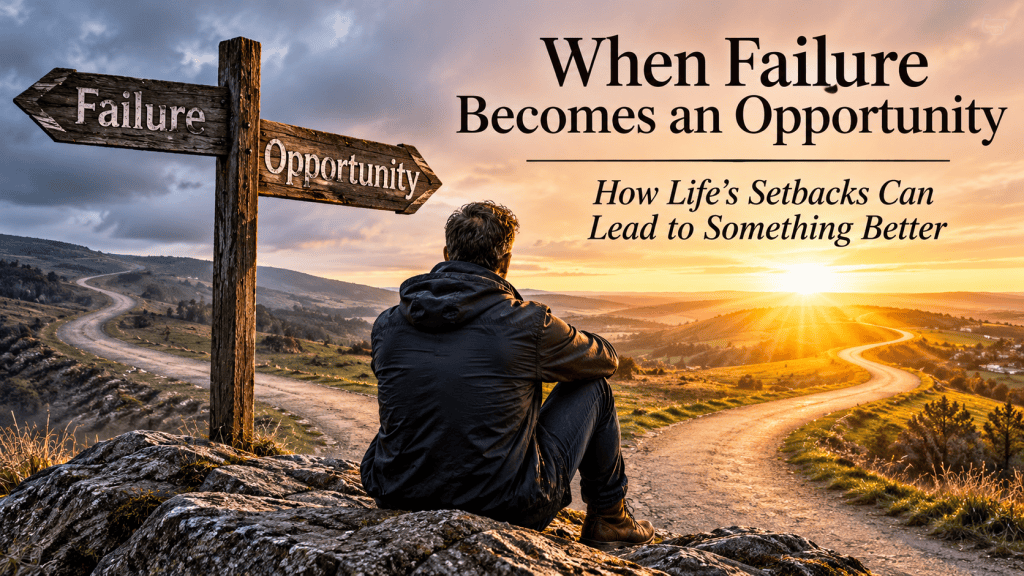
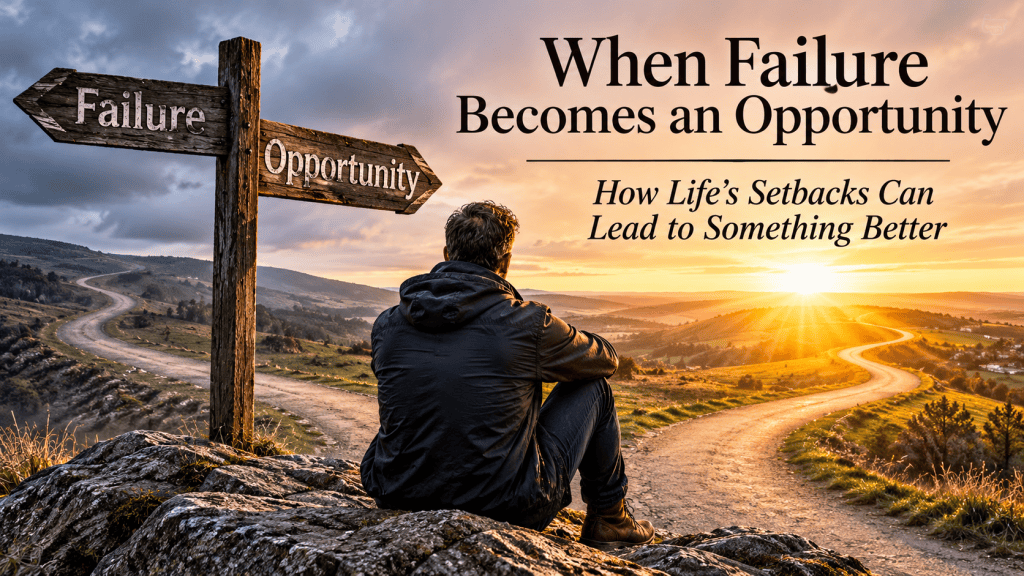
Describe a failure that, looking back, was actually one of the best things that ever happened to you.
Failure is something most people spend their lives trying to avoid. Whether it involves a disappointing career decision, a relationship that doesn’t work out, a business venture that struggles or an opportunity that never materialises, experiencing failure can leave people questioning their abilities, decisions and future direction.
Yet, with the benefit of hindsight, some of life’s most disappointing experiences can become important turning points. What initially feels like an ending can sometimes create the opportunity for a completely different beginning.
The relationship between failure and personal growth is more complicated than simply believing that everything happens for a reason. However, research into psychology, resilience and human behaviour suggests that the way people respond to setbacks can influence their ability to learn, adapt and move forward.
The Lessons That Success Doesn’t Always Teach
Success can provide confidence and satisfaction, but failure often exposes areas that require attention.
A business that doesn’t succeed might reveal weaknesses in planning, financial management or understanding customer needs. A professional setback might encourage someone to reconsider their ambitions, develop new skills or explore a different career.
These experiences can provide valuable information that would otherwise remain undiscovered.
Psychologists have explored the concept of learning from mistakes, with research suggesting that recognising errors and understanding why they happened can improve future decision-making.
However, learning does not happen automatically. It requires reflection, an honest assessment of what went wrong and a willingness to make changes.
When One Door Closes, Another Direction Can Appear
Sometimes failure changes the direction of someone’s life in ways they could not have anticipated.
Losing a job, for example, might initially create financial uncertainty and emotional pressure. Yet it can also encourage someone to consider a different industry, pursue further education or establish a business of their own.
Similarly, the end of a relationship can lead people to reassess their priorities, rediscover individual interests and develop a stronger understanding of what they want from future relationships.
This does not mean that disappointment should be welcomed or that difficult experiences are necessarily beneficial. Rather, it recognises that circumstances can create opportunities for change, even when those circumstances are unwelcome.
Developing Resilience Through Difficult Experiences
Resilience is commonly understood as the ability to adapt and recover when confronted with challenges, adversity or significant changes.
It is not about avoiding difficult emotions or pretending that everything is fine. Instead, resilience involves recognising difficulties, finding ways to cope and gradually rebuilding confidence.
Experiencing setbacks can help people develop practical coping strategies, including problem-solving, patience, flexibility and seeking support when necessary.
Importantly, resilience is not simply an individual responsibility. Family, friendships, financial security, supportive workplaces and access to appropriate help can all influence how effectively someone navigates difficult circumstances.
Rethinking What Success Really Means
One of the most significant consequences of failure can be a change in perspective.
People often measure success through external achievements such as income, professional recognition, possessions and social status. However, an experience that challenges these ambitions can encourage a more personal understanding of what a successful life actually looks like.
For some, success might become having more time with family. For others, it could mean improved wellbeing, financial stability, meaningful work or the freedom to pursue personal interests.
Sometimes what appears to be a professional failure can become the catalyst for recognising that the original ambition was never particularly fulfilling.
Changing direction does not necessarily represent giving up. It can demonstrate an ability to recognise when circumstances, priorities or personal values have changed.
The Importance of Perspective
One of the difficulties with failure is that people often judge an experience while they are still living through its consequences.
An unsuccessful application, a rejected opportunity or a business that doesn’t survive can feel like a defining moment. Yet, several years later, the same experience may be viewed as one stage in a much longer journey.
This is sometimes described as hindsight: the ability to look back at past events with knowledge and understanding that were not available at the time.
It is important not to romanticise disappointment. Some failures have lasting consequences, and not everyone finds an immediate positive outcome from adversity.
Nevertheless, recognising that one disappointing experience does not determine the rest of a person’s life can be an important step towards moving forward.
Finding Something Valuable in What Went Wrong
Perhaps the greatest opportunity presented by failure is the chance to reconsider what comes next.
Instead of allowing one unsuccessful experience to define personal worth or future potential, people can examine what they have learned, identify what they would do differently and consider alternative possibilities.
That process may involve starting again, making smaller changes or simply accepting that a particular chapter has come to an end.
There is no universal formula for turning disappointment into opportunity. Every individual faces different circumstances, and progress rarely follows a predictable timetable.
However, the ability to reflect, adapt and remain open to new possibilities can make a meaningful difference.
Sometimes the Setback Is Not the End of the Story
Life rarely unfolds exactly as planned. Careers change, relationships develop or end, ambitions evolve and opportunities appear when least expected.
While failure can be painful, it does not have to represent a permanent judgement on someone’s abilities or potential.
Sometimes the experience that initially appears to have taken us backwards encourages us to reconsider our direction, discover new strengths and recognise opportunities that we might previously have overlooked.
Perhaps, when looking back, the most important question is not simply why something failed, but what we learned from the experience and how it influenced the person we eventually became.
Because sometimes the greatest turning points in life do not begin with success. They begin with something not going according to plan.






Leave a Reply