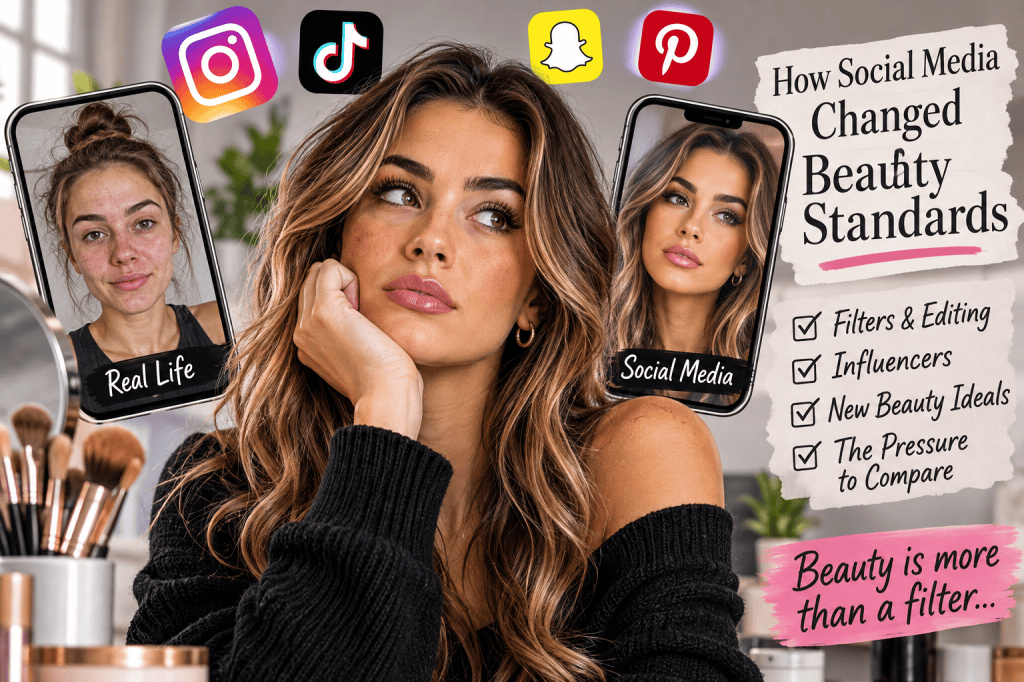
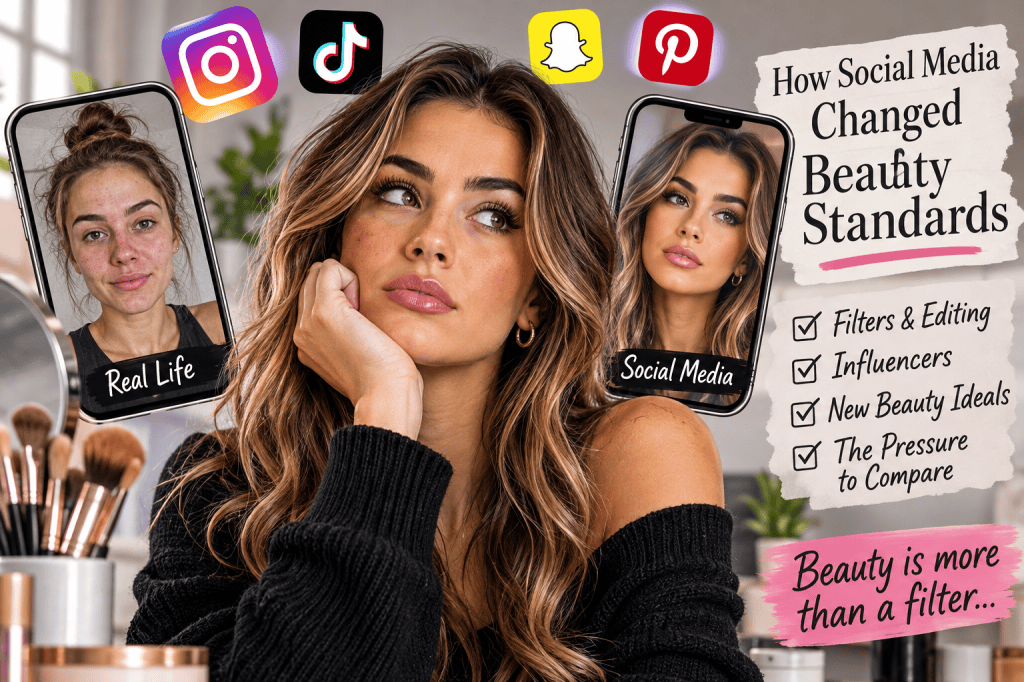
Beauty has always been influenced by culture, fashion, celebrities and the media. However, the arrival of social media has transformed how people view themselves, how they define attractiveness and what they consider desirable. Platforms such as Instagram, TikTok, Snapchat and Pinterest have created a world where beauty trends can reach millions of people within hours, influencing everything from hairstyles and skincare to body shapes and cosmetic procedures.
While traditional magazines, television and advertising once played a major role in establishing beauty ideals, social media has given ordinary users, influencers and content creators an increasingly powerful voice.
The Rise of the Digital Beauty Standard
Before social media became part of everyday life, beauty standards were largely shaped by the fashion, entertainment and advertising industries. Magazine covers, professional photographs and celebrity appearances often presented carefully selected images of what society considered attractive.
Social media changed the relationship between audiences and these images.
People were no longer simply looking at professional models and celebrities. They were comparing themselves with friends, influencers and strangers who appeared to have carefully maintained lifestyles and seemingly perfect appearances.
This created a new form of beauty culture in which everyday photographs, makeup tutorials, fitness videos and skincare routines could influence public expectations just as much as traditional advertising.
The Influence of Filters and Photo Editing
One of the most significant changes has been the widespread availability of digital filters and editing tools.
Modern technology allows users to smooth skin, brighten eyes, reshape facial features, alter body proportions and remove perceived imperfections with relatively little effort.
Although these tools can be entertaining and creative, they have also raised questions about how people perceive natural beauty.
When heavily edited photographs become commonplace, ordinary features such as wrinkles, skin texture, blemishes and natural body shapes can begin to appear undesirable by comparison.
Research published in the journal Body Image has found that exposure to idealised appearance-related images on social media can negatively affect body satisfaction.
The issue is not simply that photographs are edited. It is that viewers may gradually begin comparing their everyday appearance with images that do not accurately represent reality.
Influencers and the Changing Beauty Industry
Social media influencers have become important figures within the modern beauty industry.
Unlike traditional celebrities, influencers often build their audiences through personal recommendations, product demonstrations, tutorials and everyday lifestyle content.
Their influence extends across skincare, cosmetics, fashion, haircare, fitness and cosmetic treatments.
Beauty brands have recognised this opportunity, increasingly using influencers to introduce products, demonstrate routines and connect with consumers.
This has also made beauty advice more accessible. People can discover different skincare approaches, makeup techniques and products without relying exclusively on traditional advertising or specialist publications.
However, there is an important distinction between genuine recommendations and sponsored content. Commercial partnerships can influence what audiences see, making it important for consumers to understand when an influencer is promoting a product for payment.
Beauty Standards Are No Longer One-Dimensional
One positive development associated with social media has been the growing visibility of different appearances and beauty identities.
Body positivity, natural beauty, age-inclusive skincare and greater representation of different skin tones and body types have all found audiences online.
People who may previously have felt overlooked by traditional advertising can now find creators and communities whose experiences reflect their own.
There has also been a greater conversation about men’s appearance. Skincare, grooming, fitness and fashion are no longer presented exclusively as subjects for women. Male beauty and personal care have become increasingly visible parts of online culture.
Nevertheless, greater visibility does not automatically mean greater acceptance. Social media can celebrate diversity while simultaneously promoting new appearance-based expectations.
For example, the pressure to achieve a particular body shape, maintain youthful-looking skin or follow complicated skincare routines can affect people regardless of gender or age.
The Psychological Impact of Constant Comparison
One of the more concerning aspects of social media beauty culture is the opportunity for constant comparison.
A person can scroll through hundreds of photographs and videos featuring attractive faces, carefully styled outfits, fitness transformations and elaborate beauty routines in a relatively short period.
Research has identified links between exposure to idealised social media imagery, appearance comparisons and body dissatisfaction.
A systematic review published in 2022 examined 43 experimental studies involving more than 8,600 participants. Its findings indicated that viewing idealised appearance-related images could increase body dissatisfaction among young women and men.
This does not mean that social media affects everyone in the same way. Individual experiences, the type of content viewed and personal circumstances all matter.
However, it demonstrates why a healthy relationship with online content is important.
The Role of Algorithms in Beauty Trends
Social media platforms use recommendation systems to suggest content based on users’ activity and interests.
When someone regularly watches makeup tutorials, fitness videos or skincare demonstrations, they may find themselves receiving increasingly similar material.
This can create a concentrated online environment in which particular appearances, products and routines become especially prominent.
Beauty trends can consequently develop and spread rapidly. A particular hairstyle, makeup technique, skincare ingredient or fashion aesthetic can move from a small online community into mainstream culture.
The speed of these trends has also created a more commercially competitive beauty environment, with brands and creators constantly looking for the next popular product or appearance.
Finding a Healthier Definition of Beauty
Despite the pressures associated with social media, it would be unfair to overlook its positive contributions.
Online communities have helped people discover new approaches to personal care, share experiences and challenge narrow definitions of attractiveness.
The most important consideration is learning to distinguish inspiration from expectation.
Enjoying makeup, fashion, skincare and fitness does not have to involve dissatisfaction with natural appearance. Equally, choosing not to follow particular trends should never be viewed as a failure to look after oneself.
Beauty is not a competition, and there is no single appearance that everyone should aspire to achieve.
A New Era of Beauty
Social media has fundamentally changed how beauty standards are created, communicated and challenged.
It has made beauty culture more accessible, commercially influential and diverse, but it has also increased exposure to carefully edited images and unrealistic expectations.
Perhaps the greatest challenge for modern society is learning to appreciate the opportunities offered by digital beauty culture without allowing it to dictate personal worth.
After all, photographs can be filtered, trends can disappear and fashionable appearances can change. Confidence, individuality and the ability to feel comfortable in one’s own skin are far less dependent on what happens to be popular online.
At Vion Lifestyle Magazine, we believe beauty should be about personal expression, individuality and confidence rather than attempting to meet an ever-changing digital ideal.


Leave a Reply