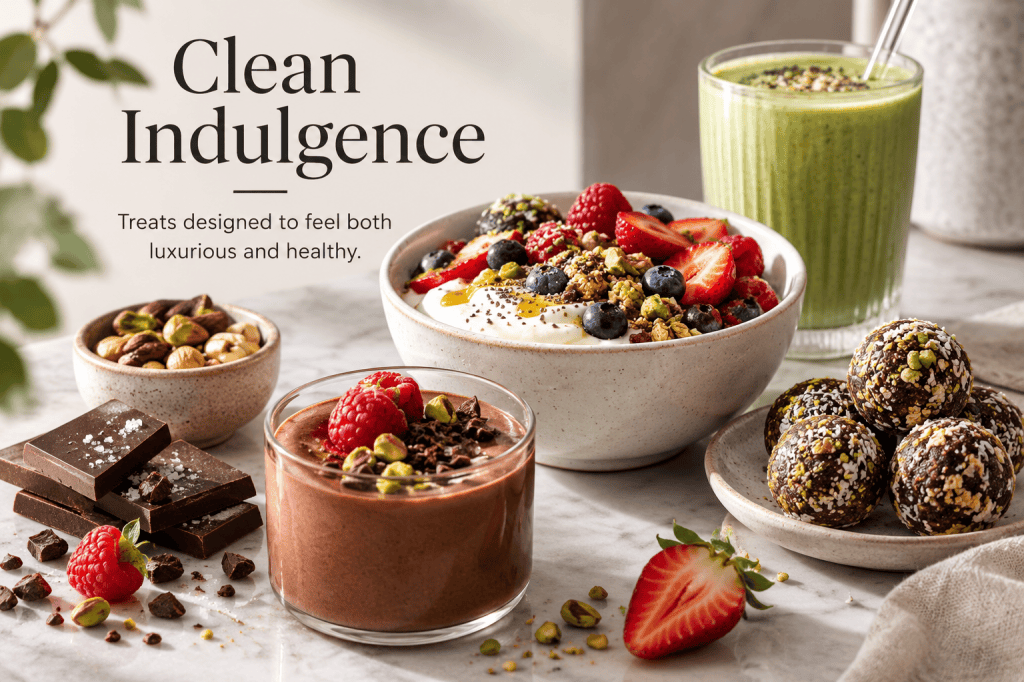
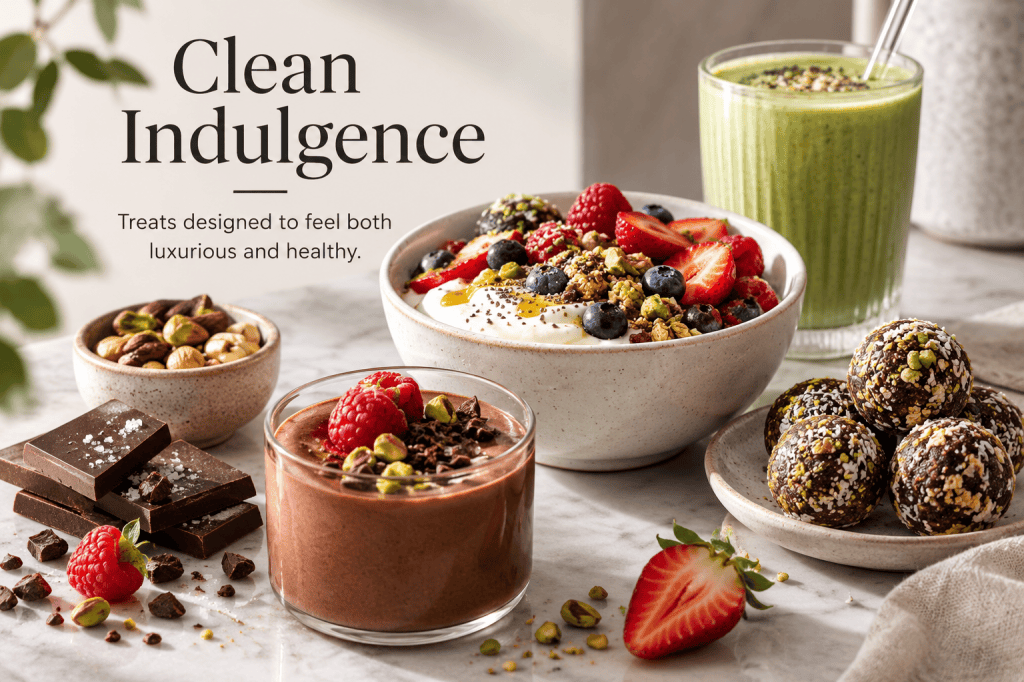
The idea of indulgence is changing. Rather than viewing treats as something that must be completely separate from a healthy lifestyle, a growing part of the food and wellness market is focusing on what could be described as “clean indulgence” — products designed to deliver the pleasure and sense of luxury associated with traditional treats while placing greater emphasis on ingredients, portion size and nutritional balance.
Clean indulgence can include everything from premium dark chocolate and reduced-sugar desserts to high-protein snacks, naturally sweetened products, frozen yoghurt, fruit-based desserts and sophisticated alcohol-free drinks. The common theme is that consumers are increasingly interested in products that feel special without necessarily being perceived as an everyday nutritional compromise.
Luxury Meets Simplicity
One of the characteristics of this trend is the presentation of relatively simple ingredients in a more premium way. High-quality cocoa, nuts, berries, yoghurt, spices, seeds and naturally flavoured ingredients can be transformed into desserts and snacks that look and taste luxurious.
Dark chocolate is a good example. Higher-cocoa varieties are often marketed around their intense flavour, allowing smaller portions to provide a richer experience. However, dark chocolate is still energy-dense and can contain significant amounts of sugar and fat, meaning that “premium” does not automatically mean healthier.
The same principle applies to other products marketed around natural or simple ingredients. Consumers are becoming more interested in what is actually contained in their food rather than relying solely on claims such as “natural”, “clean” or “guilt-free”.
The Rise of Better-For-You Treats
The modern snack market has also expanded beyond traditional confectionery. Protein bars, high-protein puddings, yoghurt-based desserts and lower-sugar alternatives are increasingly available alongside conventional treats.
Protein has become particularly prominent because of its association with satiety and muscle maintenance. This has helped create a new category of snacks positioned between conventional confectionery and sports nutrition.
At the same time, reduced-sugar products have become more sophisticated. Advances in food formulation mean manufacturers can use combinations of sweeteners, fruit ingredients and flavouring techniques to create products intended to retain sweetness while reducing added sugar.
Portion Size Matters
Clean indulgence is not necessarily about finding a version of a treat that can be consumed without limits. Portion size remains an important part of a balanced diet.
A small serving of a high-quality dessert can provide an enjoyable eating experience without turning the occasion into excessive consumption. This reflects a broader shift away from the idea that foods must be categorised simply as either “good” or “bad”.
Instead, treats can have a place within an overall eating pattern that includes a variety of foods and appropriate amounts of energy, protein, fibre, vitamins and minerals.
A More Conscious Approach to Treating Yourself
The trend also reflects changing attitudes towards wellness. Consumers increasingly want food to provide enjoyment as well as fitting into their broader lifestyles.
This has created opportunities for brands to combine premium packaging, sophisticated flavours and carefully selected ingredients. Desserts and snacks are being presented as experiences rather than simply sources of calories.
From dark chocolate with sea salt to Greek yoghurt topped with berries and nuts, the modern interpretation of indulgence often places emphasis on quality, texture and flavour rather than simply sweetness.
Health Claims Still Need Context
Despite the appeal of clean indulgence, consumers should remain cautious about marketing language. Terms such as “healthy”, “natural”, “clean” and “guilt-free” can create an impression that a product is nutritionally superior when the overall nutritional profile may be more complicated.
A product can be organic, natural or lower in sugar without automatically being low in calories or particularly nutritious. Reading the nutritional information and ingredient list provides a more useful picture than relying on front-of-pack marketing alone.
Ultimately, clean indulgence is less about making desserts “healthy” and more about finding ways to enjoy luxurious foods while being more conscious of ingredients, portions and overall dietary balance.
As the boundary between wellness and indulgence continues to evolve, the modern treat is increasingly being designed to offer both pleasure and a sense of mindful consumption — proving that enjoying food and making considered choices do not necessarily have to be opposites.









Leave a Reply