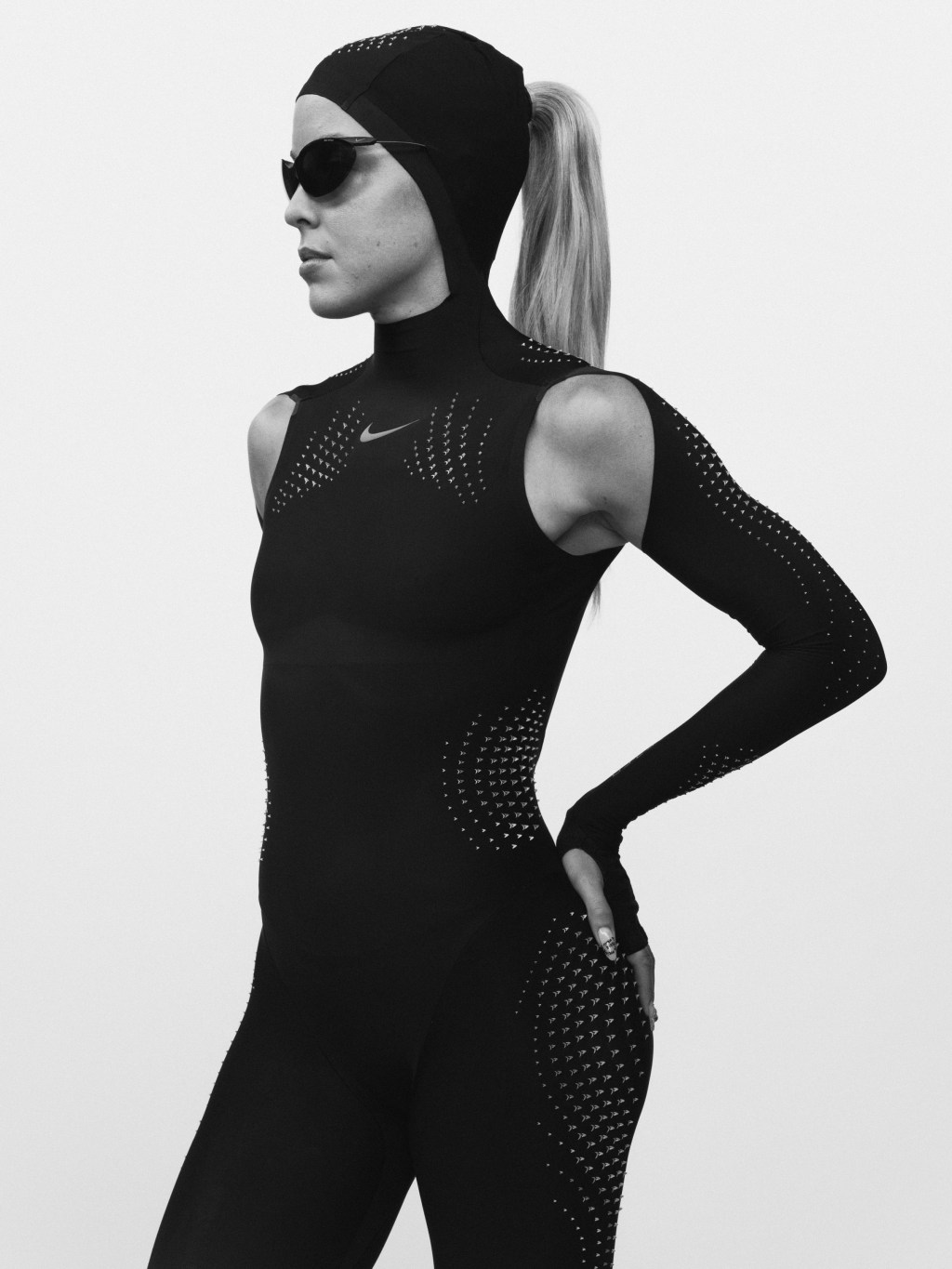
Nike has unveiled a striking one-of-one racing suit created specifically for British middle-distance athlete Keely Hodgkinson, bringing together sports science, aerodynamic research, advanced apparel design and Hodgkinson’s own personal style.
Unveiled on September 18, 2026, the bespoke speed suit has been developed around Hodgkinson’s requirements as an 800-metre specialist. Nike describes the project as a collaboration between the athlete, designers, engineers and innovators, with the objective of creating a highly aerodynamic racing system without compromising movement or comfort.
Designed Around the Athlete
Rather than adapting an existing racing uniform, Nike worked with Hodgkinson to create the suit according to her specific performance requirements.
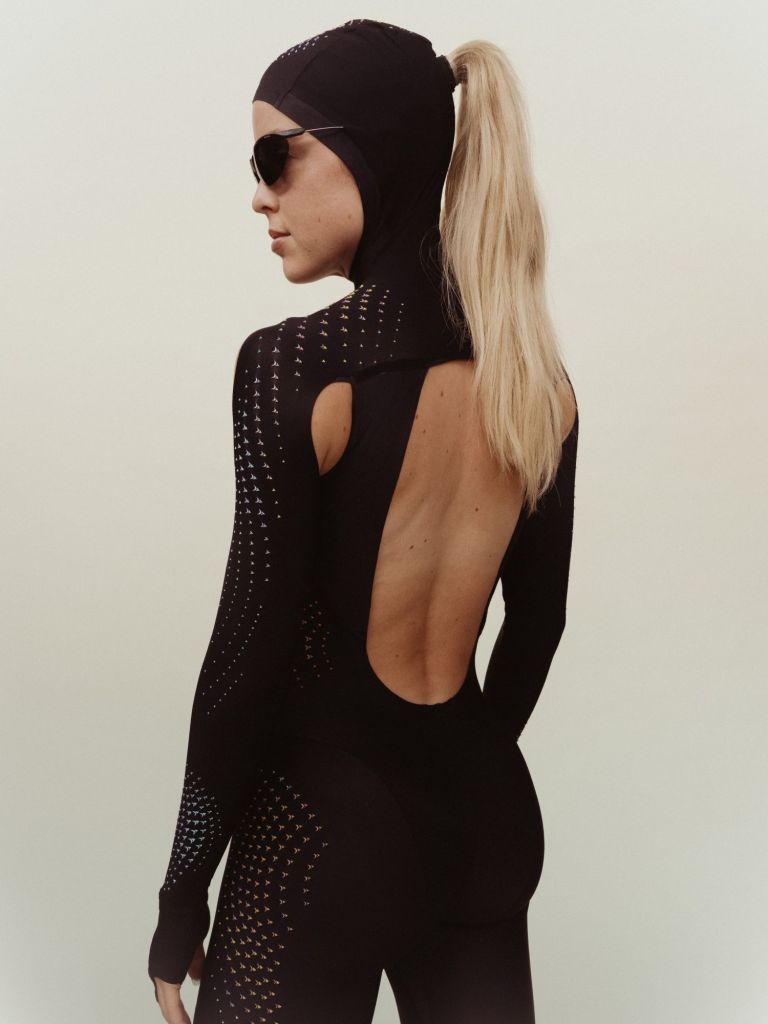
The result is a full-length, open-back and hooded design, predominantly finished in black. Nike says the suit was designed to minimise aerodynamic drag while allowing the freedom of movement required during an 800-metre race.
The company incorporated minimal seams and no traditional closures, alongside technical features intended to allow the fabric to move naturally with Hodgkinson’s body. An articulated section behind the knee, a patented 4D mobility gusset and large openings around the underarm and back are among the details incorporated into the design.
The result is intended to function almost like a second skin, with the fit carefully developed around Hodgkinson’s movement rather than simply being designed as conventional race apparel.
The Science Behind the Design
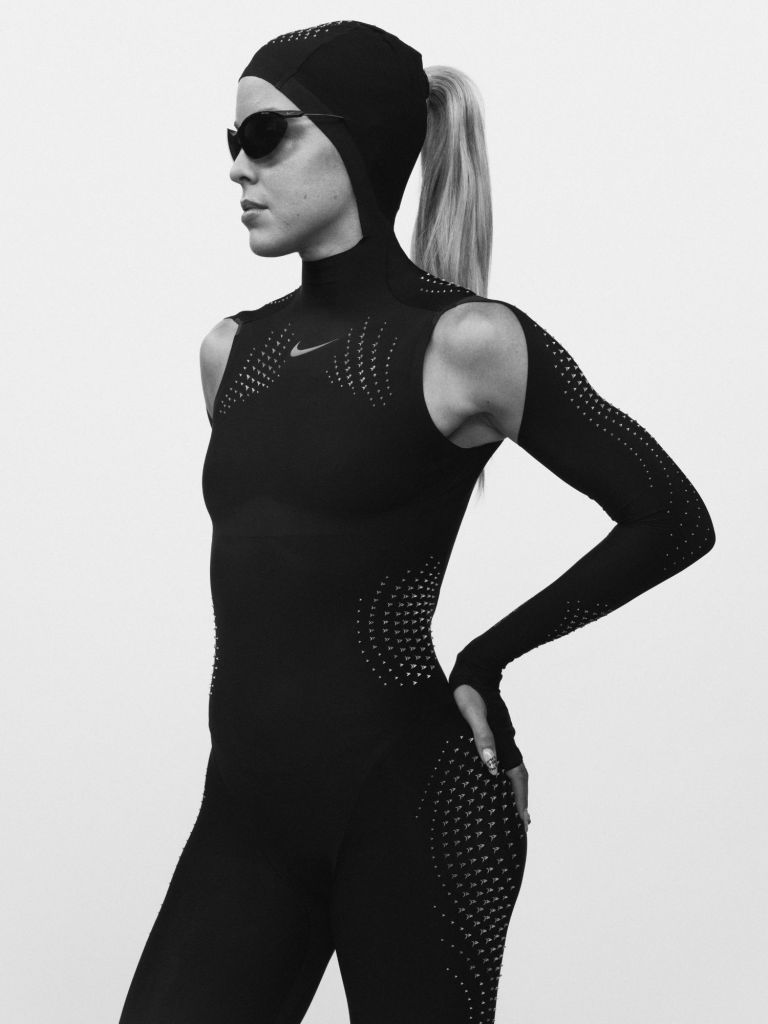
One of the most technically distinctive aspects of the suit is Nike’s use of 3D-printed aerodynamic devices known as vortex generators.
The small, delta-shaped structures have been computationally positioned across different areas of Hodgkinson’s body. According to Nike, they are designed to manipulate airflow and reduce the drag created by the low-pressure wake that develops behind a moving athlete.
Nike says the vortex generators are its fastest such system to date, with their size and orientation adapted according to their position on Hodgkinson’s body.
The concept reflects a wider trend in elite sport: increasingly sophisticated equipment is being developed around individual athletes rather than simply around broad categories of performance.
Function Meets Personal Expression
Although the suit has a highly technical purpose, Nike has also placed considerable emphasis on Hodgkinson’s personality.
The black design is complemented by carefully considered details, including an opening specifically designed for her ponytail. The hood was also engineered to manage airflow around the athlete’s head while accommodating her hairstyle.
The suit is paired with Nike Vision Airelon Force E sunglasses, while the aerodynamic elements provide contrasting visual details against the black base.
That combination of technical performance and individual expression is particularly significant in a sport where racing uniforms have traditionally been strongly associated with national colours, team identity and established competition aesthetics.
Nike’s Dan Farron described the project as an attempt to combine performance with personal expression, while Hodgkinson herself said the suit makes her feel fast, comfortable, free-flowing and empowered.
A History of Bespoke Racing Innovation
The Hodgkinson project also forms part of Nike’s longer history of developing specialised equipment for elite athletes.
Nike’s own account traces its aerodynamic apparel research through several decades. Earlier projects included aerodynamic racing suits developed for rowing and wheelchair racing, followed by Project Swift and the company’s work on speed-skating suits.
The company subsequently developed aerodynamic technologies for running apparel, including Aeroblade technology and specialised racewear created for elite athletes.
In 2025, Nike produced a highly specialised Fly Suit for Faith Kipyegon’s attempt to break the four-minute barrier for the women’s mile. That project included extremely small aerodynamic structures designed to influence airflow around the athlete.
Hodgkinson’s suit therefore represents another stage in an ongoing approach in which athlete feedback, scientific research and product engineering are combined to pursue marginal gains.
The Victory Elite Spikes
The speed suit is only part of Hodgkinson’s latest Nike racing system.
Nike has also introduced the Victory Elite, a development of its middle-distance Victory franchise. The shoe features a full-length carbon-fibre plate, a tuned forefoot Air Zoom unit, a carbon outsole plate with titanium pins and a lightweight upper.
The outsole incorporates six pins, with Nike stating that the design is intended to reduce weight while maintaining the traction required for middle-distance racing.
The spikes have been given the same predominantly black aesthetic as Hodgkinson’s racing suit, with gold details providing a visual connection to her signature Nike collection.
Innovation With an Individual Identity
Hodgkinson has been a Nike athlete since 2019, and the relationship has increasingly involved her in the development of products associated with her performance.
In July 2026, Nike launched the Keely Hodgkinson Collection, its first signature athlete pack bearing her name. The collection brought together running apparel and footwear, including the Vomero Plus, Pegasus 42, Vaporfly 4 and Victory 2, alongside performance clothing.
The new one-of-one speed suit takes that relationship further by moving from a signature collection towards an item created specifically around one athlete’s body, movement and racing requirements.
That distinction is important. Instead of treating athletic apparel purely as a piece of clothing, Nike is approaching the racing suit as part of an integrated performance system.
A New Image for Middle-Distance Racing
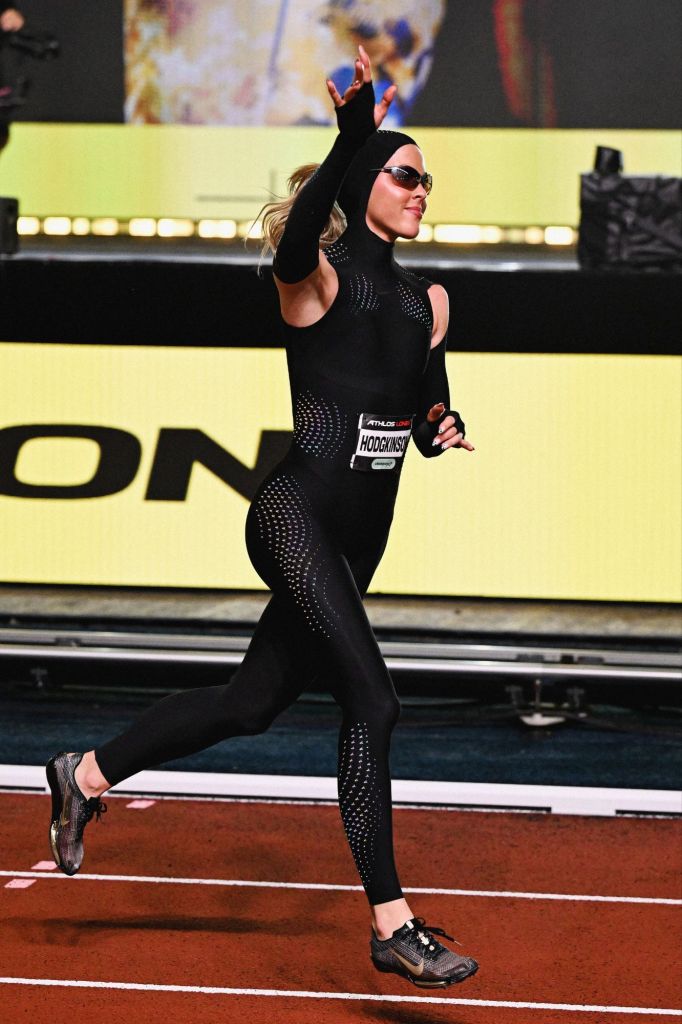
Hodgkinson subsequently wore the distinctive black hooded suit during the Athlos London 800 metres on September 18. Reuters reported that the Olympic champion won the race in 1:56.40 at StoneX Stadium, more than two seconds clear of the field.
The appearance demonstrated how dramatically elite athletics equipment has evolved. The racing uniform is no longer simply about identifying an athlete or team; it can incorporate aerodynamic engineering, computational design, advanced materials and highly personalised construction.
Nike’s latest project with Hodgkinson illustrates that evolution particularly clearly.
The suit combines science and aesthetics without treating them as separate concepts. Its aerodynamic components have a specific technical purpose, while the black colourway, hood, ponytail opening and other details are designed around Hodgkinson’s identity as much as her biomechanics.
For Nike, the project represents another chapter in its long-running pursuit of performance innovation. For Hodgkinson, it provides something more personal: equipment developed around the way she actually races, moves and presents herself.
As athletics continues to search for increasingly small performance gains, the Hodgkinson speed suit offers an intriguing example of where elite racing apparel may be heading — towards increasingly individualised designs in which technology, biomechanics and personal expression become part of the same package.









Leave a Reply