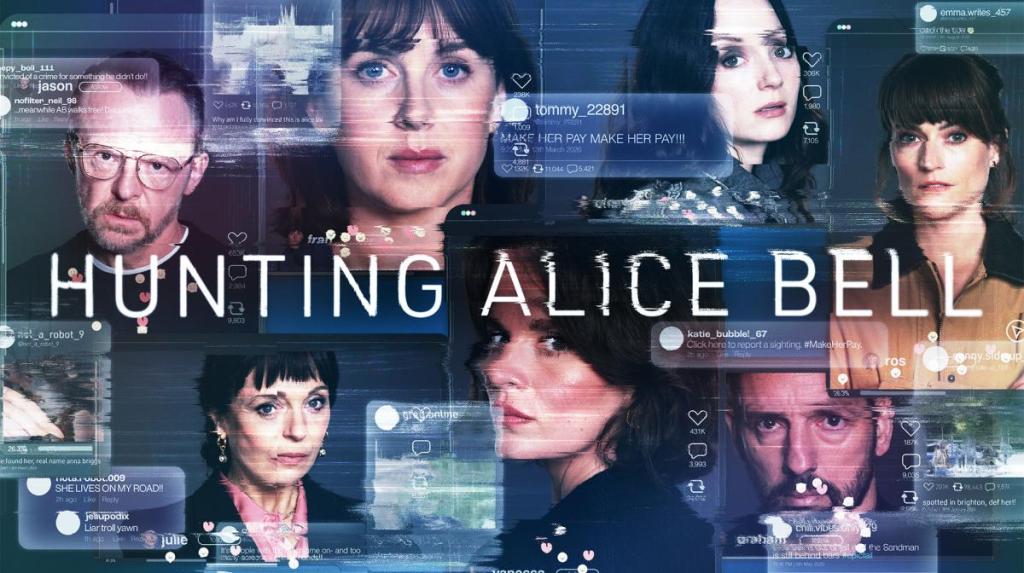
Channel 4’s gripping psychological thriller exposes the dangers of online misinformation, toxic content creators and the devastating consequences of allowing internet rumours to become public judgement.
In an age where social media has become an influential part of everyday life, Channel 4’s psychological thriller Hunting Alice Bell offers a particularly timely and thought-provoking examination of the dangers that exist behind our screens.
Created by David Baddiel and Peter Bradshaw, this six-part drama explores what happens when online accusations, conspiracy theories and public speculation begin to destroy the lives of ordinary people.
At the centre of the story is Fran Da Silva, played by Alexandra Roach, whose relatively ordinary family life is thrown into turmoil when she is wrongly accused online of being Alice Bell, the former lover and accomplice of a notorious serial killer.
As rumours spread, Fran becomes the target of hostility, harassment and public suspicion. Her experience soon reveals that she is not the only woman to have found herself caught up in this disturbing situation.
The series features an impressive cast, including Amanda Abbington, Emily Barber, Toni O’Rourke, Christina Bennington, Simon Pegg and Ralf Little.
Little delivers a particularly interesting performance as Graham Hunter, associated with the online persona True Crime Buster. His character represents a deeply troubling side of modern internet culture: content creators who exploit public curiosity, suspicion and outrage while presenting themselves as people pursuing the truth.
It is an important distinction. There is nothing inherently wrong with discussing crime, investigating publicly available information or creating true-crime content. Responsible journalism and legitimate public discussion have an important place in society. However, when individuals begin presenting speculation as fact, encouraging harassment or directing online audiences towards people without properly established evidence, the consequences can become extremely serious.
This is one of the most compelling aspects of Hunting Alice Bell.
When online entertainment becomes a real-world danger
The internet has provided extraordinary opportunities for communication, education, entertainment and the exchange of information. However, it has also created an environment in which misinformation can travel rapidly, accusations can reach thousands of people and individuals can find themselves publicly judged without having an opportunity to defend themselves.
The series illustrates how an accusation does not necessarily need to be supported by convincing evidence to attract an audience. Sometimes, a compelling theory, a confident online personality and a growing community of followers can be enough to create a damaging narrative.
What makes this particularly concerning is the way online hostility can move beyond a computer or mobile phone.
In the series, the consequences include intimidation, threats, damage to property and the breakdown of personal relationships. The people affected are not simply usernames or characters in somebody else’s online investigation. They are individuals with families, responsibilities, careers and lives that can be permanently affected.
This is not an entirely fictional concern. Real-life experiences of mistaken identity, online harassment, vigilante behaviour and public misinformation demonstrate why responsible online conduct matters.
David Baddiel has explained that the original inspiration for the drama came partly from the experiences of innocent women who were wrongly suspected of being Maxine Carr following the Soham murders. His story explores how social media can intensify the consequences of rumour-mongering and public suspicion.
The responsibility of online content creators
Perhaps the most important message running throughout the series concerns the responsibility that comes with having an online audience.
Content creators can influence opinions, shape conversations and direct the attention of thousands of people. With that influence comes a responsibility to distinguish between verified information, personal opinion, speculation and outright misinformation.
A creator who encourages followers to investigate or target an individual without reliable evidence can contribute to an environment in which harassment becomes normalised.
The character played by Ralf Little is particularly effective in illustrating this danger. His online presence represents the potentially toxic relationship between sensationalist content, personal notoriety and an audience hungry for the next revelation.
There is an important lesson here for viewers: popularity is not proof of credibility, confidence is not evidence, and a large following does not automatically make someone a trustworthy source of information.
The pursuit of views, engagement and online recognition should never come at the expense of another person’s safety or dignity.
An important conversation about modern society
Beyond its thriller storyline, Hunting Alice Bell also explores the psychology of online crowds and the ease with which people can become convinced of something without properly examining the evidence.
Once an accusation gains momentum, contradictory information can be dismissed, innocent explanations can be treated as further evidence of guilt, and individuals can become trapped in a narrative they never created.
The drama also raises questions about misogyny, public judgement and the disproportionate hostility directed towards women associated with notorious crimes.
Its underlying message is particularly relevant in a society where social media can sometimes encourage people to react first and establish the facts afterwards.
A worthwhile and timely Channel 4 drama
Hunting Alice Bell is more than an entertaining psychological thriller. It is a reminder that the digital world is not separate from real life and that what happens online can have very serious consequences offline.
Its combination of suspense, strong performances and uncomfortable social commentary makes it a worthwhile addition to Channel 4’s drama offering.
Most importantly, it encourages viewers to think more carefully about the information they consume, the personalities they follow and the accusations they choose to believe.
We should never forget that behind every online profile is a real person, and behind every accusation there should be a responsibility to establish the facts.
In a world where almost anyone can become an online commentator, investigator or self-appointed authority, Hunting Alice Bell delivers a message worth taking seriously: the freedom to publish does not remove the responsibility to do so ethically.
Vion Verdict: A compelling, thought-provoking and socially relevant drama that deserves recognition for bringing the dangers of online vigilantism, toxic content creation and digital misinformation into the spotlight.





Leave a Reply