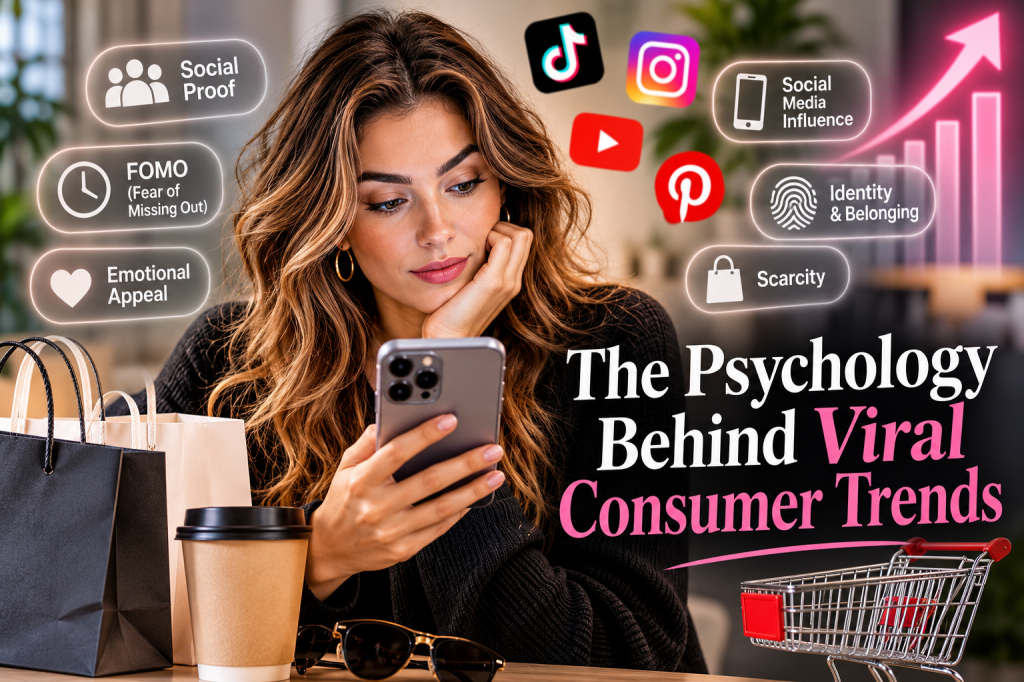
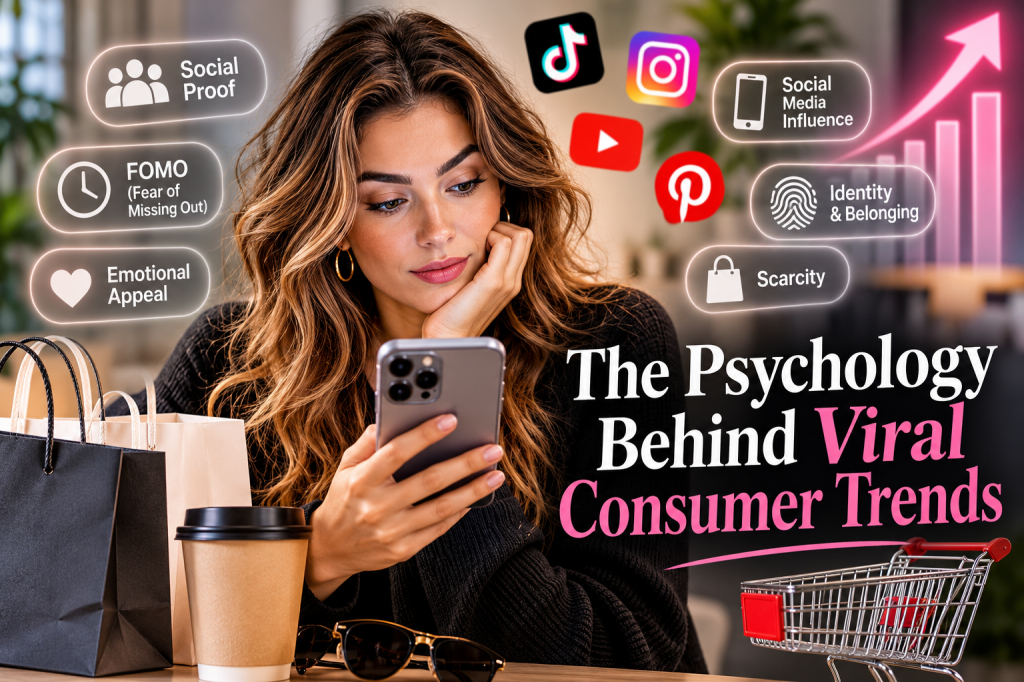
Viral consumer trends have become a defining feature of modern shopping culture. From fashionable clothing and beauty products to new technology, household gadgets and lifestyle accessories, certain products can seemingly become popular overnight. Social media platforms, online communities and digital influencers have transformed how consumers discover products, develop preferences and make purchasing decisions.
However, behind the popularity of viral products lies something more complex than clever marketing. Human psychology plays an important role in explaining why people are attracted to particular trends, why they want to own certain products and how purchasing behaviour can spread rapidly between individuals.
The Power of Social Influence
One of the strongest psychological factors behind viral consumer trends is social influence.
People naturally observe the behaviour of others, particularly when making decisions about unfamiliar products. When consumers see friends, celebrities, influencers or large online communities supporting a particular product, they may become more interested in purchasing it themselves.
This behaviour is closely connected to a psychological concept known as social proof. Social proof describes the tendency to use other people’s actions and opinions as guidance when deciding what is popular, acceptable or worth trying.
For example, a product receiving thousands of positive reviews, social media mentions or recommendations may appear more desirable because so many other people seem interested in it.
Popularity can therefore become a selling point in its own right.
The Fear of Missing Out
Another important influence is the fear of missing out, commonly known as FOMO.
When consumers believe a product is becoming popular or may soon become unavailable, they can feel pressured to purchase it before the opportunity disappears.
Limited-edition releases, countdown promotions, exclusive collections and products described as being in high demand can all contribute to this feeling.
The psychological appeal is not necessarily limited to the product itself. Consumers may also want to experience something while it is fashionable, participate in a shared cultural moment or avoid feeling excluded from a popular conversation.
This can encourage quicker purchasing decisions, sometimes without careful consideration of whether the product is genuinely needed.
The Influence of Social Media
Social media has significantly changed the speed at which consumer trends develop.
Platforms such as TikTok, Instagram, YouTube and Pinterest allow products to reach large audiences through short videos, recommendations, reviews and user-generated content.
A product that might previously have depended on traditional advertising can now gain widespread attention through a single popular video or a series of independent recommendations.
Algorithms also influence what consumers see. Content that generates engagement may be recommended to additional users, creating opportunities for products and trends to reach audiences far beyond their original communities.
Repeated exposure can increase familiarity with a product. Over time, consumers may begin to recognise a particular brand or item and associate it with popularity, quality or desirability.
Emotional Purchasing and Personal Identity
Consumer behaviour is not always driven by practical requirements. Emotional responses and personal identity can also influence what people choose to buy.
Fashion, technology, beauty products and lifestyle purchases can communicate something about an individual’s interests, personality and aspirations.
For some consumers, purchasing a trending product provides a sense of belonging. For others, it offers an opportunity to express individuality, experiment with a new identity or feel connected to a particular community.
There is also an emotional reward associated with discovering something new. The anticipation of receiving a purchase and the excitement of trying it can make shopping an enjoyable experience.
Marketing campaigns frequently draw upon these emotional connections, presenting products as part of a desirable lifestyle rather than simply as objects with practical functions.
The Role of Influencers and Online Communities
Influencers have become important participants in modern consumer culture.
Their recommendations can introduce products to audiences who may trust their opinions because of familiarity, perceived expertise or shared interests.
Unlike traditional advertising, influencer content often appears within everyday lifestyle posts, personal experiences and product demonstrations. This can make recommendations feel more relatable.
Online communities also contribute to the development of viral trends. Consumers share experiences, compare products, discuss alternatives and encourage others to participate.
This collective activity can turn an ordinary product into a cultural talking point.
Nevertheless, consumers should remember that sponsored content and commercial partnerships can influence recommendations. Understanding the difference between independent opinion and paid promotion is an important part of informed purchasing.
Why Some Trends Disappear So Quickly
Although certain products achieve enormous popularity, not every viral trend has lasting appeal.
Some trends are driven primarily by novelty, curiosity or temporary social attention. Once consumers have experienced the product or public interest moves elsewhere, demand can decline.
Other products establish a longer-lasting presence because they offer genuine usefulness, quality, convenience or value.
The difference between a temporary craze and a lasting consumer trend often depends on whether the product continues to meet people’s expectations after the initial excitement has disappeared.
This also demonstrates how quickly modern consumer preferences can change in an environment where new products and recommendations are constantly appearing.
Becoming a More Conscious Consumer
Understanding the psychology behind viral consumer trends can help people make more considered purchasing decisions.
Before buying a popular product, consumers can benefit from asking themselves whether they genuinely need it, whether it offers good value and whether their interest comes from personal preference or external pressure.
Reading independent reviews, comparing prices and taking time before making a purchase can also help reduce impulsive spending.
Being aware of social influence does not mean avoiding trends altogether. It simply means recognising how marketing, popularity and emotional responses can shape decisions.
The Future of Viral Consumer Culture
As digital platforms continue to evolve, the relationship between social media and consumer behaviour is likely to remain influential.
Artificial intelligence, personalised recommendations, livestream shopping and increasingly sophisticated advertising techniques are creating new ways for businesses to reach potential customers.
At the same time, consumers are becoming more familiar with online marketing practices and the commercial relationships behind some recommendations.
The psychology behind viral consumer trends is unlikely to change fundamentally. People will continue to be influenced by social connections, emotional experiences, personal identity and the desire to belong.
What is changing is the speed and scale at which these influences operate.
Ultimately, viral consumer trends reveal something important about modern society: purchasing decisions are rarely just about the products themselves. They are also shaped by human relationships, cultural interests, emotions and the desire to feel connected to the world around us.









Leave a Reply