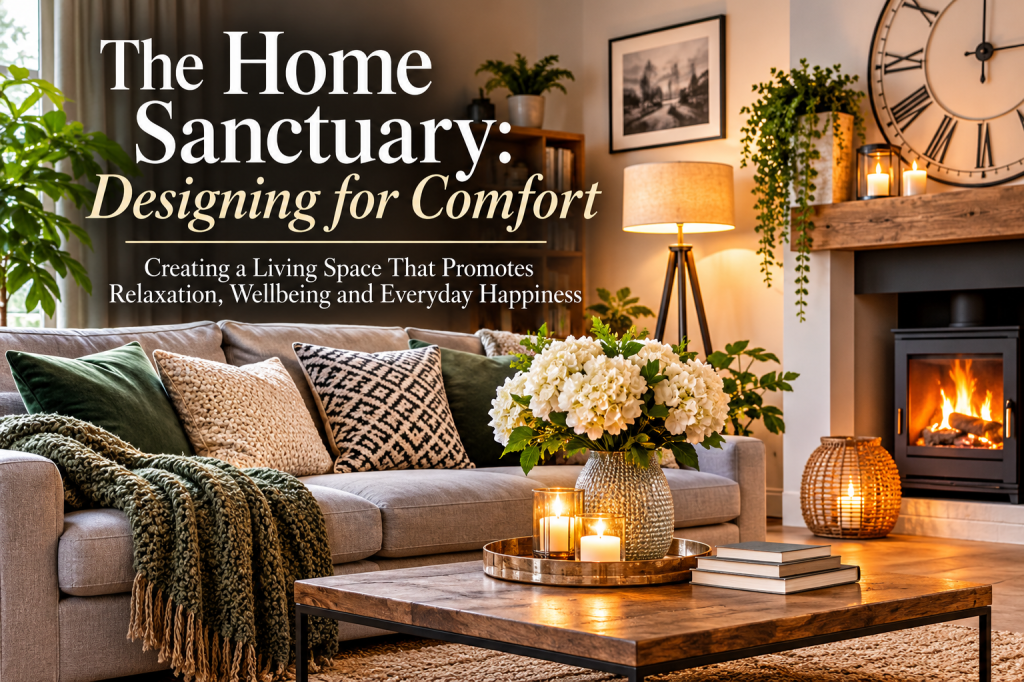
Creating a Living Space That Promotes Relaxation, Wellbeing and Everyday Happiness
Our homes have always been more than simply places to sleep, eat and store our belongings. They are personal spaces where we retreat from the outside world, spend time with loved ones and find moments of peace amid the demands of everyday life. Increasingly, people are recognising the importance of creating homes that offer more than visual appeal. Comfort, atmosphere and wellbeing are becoming central to the way we think about interior design.
The idea of the home sanctuary reflects this changing approach. Rather than concentrating solely on fashionable furniture or the latest interior trends, it is about creating an environment that feels welcoming, calming and genuinely suited to the people who live there.
Understanding the Home Sanctuary
A home sanctuary does not necessarily mean an expensive renovation, a large property or perfectly coordinated interiors. It is about understanding how a living environment influences everyday experiences.
For some, it might be a comfortable reading corner with a favourite chair and good lighting. For others, it could be a peaceful bedroom, a welcoming living room or a kitchen designed to bring family and friends together.
The underlying principle is simple: a home should support the lifestyle, needs and personalities of its occupants.
The Importance of Colour and Atmosphere
Colour plays an important role in how we experience our surroundings. Interior designers frequently use softer, natural colour palettes to create environments that feel relaxed and harmonious.
Neutral shades such as cream, beige, warm grey and soft white can provide a versatile foundation. Meanwhile, natural greens, muted blues and earthy tones can introduce additional character without overwhelming a room.
This does not mean that every comfortable home needs to be decorated in neutral colours. Personal expression remains important, and carefully chosen stronger colours can give a space individuality.
The key is finding a balance between visual interest and an atmosphere that feels comfortable to spend time in.
Lighting: Creating the Right Environment
Lighting is another important consideration when designing a comfortable home.
Natural daylight can make rooms feel brighter and more welcoming, while access to daylight is also relevant to maintaining healthy daily sleep and wake patterns.
Artificial lighting should be equally carefully considered. Relying entirely on bright overhead lighting can make some rooms feel less inviting, particularly during the evening.
Table lamps, floor lamps and softer accent lighting provide opportunities to create different atmospheres depending on the time of day and the activity taking place.
A well-lit home is not necessarily the brightest home. It is one where lighting serves a practical purpose while contributing to the overall atmosphere.
Comfort Through Furniture and Textures
Furniture should look attractive, but its practical function should never be overlooked.
A comfortable sofa, supportive mattress and well-designed seating can make a significant difference to everyday living. Choosing furniture that suits the proportions of a room also helps maintain a sense of space and movement.
Textures can further influence how welcoming a home feels. Soft cushions, blankets, rugs, natural fabrics and comfortable upholstery introduce warmth and visual depth.
Combining different materials, such as wood, cotton, wool and linen, can create an interior that feels more personal and less like a showroom.
Bringing Nature Indoors
The relationship between our living spaces and the natural environment is another important aspect of contemporary interior design.
Houseplants can introduce colour, texture and a connection to nature. Depending on the species, some plants can also help improve the appearance of indoor spaces, although they should not be considered a substitute for proper ventilation.
Natural materials, wooden furniture, stone finishes and botanical decorations can also help create a more organic atmosphere.
Even small touches, such as fresh flowers or a view of a garden, can make a room feel more connected to the outdoors.
Decluttering and Creating Space to Breathe
A comfortable home is not necessarily a minimalist one, but organisation can make everyday living considerably easier.
Excessive clutter can make rooms feel crowded and reduce the practicality of available space. Finding suitable storage solutions, organising everyday belongings and keeping frequently used areas accessible can help create a more manageable environment.
However, creating a sanctuary should not mean removing everything that makes a home personal.
Photographs, books, artwork, treasured possessions and meaningful decorations all contribute to a sense of identity. The objective is not to create an empty space, but one where personal belongings have a place and purpose.
Designing for Different Lifestyles
There is no universal formula for a comfortable home because people have different routines, interests and priorities.
Someone who works from home may benefit from a dedicated workspace with appropriate lighting and comfortable seating. A family might prioritise practical storage, flexible living areas and spaces where everyone can spend time together.
For someone who enjoys reading, music or creative hobbies, a dedicated corner for those activities could become an important part of the home.
The most successful interiors are often those that reflect how people actually live rather than simply following what is fashionable.
Comfort Does Not Have to Be Expensive
Creating a more comfortable home does not have to involve significant financial investment.
Small, thoughtful changes can make a noticeable difference. Rearranging furniture, introducing softer lighting, adding cushions, improving storage or bringing in a few plants can help refresh an existing space.
Before purchasing new furniture or undertaking expensive improvements, it is worth considering what already works and what could be changed.
Sometimes, the most effective transformation comes from making better use of what is already available.
The Home as a Reflection of Wellbeing
Our surroundings form part of our everyday experiences, influencing how we relax, work, socialise and spend our leisure time.
Although interior design alone cannot guarantee better mental or physical wellbeing, creating a comfortable, practical and welcoming environment can support routines that contribute to a more balanced lifestyle.
A peaceful bedroom may encourage a more consistent bedtime routine. An inviting living room can encourage people to put down their devices and spend time together. A comfortable reading space might provide an opportunity to slow down and enjoy a quieter activity.
These everyday details are often more meaningful than the latest interior design trend.
Final Thoughts
The home sanctuary is ultimately about creating a space that feels right for the people who live within it.
It does not require designer furniture, expensive decorations or an immaculate interior. Instead, it comes down to thoughtful choices, personal touches and an understanding of what makes everyday life more comfortable.
As lifestyles continue to evolve, the importance of having somewhere to retreat, recharge and reconnect should not be underestimated.
A home should be more than somewhere we simply return to at the end of the day. It should be a place where we feel comfortable being ourselves.
Because true comfort is not about how a home looks to the outside world. It is about how it makes us feel when we walk through the door.









Leave a Reply