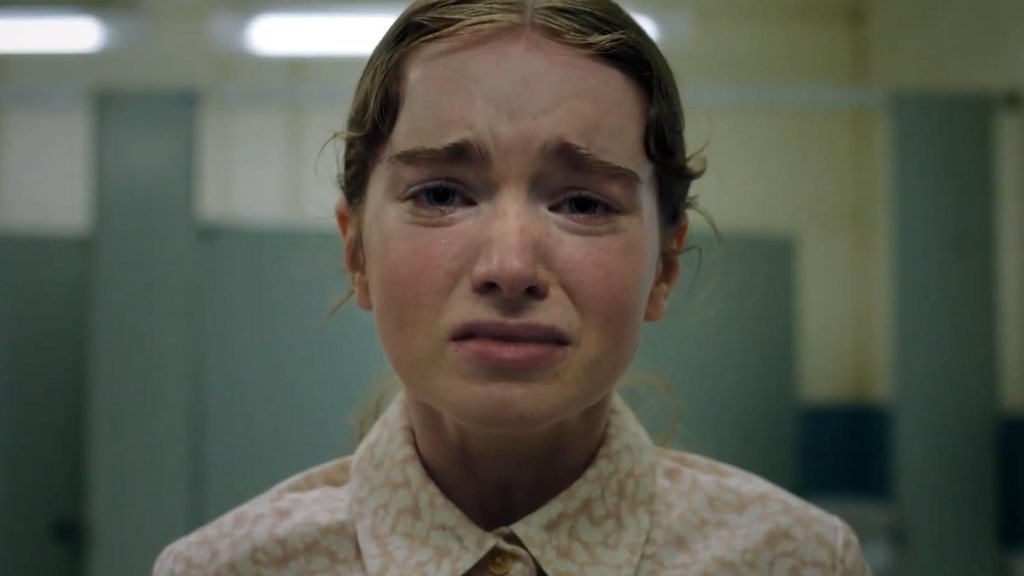
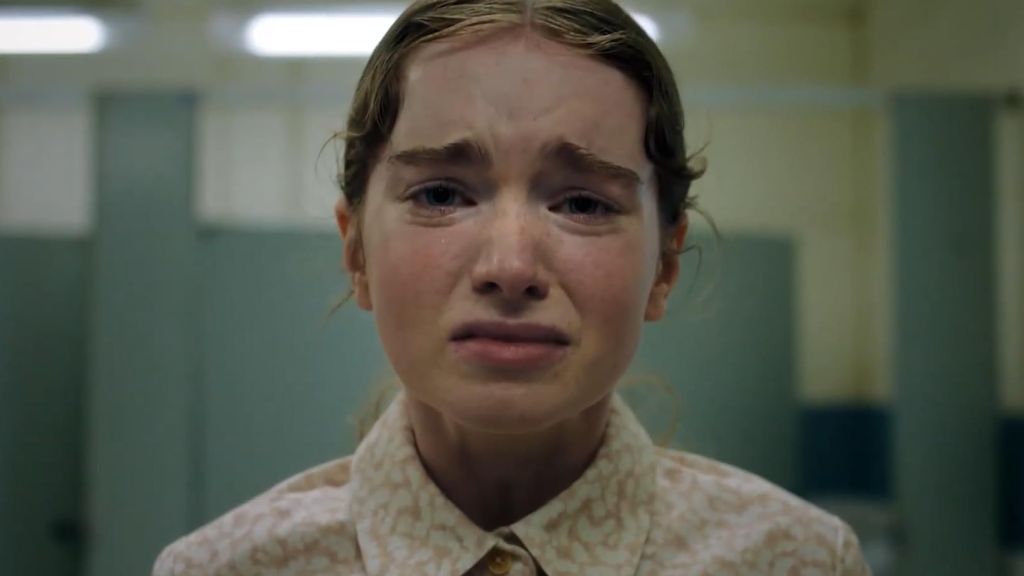
The Carrie miniseries on Amazon Prime offers a disturbing and thought-provoking exploration of bullying, social exclusion and the cruelty that can emerge when someone struggles to fit into society’s expectations. Based on Stephen King’s acclaimed 1974 novel, the story centres on Carrie White, a young woman whose sheltered upbringing, lack of social experience and differences from her peers leave her vulnerable in a world that often responds to individuality with ridicule rather than understanding.
At its heart, Carrie is more than a supernatural horror story. It is a tragic examination of what can happen when a person who desperately wants acceptance is repeatedly made to feel that they do not belong.
The Cruelty of School Life
One of the story’s most unsettling themes is the cruelty Carrie experiences at school. Instead of finding friendship, support and the opportunity to develop confidence, she becomes a target for humiliation. Her classmates treat her differences as reasons to mock and isolate her, turning an environment that should encourage personal growth into a source of fear and anxiety.
The bullying depicted in Carrie highlights how easily a group can single out someone who does not understand the unwritten social rules that others take for granted. Rather than offering patience or kindness, those around Carrie often exploit her vulnerability for entertainment or social approval.
The story also raises important questions about bystanders. Cruelty is not sustained solely by those who initiate it; it can also flourish when others laugh along, remain silent or allow humiliation to become normal. In this respect, Carrie remains relevant to conversations about school bullying, peer pressure and the lasting emotional consequences of being made to feel different.
Trying to Find a Place in the World
Perhaps the most tragic aspect of Carrie’s story is her desire to experience the ordinary milestones of life. She wants to participate, form connections, discover who she is and experience the excitement of stepping beyond the narrow boundaries of her everyday existence.
For someone who has spent much of her life feeling isolated, these seemingly simple experiences can require enormous courage. Going to a social event, interacting with unfamiliar people or allowing oneself to hope for acceptance can represent a significant personal risk.
Carrie’s attempt to experience life outside her comfort zone reflects a universal human desire: to be seen, understood and accepted without having to become somebody else.
Yet the story demonstrates how painful it can be when that vulnerability is met with exploitation. When someone who already feels excluded takes the risk of opening themselves up to the world, the response they receive can profoundly influence their sense of self-worth and their willingness to trust others.
When Society’s Cruelty Extends Beyond School
The tragedy of Carrie is not limited to the school environment. The story also explores the wider social pressures that surround her, including the judgement, fear and intolerance that can accompany difference.
School may be the most immediate setting for Carrie’s humiliation, but the underlying problem is broader. Society frequently places pressure on individuals to conform to expectations concerning appearance, behaviour, confidence, social ability and what is considered normal.
Those who do not fit comfortably within these expectations can find themselves misunderstood or treated as outsiders. Sometimes this exclusion is obvious, expressed through insults and public humiliation. At other times, it is more subtle, appearing through dismissive attitudes, uncomfortable reactions or the assumption that somebody who behaves differently is somehow less deserving of respect.
Carrie’s experiences encourage viewers to consider how people are treated when they step into unfamiliar social spaces and attempt to participate in a world that has repeatedly made them feel unwelcome.
The story also reminds us that people rarely know the full circumstances behind another person’s behaviour. What appears unusual to an outsider may be connected to a lifetime of isolation, fear, difficult experiences or a lack of opportunities to develop confidence. Judging someone without understanding their circumstances can deepen the very exclusion they are trying to overcome.
The Power of Humiliation and the Consequences of Exclusion
The series becomes particularly compelling when viewed through the relationship between cruelty and power. For some of Carrie’s peers, humiliating her is a way to strengthen their own social standing. By making another person feel small, they temporarily reinforce their own position within the group.
This behaviour reflects a familiar aspect of human social dynamics: the desire to belong can sometimes encourage people to participate in acts of cruelty they might otherwise question. When popularity and acceptance become more important than empathy, another person’s suffering can be dismissed as unimportant.
The series also brings this theme into the modern world through its exploration of social media and public humiliation. In an age when embarrassing moments can be recorded, shared and viewed by enormous audiences, bullying can follow its target far beyond the school gates. What was once a humiliating incident among classmates can become a public spectacle, making it increasingly difficult for the victim to find a place of safety.
By extending Carrie’s experiences into this contemporary environment, the adaptation gives an established story renewed relevance.
A Tragedy That Encourages Reflection
One of the strengths of Carrie is that it invites audiences to consider the circumstances that contribute to its central character’s suffering without suggesting that pain automatically excuses every action that follows.
Carrie is a victim of sustained cruelty, but the story is also concerned with the frightening consequences of accumulated humiliation, fear and isolation. Her supernatural abilities give the horror a dramatic dimension, yet the emotional foundations of the narrative are recognisably human.
The most disturbing question is not simply what Carrie is capable of doing, but how differently her life might have unfolded if the people around her had shown greater compassion. What if her attempts to connect with others had been met with encouragement rather than ridicule? What if someone had recognised her vulnerability and chosen to intervene?
These questions give the series much of its emotional weight. They challenge viewers to look beyond the spectacle of horror and consider the human choices that help create the conditions in which tragedy develops.
Final Verdict
The Carrie miniseries on Amazon Prime is a powerful and worthwhile adaptation that brings fresh attention to the enduring themes of Stephen King’s story. Led by Summer H. Howell as Carrie White, the series explores the painful consequences of social exclusion, the pressures of conformity and the vulnerability of someone attempting to discover life beyond the limits of their upbringing. Its eight-episode format also allows the story to explore its characters and social environment in greater depth.
What makes Carrie particularly effective is its reminder that cruelty is not always committed by obvious villains. It can be found in everyday interactions, casual remarks, group behaviour and the decision to treat somebody as less deserving of dignity simply because they are different.
Carrie’s desire to experience friendship, romance and ordinary social life is understandable. Her tragedy lies partly in the fact that she approaches these experiences with a vulnerability that others repeatedly exploit. Rather than finding the acceptance she seeks, she encounters a world in which her differences become a source of entertainment and humiliation.
Ultimately, Carrie asks an important question about the society we create: How can we expect people to find their place in the world when we punish them for being different the moment they try?
It is a question that extends well beyond horror television. Whether in school, the workplace or public life, people should not have to disguise their individuality or conform to every social expectation to deserve kindness and respect.
For all its supernatural horror, Carrie delivers a deeply human message. Acceptance can change a person’s life, while sustained cruelty can leave wounds that are far more profound than those visible on the surface. The series serves as a compelling reminder that empathy is not a weakness, difference is not a defect, and the way we treat those who struggle to fit in says as much about society as it does about the individuals we judge.
Carrie is therefore more than a story about horror and revenge. It is a cautionary tale about the consequences of exclusion and a timely reminder that sometimes the smallest act of kindness can make the greatest difference.









Leave a Reply