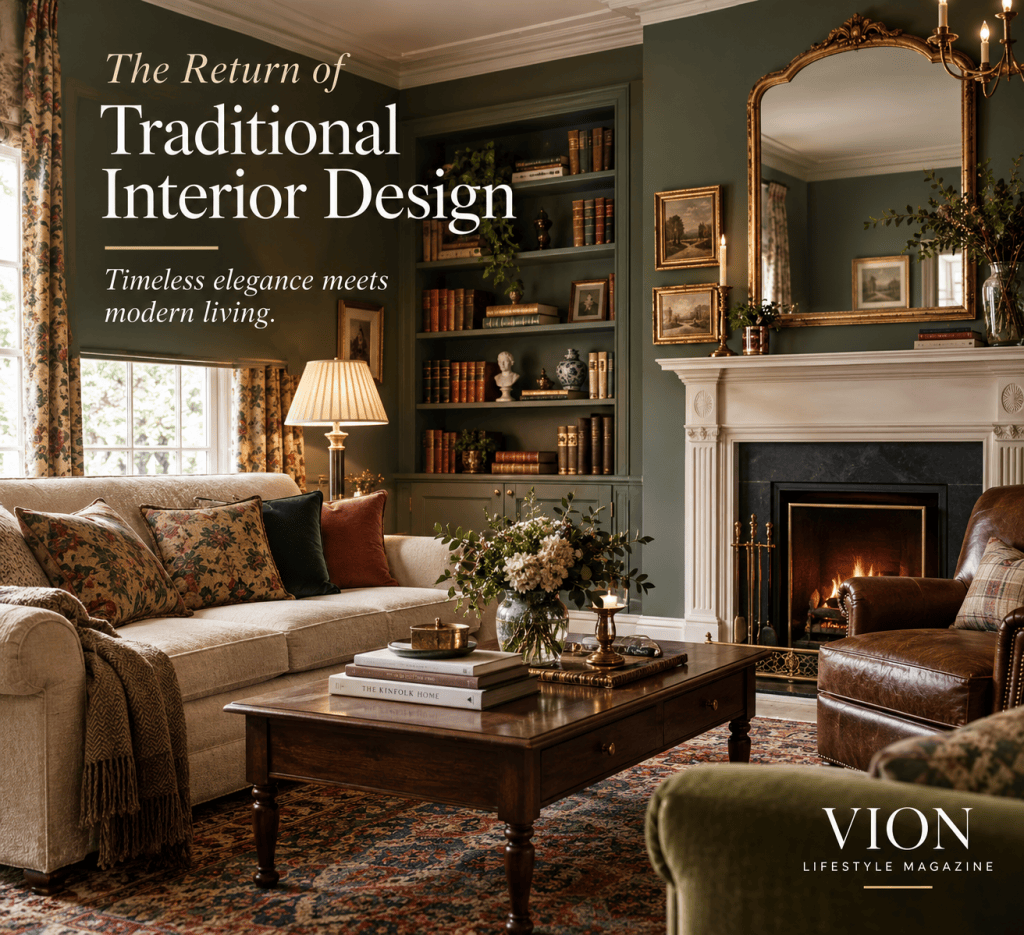
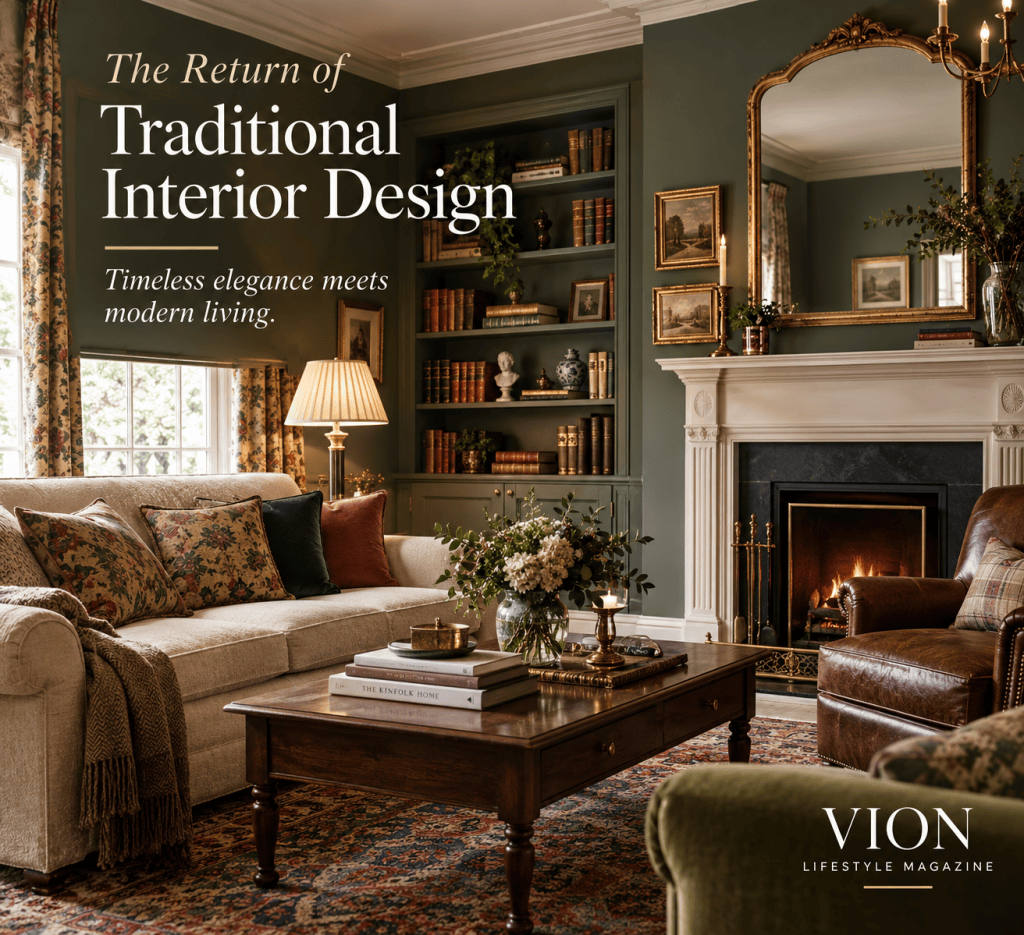
For years, contemporary interiors have been influenced by minimalism, neutral colour palettes and clean, uncluttered spaces. However, traditional interior design continues to attract renewed appreciation, offering homeowners a way to bring warmth, character and a sense of history into modern living spaces.
Rather than simply recreating the interiors of the past, today’s approach to traditional design often combines classic decorative elements with the comfort and practicality expected of modern homes. The result is an interior style that feels considered, welcoming and enduring.
A Renewed Appreciation for Classic Design
Traditional interior design draws inspiration from established decorative styles, often incorporating symmetry, detailed woodwork, elegant furniture, patterned fabrics and carefully chosen accessories. Depending on the period or influence, it can include anything from Georgian-inspired proportions and Victorian detailing to country-house charm and more formal European interiors.
One of its defining characteristics is its emphasis on craftsmanship. Furniture with carved details, solid wood finishes, decorative mouldings and traditional joinery can bring depth and individuality to a room. These features also celebrate the skill involved in creating objects intended to be enjoyed for many years.
In an age when many interiors can look remarkably similar, traditional design offers an opportunity to create spaces with a more distinctive identity.
Rich Colours and Layered Textures
Colour plays an important role in traditional interiors. While pale neutrals remain popular, classic design also embraces deeper shades such as forest green, burgundy, navy blue, warm brown and muted gold. These colours can create a feeling of richness without requiring every element of a room to be elaborate.
Wallpaper, curtains, upholstered furniture, rugs and cushions introduce additional layers of texture and pattern. Floral prints, stripes, damask-inspired designs and other heritage patterns can provide visual interest when balanced with simpler surfaces and complementary colours.
The key is not to fill every available space with decoration, but to create a harmonious arrangement in which individual elements work together.
Furniture Built Around Character and Longevity
Traditional furniture often places greater emphasis on enduring forms than short-lived trends. Wooden dining tables, upholstered armchairs, bookcases, sideboards and classic sofas can serve as practical foundations for a room while contributing to its overall character.
Antique and second-hand furniture also has a natural place within this style. Older pieces may feature craftsmanship, materials or decorative details that are difficult to replicate in mass-produced alternatives. Choosing pre-owned furniture can also extend the useful life of existing items and reduce the need to purchase everything new.
Importantly, traditional interiors do not require a complete collection of antiques. A single vintage cabinet, an inherited dining table or a beautifully made armchair can introduce a sense of history into an otherwise contemporary home.
The Influence of Heritage and Personal History
Part of the appeal of traditional interior design lies in its connection to memory and heritage. Family photographs, treasured books, framed artwork, ceramics and objects collected over time can make a home feel personal rather than simply decorated.
This approach encourages people to display items that have meaning to them. Instead of following a uniform showroom aesthetic, a room can develop gradually as its owners discover pieces that reflect their interests, experiences and tastes.
Traditional design is particularly well suited to this way of living because it welcomes a mixture of ages, materials and influences. When thoughtfully arranged, older possessions can sit comfortably alongside modern lighting, contemporary artwork and everyday technology.
Traditional Design in the Modern Home
One of the most appealing aspects of traditional interiors is their ability to adapt to contemporary lifestyles. A home does not need to resemble a historic mansion to benefit from classic design principles.
In a modern living room, traditional furniture might be paired with understated lighting and a contemporary rug. A kitchen could combine Shaker-style cabinetry with modern appliances, while a bedroom might feature a classic upholstered headboard, soft lighting and layered bedding.
This balance allows homeowners to enjoy the visual richness of traditional design without sacrificing convenience. It also means that the style can work in different types of properties, from period houses and country cottages to modern apartments.
The growing interest in heritage-inspired interiors reflects a wider appreciation for homes that feel individual, comfortable and connected to the people who live in them. Recent interior design coverage has highlighted renewed interest in vintage furniture, decorative details, richer wood tones and interiors that combine old and new. <Cite refs={[“turn583560search1″,”turn583560search0”]}/>
Sustainability and the Value of Reusing Furniture
Traditional interior design can also complement a more considered approach to consumption. Rather than replacing furniture whenever tastes change, homeowners can restore, reupholster or repurpose existing pieces.
Antique shops, charity shops, second-hand marketplaces and family collections can all provide opportunities to discover furniture and decorative objects with character. Reusing an existing piece can extend its lifespan and reduce the demand for newly manufactured alternatives, although the environmental benefits depend on factors such as transport, restoration materials and the condition of the item.
This approach encourages people to make thoughtful purchases, prioritising quality, usefulness and personal meaning over constantly changing trends.
Creating a Traditional Interior Without Overdoing It
For anyone interested in introducing traditional design into their home, small changes can make a significant difference.
- Introduce natural materials: Wood, stone, wool, linen and cotton can add texture and warmth.
- Choose furniture with character: A traditional sideboard, wooden dining table or upholstered armchair can establish the look without transforming an entire room.
- Experiment with colour: Deep greens, warm creams, earthy browns and muted blues can create a classic atmosphere.
- Celebrate architectural details: Where appropriate, picture rails, decorative mouldings, panelled walls and traditional-style doors can add depth.
- Mix old with new: Contemporary lighting, modern artwork and practical technology can keep the space feeling current.
- Decorate with personal meaning: Books, artwork, family photographs and collected objects help create an interior that reflects individual taste.
The most successful traditional interiors are not necessarily the most expensive. Careful choices, thoughtful arrangements and an appreciation for existing possessions can be just as important as the furniture itself.
Why Traditional Interior Design Endures
Design fashions will continue to evolve, but traditional interiors offer qualities that extend beyond temporary trends. Their emphasis on craftsmanship, layered materials, familiar forms and personal history creates opportunities for homes to develop naturally over time.
Traditional design is also flexible. It can be formal or relaxed, richly decorated or relatively restrained, and influenced by different periods and cultures. There is no single formula that every home must follow.
Ultimately, the return of traditional interior design is not simply about looking backwards. It is about recognising the value of what has endured and finding ways to make it relevant to everyday life.
By combining classic furniture, thoughtful decoration and modern comfort, homeowners can create spaces that feel welcoming, distinctive and personal. In a world where trends can change quickly, there is something reassuring about an interior designed to be enjoyed for years rather than seasons.
Vion Lifestyle Magazine — celebrating the ideas, interiors and everyday choices that shape the way we live.









Leave a Reply