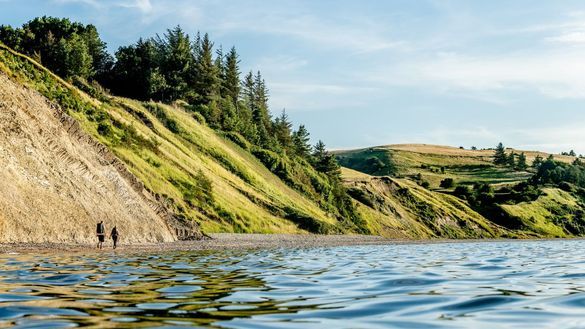
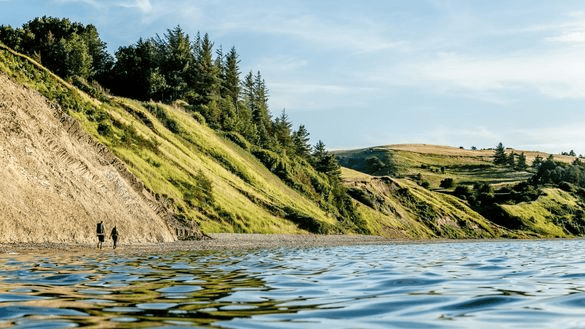
From Denmark’s windswept coastlines and more than 400 islands over Finland’s vast Lakeland and the summer landscapes of Lapland to Norway’s vibrant cities, local food and spectacular shoulder-season landscapes, the Nordic countries offer tour operators a wealth of opportunities to take travellers beyond the familiar.
At World Travel Market London, VisitDenmark, Visit Finland and Visit Norway are encouraging the travel trade to look beyond the best-known experiences and develop itineraries that showcase the breadth of the region, from slow travel and soft adventure to wildlife, wellness, culture, food and the great outdoors.
For Denmark, that means looking beyond Copenhagen to discover the country’s diverse regions, islands and coastal landscapes. In Finland, its going beyond the traditional winter Lapland experience and discovering the country during its spectacular summer and autumn seasons, as well as embracing one of Finland’s most enduring cultural traditions: the sauna. And in Norway, it’s about exploring further than the iconic fjords to discover vibrant cities, local food, culture and destinations that can be enjoyed throughout the year.
Denmark: Beyond Copenhagen
Copenhagen is the natural starting point for a trip to Denmark, but VisitDenmark is encouraging tour operators to venture further afield, and discover the countryside and smaller cities, which can easily be combined with Copenhagen.
From the windswept coastline and dramatic landscapes of North Jutland to the rolling countryside and charming towns of Funen, Denmark offers a surprising variety of experiences within a relatively small geographical area. With more than 400 islands, three international airports in mainland Jutland and extensive road, rail and ferry connections, travellers can easily combine Copenhagen with lesser-known destinations or build an itinerary entirely around exploring Denmark beyond its capital.
“Denmark’s size is one of its greatest advantages for international visitors,” says Ninna Seerup, Head of Travel Trade for VisitDenmark. “It is possible to experience Copenhagen and then be in a completely different landscape within a couple of hours. For tour operators, this creates opportunities to develop itineraries that combine city, coast, culture, food and outdoor experiences without long travel times.”
Capital, castles and countryside
Copenhagen provides an ideal base for exploring Zealand’s cultural and natural highlights. Just 45 minutes north of the capital, Kronborg Castle in Elsinore, the setting for Shakespeare’s Hamlet and a UNESCO World Heritage Site, offers a glimpse into Denmark’s royal history. Nearby Frederiksborg Castle, Denmark’s official museum of national history, sits on three islands in a lake surrounded by formal gardens. While the Danish Riviera, stretching along Zealand’s north coast, combines picturesque seaside villages, beaches, coastal hotels, culinary experiences and water sports. For active travellers, Camp Adventure in South Zealand offers Denmark’s largest climbing park and the spectacular Forest Tower, while nearby Møns Klint, which was inscribed as a UNESCO World Heritage Site in 2025, is famed for its towering white chalk cliffs rising from the Baltic Sea and an emerging wine scene.
Aarhus and Denmark’s outdoor heartland
Further west, Aarhus, Denmark’s second-largest city, offers another base for combining culture and the great outdoors. Main attractions include the Latin Quarter, Den Gamle By and the ARoS Aarhus Art Museum with its new art installation ‘As Seen Below – The Dome’, a Skyspace by James Turrell.
From here, travellers can continue to Silkeborg, Denmark’s outdoor capital, surrounded by forests and lakes; ideal for hiking, cycling, canoeing and exploring the Gudenå, the country’s longest river. For longer itineraries, Skagen, at the northern tip of Jutland, is around six hours from Copenhagen and offers the chance to stand at Grenen, where the Skagerrak and Kattegat seas meet. Jutland also provides easy links to Germany, while ferry connections to Norway and Sweden make Denmark a natural starting point for wider Nordic itineraries.
Discover Funen and its islands
Between Zealand and Jutland, Funen offers another reason to venture beyond Denmark’s best-known destinations. Odense, the birthplace of fairytale writer, Hans Christian Andersen, is home to the H.C. Andersen Museum, while Egeskov Castle, one of Europe’s best-preserved Renaissance water castles, is a highlight for families and culture lovers. The island also offers the unique experience of bridgewalking across the top of the Great Belt Bridge. Beyond the main island, the South Funen Archipelago encompasses more than 90 islands and islets, including Ærø and Langeland, where visitors can enjoy a slower pace of life, coastal scenery, cycling, charming villages and a distinctive island culture.
Finland: Beyond Winter Lapland
“Finland is often synonymous with snowy Lapland, huskies and the Northern Lights,” says Asta Kekkonen, Area Manager, UK and USA VisitFinland, “but we are encouraging tour operators to discover a very different side of the country, particularly during the summer and autumn months. From the thousands of lakes and forests of Finnish Lakeland to the endless daylight of northern Lapland and our deep-rooted sauna culture, there are opportunities for year-round itineraries combining nature, wellbeing, wildlife and authentic cultural experiences.”
Finnish Lakeland: 188,000 lakes and the art of slowing down
Beyond the familiar image of winter Lapland lies a country shaped by water, forests and space. Finland has around 188,000 lakes, with Finnish Lakeland forming Europe’s largest lake district — a vast landscape of blue waterways, forests and islands that invites travellers to slow down and reconnect with nature. From summer swimming, kayaking and cycling to autumn foraging and winter ice-skating, Lakeland offers nature, calm and outdoor experiences year-round. Lakeside cottages, saunas, wildlife and small rural communities provide a distinctly Finnish way to experience the country at a gentler pace.
Lapland beyond winter: Midnight Sun, autumn colours and Northern Lights
Lapland is not only a winter destination. In summer, the Midnight Sun transforms the north into a landscape of almost continuous daylight, creating exceptional conditions for hiking, cycling, canoeing and wildlife watching. As summer fades, Ruska, Finland’s spectacular autumn foliage turns the northern landscape into a mosaic of red, gold and orange, while from September the Northern Lights begin to return to the skies.
Together, these seasonal contrasts offer tour operators a way to reposition Lapland as a year-round nature destination, combining Arctic wilderness with Sámi culture, reindeer traditions and the changing rhythms of the north.
Coast & Archipelago: island-hopping, nature and modern Nordic gastronomy
Finland’s maritime side offers another largely unexplored dimension. With more than 50,000 islands, Finland is home to the world’s largest archipelago, stretching along a coastline of historic towns, forests, rocky shores and open sea. Turku is the natural gateway to the archipelago, offering easy access to island-hopping routes, maritime experiences and the distinctive laid-back rhythm of coastal Finland. The region also brings together nature and a new generation of modern Finnish gastronomy, built around local seafood, seasonal ingredients and the flavours of the archipelago.
The Golden Travel Triangle: Helsinki–Tampere–Turku
For a compact introduction to contemporary Finland, Helsinki, Tampere and Turku form a natural travel triangle, connecting urban culture, lakes and the coast — with sauna providing a common thread. Helsinki combines design, gastronomy and a vibrant public sauna culture, while Tampere has been known as the Sauna Capital of the World since 2018, with more than 70 public saunas in the region. From Helsinki’s contemporary urban saunas to Tampere’s lakeside and historic sauna traditions, and onwards to Turku and the archipelago, the triangle offers travellers an opportunity to experience sauna not simply as wellness, but as a living part of Finnish culture.
Norway beyond the fjords
Norway is renowned for its spectacular scenery, but Visit Norway is encouraging tour operators to look beyond the famous fjords and mountains and discover the country’s vibrant cities, culture and local food, particularly when developing shoulder-season and winter itineraries.
“Norway has so much more to offer beyond the classic summer fjord experience,” says Catherine Foster, Market Specialist UK and Ireland Visit Norway. “We have always been known for our spectacular nature, and by combining this with products in our vibrant cities, local cuisine and rich cultural experiences, operators can develop new itineraries and programmes that feel both fresh, authentic and distinctly Norwegian.”
From winter city breaks in Oslo, Bergen, Stavanger and Trondheim to spring journeys through Southern and Fjord Norway, there are opportunities to explore the country at different times of year and at a slower pace.
Trøndelag, centred around Trondheim, offers a particularly satisfying combination of culture, history, nature and food, with culinary experiences ranging from Michelin-starred restaurants to farms, local producers and regional specialities. Spring is also an ideal time to explore Southern Norway and the fjords as the landscape emerges from winter, with coastal communities, islands, forests and outdoor activities providing an alternative to the established summer routes. For tour operators, these experiences offer opportunities to extend the traditional summer season while introducing travellers to lesser-known destinations and a more local side of Norway.
In summer, Northern Norway provides another compelling reason to venture further north, with the Midnight Sun creating almost continuous daylight for several weeks and allowing visitors to hike, kayak, cycle, fish and explore well into the evening. Northern Norway can also be combined with Finnish Lapland to create multi-country itineraries showcasing the Nordic north, while food provides a natural thread throughout a Norwegian journey from seafood and shellfish on the coast to meat, berries, mushrooms and locally grown produce inland. Visit Norway is encouraging tour operators to look beyond the traditional summer fjord itinerary and consider how these experiences can be built into new year-round programmes, helping to broaden their Norwegian product, extend the selling season and give customers fresh reasons to return.
Building multi-country Nordic itineraries
For global tour operators, the opportunity is to look beyond traditional Nordic itineraries and create multi-country journeys that showcase the diversity of the region. Denmark provides easy connections to Norway and Sweden, while Finnish Lapland can be combined with Northern Norway to create a cross-border Arctic adventure. Together, Denmark, Finland and Norway demonstrate that the Nordics are not a single-season destination or simply a collection of iconic landscapes. They offer cities, culture, food, islands, forests, lakes, coastlines, wildlife, wellness and outdoor adventure, experiences that can be combined to create distinctive itineraries throughout the year.
The Nordics – VisitDenmark, Visit Finland and Visit Norway – will be exhibiting at World Travel Market London 2026 on stand S4-520, where tour operators can meet over 40 regional partners* and discover more about creating multi-destination itineraries that go beyond the traditional Nordic highlights and unlock new opportunities for year-round travel.









Leave a Reply