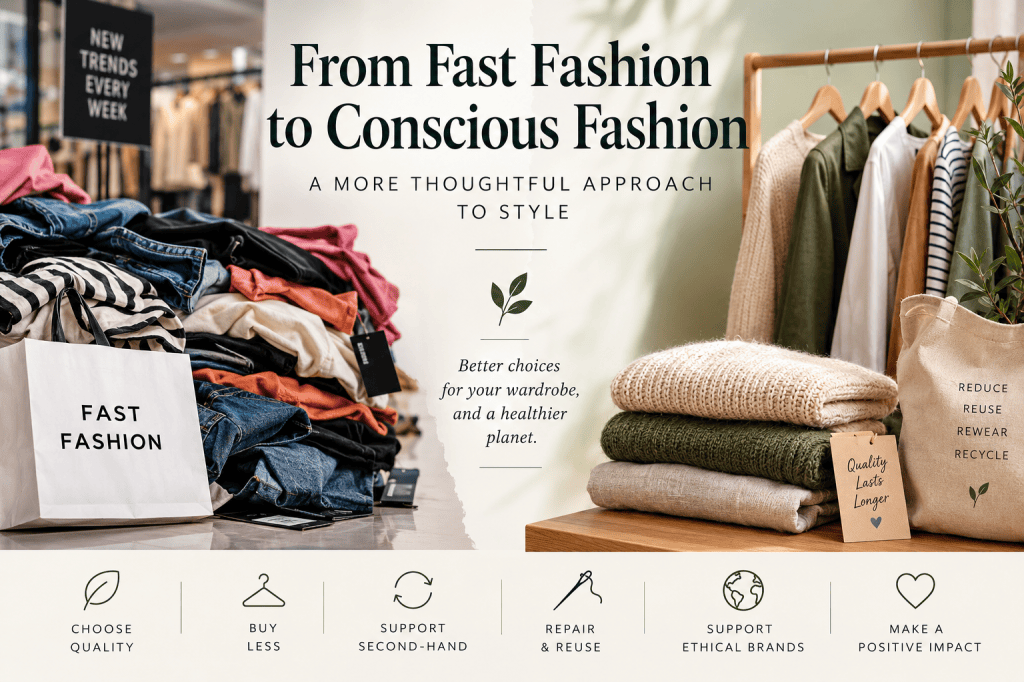
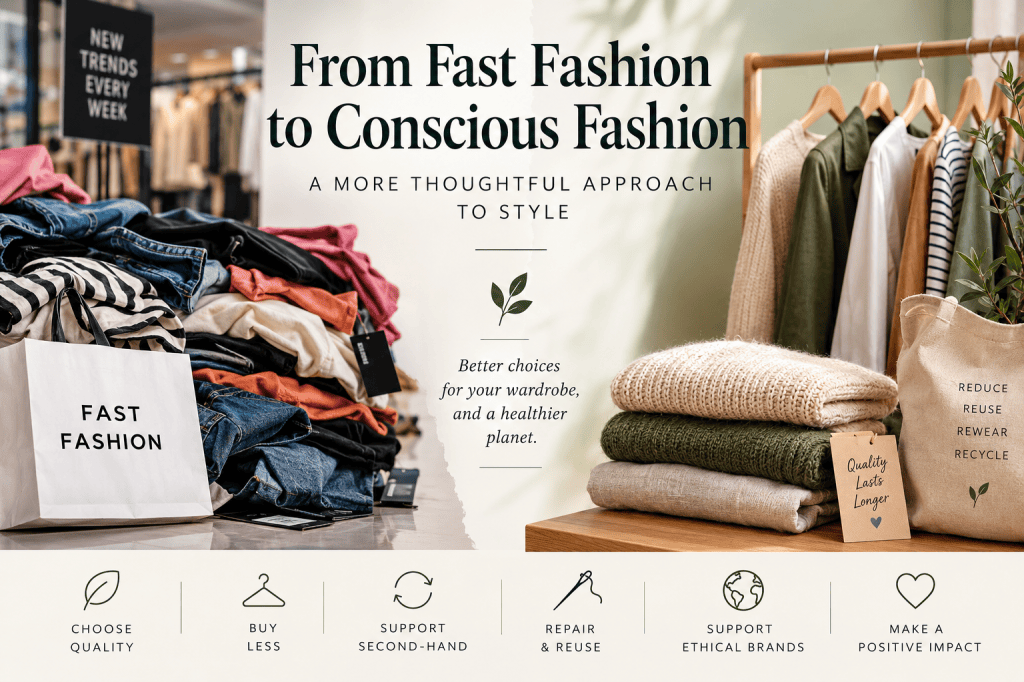
Fashion has always been a powerful form of self-expression, allowing people to communicate their personality, creativity and individuality through the clothes they wear. However, as the fashion industry continues to evolve, growing attention is being given to how clothing is produced, purchased and discarded. The movement from fast fashion towards conscious fashion represents a more thoughtful approach to personal style, one that places greater emphasis on quality, longevity and responsible choices.
Understanding Fast Fashion
Fast fashion is a business model built around producing clothing quickly and selling it at relatively low prices. By responding rapidly to changing trends, retailers can offer consumers new styles throughout the year, making fashionable clothing accessible to a wide audience.
Although this approach has made fashion more affordable, it has also contributed to concerns about textile waste, resource consumption and working conditions within global supply chains. When garments are designed to follow short-lived trends, some may be worn only a handful of times before being discarded.
The environmental impact of clothing extends beyond manufacturing. Growing and processing fibres, dyeing fabrics, transporting products and disposing of unwanted garments all contribute to the industry’s overall footprint. Synthetic fabrics can also release tiny plastic fibres during washing, while discarded textiles may take considerable time to break down, depending on their composition and disposal conditions.
These challenges have encouraged consumers and businesses to reconsider what fashion should look like in the years ahead.
What Is Conscious Fashion?
Conscious fashion is an approach to clothing that considers more than appearance and price. It encourages people to think about the materials used, the conditions in which garments are made, their expected lifespan and what happens when they are no longer needed.
Rather than demanding that everyone abandon affordable clothing or follow a particular lifestyle, conscious fashion promotes more informed decisions. This might involve purchasing fewer items, choosing durable designs, supporting transparent brands or making better use of the clothes already in a wardrobe.
It also recognises that responsible fashion can take different forms. For some people, it means buying second-hand. For others, it means repairing existing garments, choosing versatile pieces or researching a company’s environmental and ethical commitments before making a purchase.
The central idea is simple: clothing can be enjoyed without treating every new trend as a reason to buy something different.
The Return of Quality and Timeless Style
One of the most appealing aspects of conscious fashion is its emphasis on longevity. Well-made garments in classic cuts and versatile colours can remain useful long after seasonal trends have passed.
A carefully chosen jacket, a well-fitting pair of trousers, a quality knitwear piece or a timeless dress can form the foundation of a wardrobe that works across different occasions. These items can be combined in numerous ways, reducing the perceived need to constantly purchase new clothing.
Quality does not always mean buying the most expensive item. Fabric composition, construction, stitching, fit and care requirements can all influence how long a garment remains wearable. Taking the time to assess these details can help consumers make purchases that better suit their needs.
Timeless fashion also offers creative freedom. Developing a recognisable personal style can be more satisfying than continually changing one’s appearance to match the latest trend.
Second-Hand Fashion and the Value of Reuse
Second-hand shopping has become an important part of the wider conversation about conscious fashion. Charity shops, vintage boutiques, resale platforms and clothing exchanges offer opportunities to find distinctive garments while extending the useful life of existing products.
Pre-owned clothing can also make fashion more accessible, allowing people to explore different styles without always paying the price of new items. Vintage pieces, in particular, can introduce individuality into a wardrobe, offering designs and details that may no longer be widely available.
Reusing clothing can help reduce demand for new production, although the overall environmental benefit depends on factors such as purchasing habits, transport and whether second-hand purchases genuinely replace new ones.
Repairing damaged garments, altering items for a better fit and passing unwanted clothes on to others are equally valuable ways to keep clothing in circulation.
Making More Informed Choices
Conscious fashion does not require perfection. In practice, small and consistent changes can make a wardrobe more considered.
Consumers can begin by reviewing what they already own, identifying gaps and avoiding unnecessary purchases. Before buying something new, it can be useful to consider whether the item will work with existing clothes, whether it is comfortable enough to wear regularly and whether it is likely to remain useful over time.
Looking beyond marketing claims is also important. Terms such as sustainable, eco-friendly and responsibly made can be used in different ways, so specific evidence about materials, manufacturing practices and supply-chain standards is more informative than broad promises alone.
Caring for clothing correctly can further extend its lifespan. Following washing instructions, repairing loose buttons, treating stains promptly and storing garments properly can help preserve their appearance and usefulness.
When clothes are no longer needed, donating, reselling, swapping or using appropriate textile collection schemes may offer better alternatives to general waste, depending on the garment’s condition and local facilities.
Fashion with a Greater Sense of Purpose
The movement towards conscious fashion does not mean abandoning creativity, enjoying trends or taking pleasure in shopping. Instead, it invites a more balanced relationship with clothing, where personal expression and practical responsibility can exist together.
Fashion remains an industry driven by imagination, craftsmanship and cultural influence. Designers, retailers and consumers all have a role to play in encouraging better practices, improving transparency and reducing unnecessary waste.
For consumers, the shift can begin with a simple change in perspective: instead of asking only whether a garment looks good today, consider whether it will continue to serve a purpose tomorrow.
A More Considered Future for Fashion
Moving from fast fashion to conscious fashion is not an overnight transformation, nor is there one solution that suits everyone. Affordability, availability, sizing and personal circumstances all influence what people can realistically choose.
Nevertheless, a growing appreciation for durable clothing, second-hand discoveries, timeless design and thoughtful purchasing offers a positive direction for the industry.
Ultimately, a stylish wardrobe does not need to be the largest, newest or most expensive. It can be one built around pieces that reflect personal taste, offer lasting value and are chosen with care.
Conscious fashion reminds us that style is not simply about what we wear. It is also about the decisions behind our choices, the value we place on the things we own and the possibility of enjoying fashion in a more thoughtful way.








Leave a Reply