Fashion has always been closely associated with self-expression, creativity and personal identity. What we wear can communicate everything from our personality and profession to our cultural influences and individual tastes. However, growing awareness of the environmental and social impact of clothing has led to an important question: can people continue to enjoy fashion while making more responsible choices?
The answer increasingly appears to be yes.
Sustainable fashion is not necessarily about abandoning style or following a particular aesthetic. Instead, it is about considering how clothing is produced, purchased, used and eventually disposed of.
Understanding Sustainable Fashion
Sustainable fashion is a broad term covering efforts to reduce the environmental and social impact of clothing throughout its life cycle.
This can include using materials that require fewer resources, reducing waste during manufacturing, improving working conditions, producing garments that are designed to last longer and encouraging consumers to buy fewer items of better quality.
The fashion industry is a significant global industry, employing millions of people and producing billions of garments every year. Its scale means that even relatively small changes in consumer behaviour and production methods can have a considerable cumulative effect.
Quality Over Quantity
One of the simplest ways consumers can approach fashion more sustainably is by reconsidering how often they purchase new clothing.
The rise of fast fashion has made it possible to purchase inexpensive garments quickly and frequently, often in response to rapidly changing trends. While this can make fashion accessible, it can also contribute to overconsumption and clothing waste.
Choosing well-made garments that can be worn repeatedly offers a different approach.
A quality coat, pair of shoes, suit, jacket or knitwear item can remain part of a wardrobe for years when it is properly cared for. Rather than constantly replacing clothing, consumers can build wardrobes around pieces they genuinely enjoy wearing.
Personal Style Rather Than Constant Trends
Sustainable fashion can also encourage a stronger emphasis on personal style.
Trends naturally come and go, but personal style can remain much more consistent. Building a wardrobe around colours, cuts and garments that suit an individual’s lifestyle can reduce the temptation to replace clothing every time a new trend appears.
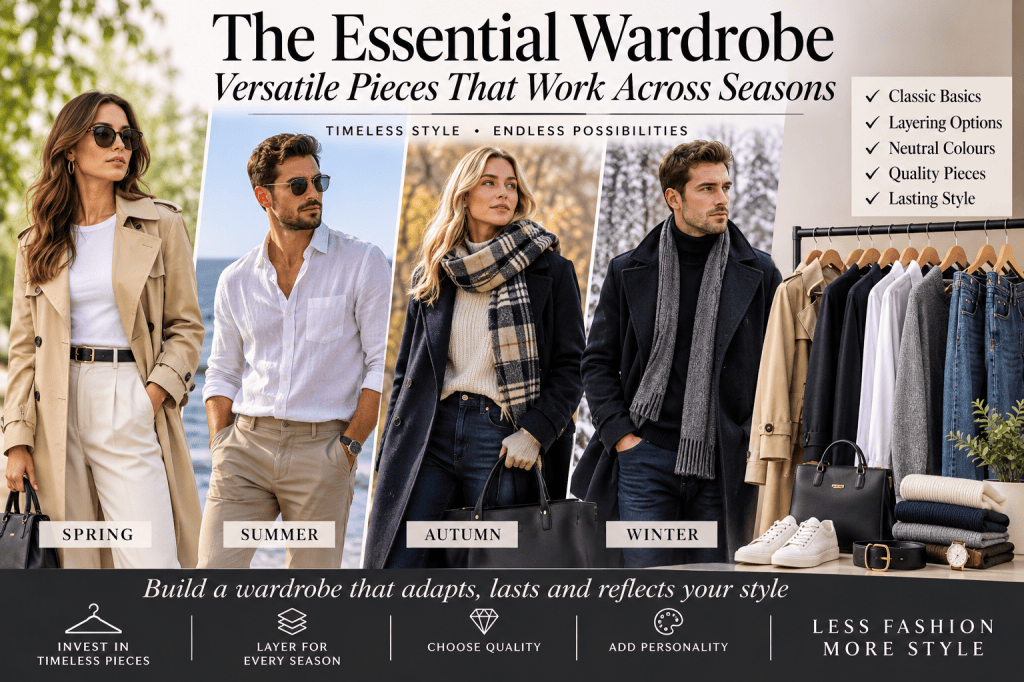
Classic clothing can be particularly useful in this respect. A well-cut jacket, simple shirt, tailored trousers, quality knitwear or timeless footwear can often be combined with different pieces to create multiple outfits.
This approach does not mean that fashion has to become boring. Accessories, textures, colours and occasional new additions can still provide variety without requiring an entirely new wardrobe every season.
The Importance of Looking After Clothes
Sustainability does not end when a garment is purchased.
Washing clothing according to its care instructions, avoiding unnecessary washing, repairing damaged items and storing garments properly can all help extend their useful life.
Simple repairs can make a significant difference. Replacing a button, repairing a seam or having footwear resoled can allow an item to remain useful rather than being discarded.
The longer a garment remains in use, the more value can potentially be obtained from the resources and labour that went into producing it.
Second-Hand Fashion
Buying second-hand clothing is another way of approaching fashion more responsibly.
Charity shops, vintage stores, online marketplaces and clothing exchanges provide opportunities to give existing garments another life. Second-hand shopping can also offer something that mass-produced fashion sometimes lacks: individuality.
Vintage clothing in particular can provide distinctive styles and designs that are not necessarily available in contemporary high-street collections.
For consumers, second-hand fashion can therefore combine sustainability with personal expression.
Materials Matter
The materials used to make clothing are another important consideration.
Different fibres have different environmental characteristics, and the overall impact of a garment depends on factors including how the raw material is produced, how the fabric is manufactured, how the garment is transported and how long it remains in use.
There is therefore no single material that automatically makes a garment completely sustainable.
Instead, consumers can look beyond simple labels and consider the entire life of a product, including its durability, care requirements and expected lifespan.
Fashion and Responsibility Can Coexist
Sustainable fashion does not require people to stop enjoying clothing.
In many respects, it can encourage people to become more thoughtful about what they wear. Instead of seeing clothing as disposable, sustainable fashion promotes the idea that garments have value beyond their initial purchase.
It can mean buying less but choosing more carefully, repairing rather than replacing, exploring second-hand options and developing a wardrobe based on personal style rather than constant consumption.
There is also an important distinction between being fashionable and constantly buying new clothes. Fashion can be creative and expressive without necessarily being disposable.
A More Considered Approach to Style
The future of fashion is likely to involve a combination of creativity, innovation and greater awareness of environmental and social responsibility.
Consumers do not have to choose between looking good and making more considered decisions. The two can coexist.
Ultimately, sustainable fashion is less about perfection and more about making informed choices. Every garment that is worn for longer, repaired instead of discarded or purchased second-hand represents a different approach to consumption.
Style has always been about individuality. Increasingly, responsibility can become part of that individuality too.








Leave a Reply