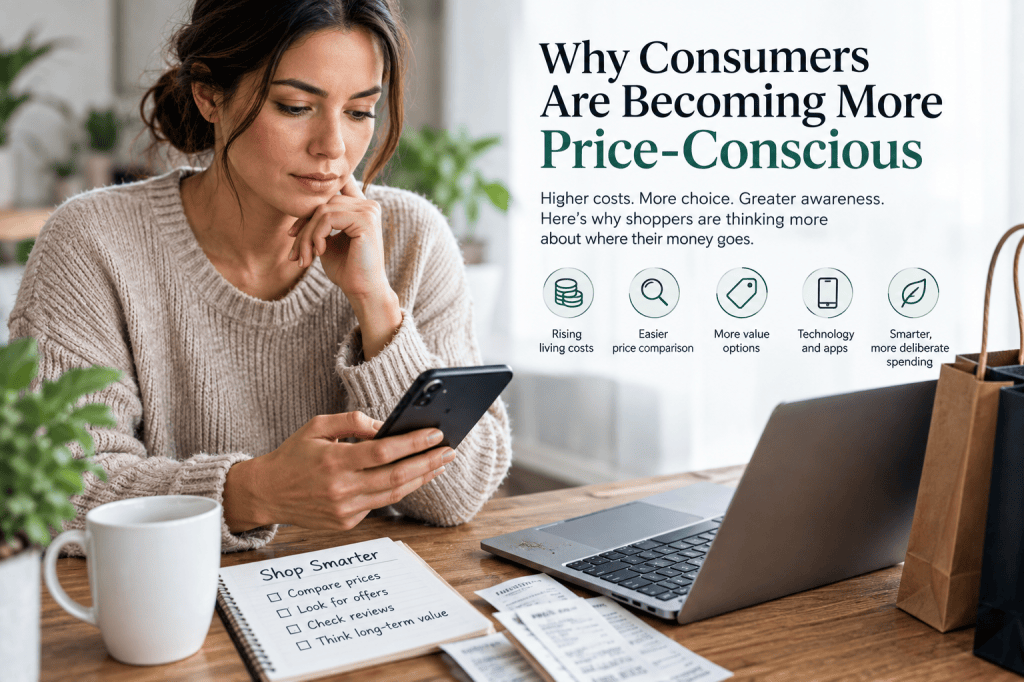
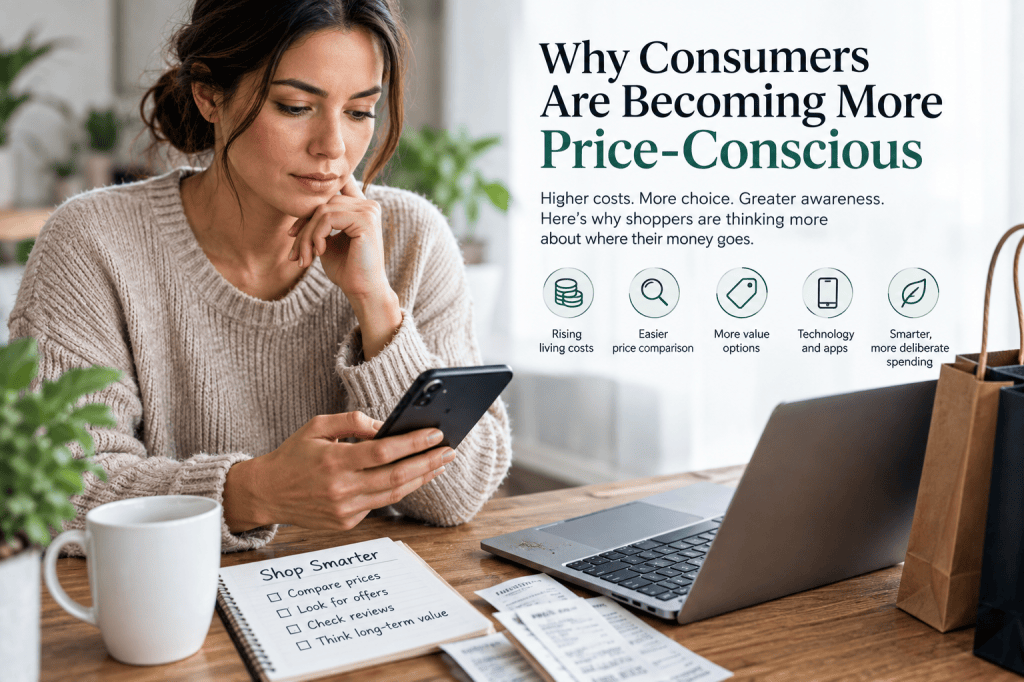
Consumers are becoming increasingly careful about how they spend their money, with price, value and long-term affordability playing a greater role in everyday purchasing decisions.
The shift towards more price-conscious consumption has been influenced by several factors, including higher household costs, changing economic conditions and greater access to information. Rather than automatically choosing familiar brands or premium products, many shoppers are comparing prices, looking for promotions and considering whether a purchase represents genuine value.
The Changing Cost of Everyday Life
Households have faced significant increases in the cost of essentials in recent years, including food, housing, energy, transport and other household expenses. Although the rate at which prices increase can change over time, the higher level of many everyday costs can continue to influence household budgets.
For consumers, this has made discretionary spending more carefully considered. Purchases that might previously have been made without much thought can now involve comparing alternatives or waiting for a discount.
More Comparison Before Buying
The growth of online shopping has made price comparison easier than ever. Consumers can check prices across multiple retailers, search for discount codes and read reviews before making a purchase.
Price comparison is also becoming increasingly common in areas such as groceries, clothing, electronics, travel and household products. Consumers are able to see competing offers within seconds, making it harder for retailers to rely solely on brand familiarity.
Private Labels and Budget Alternatives
One visible consequence of increased price awareness has been greater interest in supermarket own-brand and private-label products.
These products can offer consumers lower prices while covering many of the same everyday needs as branded alternatives. Retailers have also expanded their ranges of premium and value own-brand products, giving shoppers more options at different price points.
The result is a market in which consumers may move between brands depending on price, promotions and perceived quality rather than remaining loyal to one particular product.
Promotions Have Greater Importance
Discounts, loyalty schemes and special offers have become important tools for both retailers and consumers.
Shoppers may increasingly plan purchases around promotional periods, use loyalty-card discounts or buy larger quantities when products are reduced. However, consumer groups and financial experts have also encouraged shoppers to consider whether a promotion represents a genuine saving, particularly when discounts encourage people to purchase products they did not originally intend to buy.
Value Is About More Than Price
Being price-conscious does not necessarily mean always choosing the cheapest option.
Consumers are increasingly considering durability, quality, running costs and how frequently a product will need to be replaced. A more expensive product can sometimes appear better value if it lasts considerably longer or performs better.
This has contributed to a broader focus on the concept of “value for money”. Instead of simply asking how much something costs, shoppers may also ask what they receive in return for that expenditure.
The Role of Technology
Technology has made it easier for consumers to become more informed shoppers. Price-comparison websites, retailer apps, online marketplaces, browser tools and digital loyalty programmes can all help people identify different prices and offers.
Artificial intelligence is also beginning to play a role in shopping, with digital tools increasingly capable of comparing products, summarising reviews and helping consumers identify alternatives.
This greater access to information means consumers can make purchasing decisions with considerably more information than was available to previous generations.
A More Deliberate Approach to Spending
The growing focus on price does not necessarily mean consumers have stopped spending. Instead, spending habits are becoming more deliberate.
People may continue to spend on travel, entertainment, clothing, technology and dining out, but they can be more selective about where their money goes. Some consumers are willing to spend more on products or experiences they consider important while cutting costs elsewhere.
This approach reflects a wider change in consumer behaviour: the emphasis is increasingly on getting meaningful value from limited household budgets.
What It Means for Businesses
Greater price awareness creates challenges for businesses, particularly those operating in highly competitive markets.
Companies may need to demonstrate clearly why their products justify their prices. Quality, customer service, convenience, sustainability, durability and brand reputation can all become important factors when consumers are deciding whether to pay more.
For retailers, understanding changing price sensitivity is also becoming increasingly important. Consumers have more alternatives available to them, and switching between retailers can often be as simple as opening another website or visiting another store.
A More Selective Consumer
The rise of price-conscious shopping represents a broader change in the relationship between consumers and their money.
Shoppers are not necessarily abandoning brands or higher-priced products altogether. Instead, many are becoming more selective, researching purchases more carefully and placing greater emphasis on value.
As household budgets, technology and retail competition continue to evolve, price awareness is likely to remain an important influence on consumer behaviour. The modern shopper increasingly has both the motivation and the tools to ask a simple question before spending: Is this worth the price?









Leave a Reply