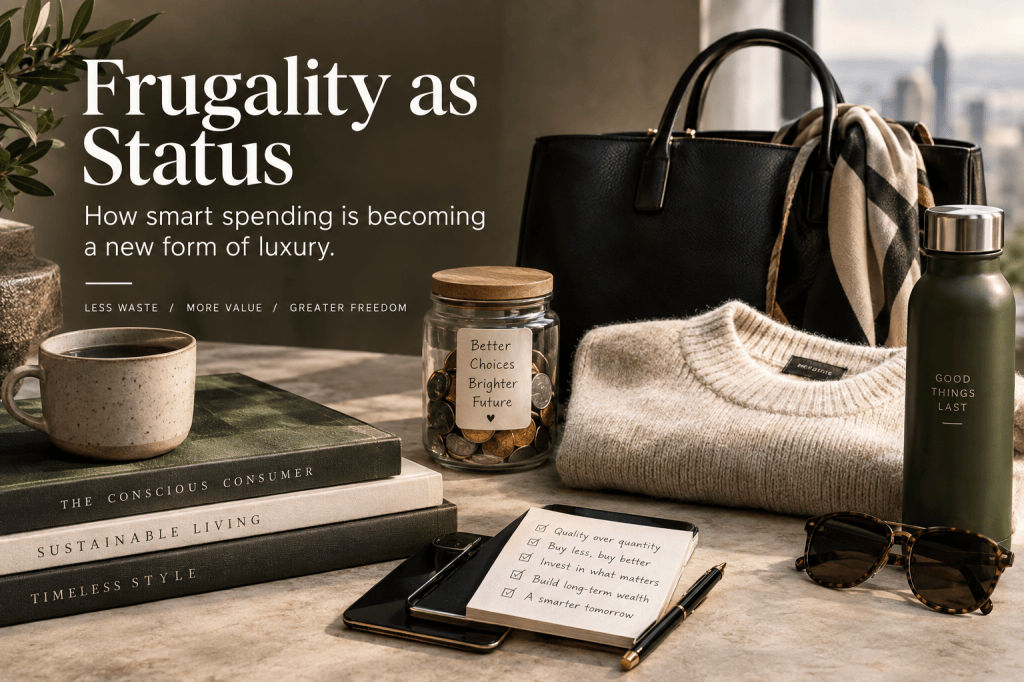
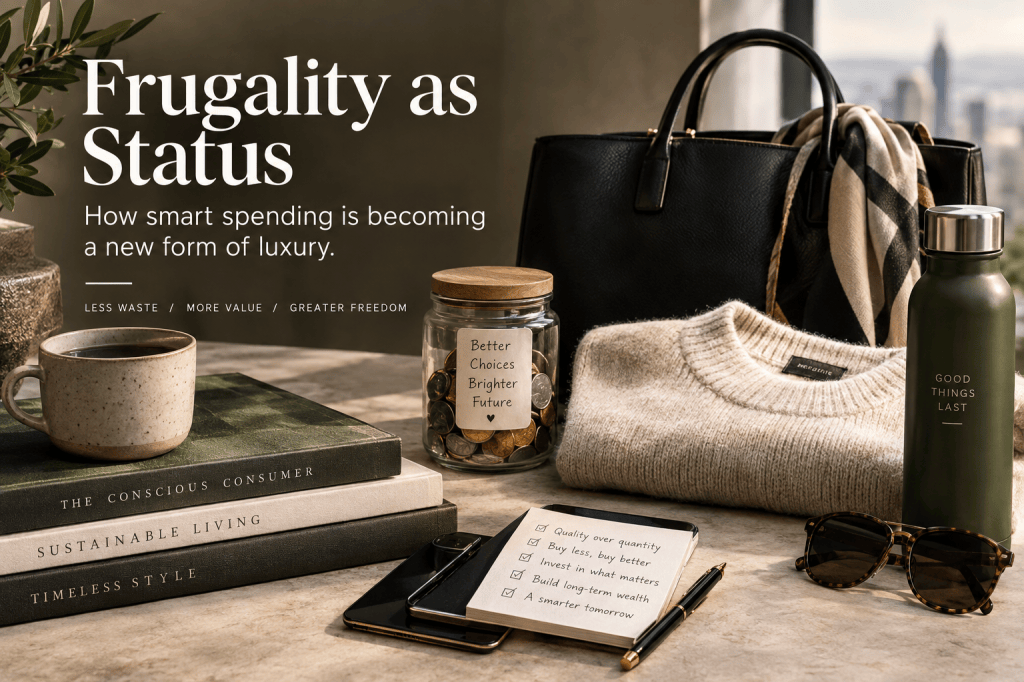
For years, luxury culture has been closely associated with visible consumption: designer fashion, expensive cars, exclusive holidays and high-end restaurants. But a different idea of luxury is gaining attention — one centred not on how much people spend, but on how intelligently they spend it.
The emerging concept of “frugality as status” reflects a wider cultural shift towards conscious consumption, financial awareness and buying with greater purpose. Rather than automatically equating wealth with spending, some consumers are increasingly viewing financial restraint, durability and value for money as signs of sophistication.
From conspicuous consumption to conscious spending
Traditional theories of consumer behaviour have long examined conspicuous consumption, a term associated with economist and sociologist Thorstein Veblen and his 1899 book The Theory of the Leisure Class. The concept describes the use of goods and services to demonstrate wealth or social position.
Modern consumer culture, however, has become more complicated. Social media has made luxury products highly visible, while economic pressures, sustainability concerns and changing attitudes towards material possessions have encouraged some consumers to reconsider what represents success.
For these consumers, purchasing less can become a deliberate choice rather than a financial necessity.
Buying a well-made coat that lasts for years, repairing an existing item instead of replacing it, cooking at home or choosing a quality product at a discounted price can all be interpreted as forms of intelligent consumption.
The appeal of getting value
The idea of value has also become increasingly important to consumers.
Research into consumer behaviour consistently shows that price is only one part of how people evaluate a purchase. Durability, usefulness, quality, convenience and long-term cost can all influence perceived value.
This has helped create an environment in which “buying well” can be considered more important than simply buying expensively.
A £1,000 product that is rarely used may offer less practical value to an individual than a £100 product used every day for several years. The calculation is not necessarily about choosing the cheapest option, but about understanding the relationship between cost, quality and use.
Luxury without the logo
There is also a connection between frugality and the continuing interest in understated consumption.
The so-called quiet luxury aesthetic has demonstrated that luxury does not always have to be immediately identifiable through prominent logos or branding. Neutral colours, high-quality materials, craftsmanship and timeless designs have become associated with a more discreet interpretation of luxury.
Frugality takes this idea a step further.
The emphasis shifts away from proving that something was expensive and towards demonstrating that the buyer understands why it was worth purchasing.
That could mean finding a vintage piece, purchasing second-hand, waiting for a sale, investing in something repairable or deliberately avoiding an unnecessary purchase.
Second-hand and resale culture
The growth of resale platforms has also contributed to changing attitudes towards consumption.
Second-hand fashion, furniture, electronics and other goods can provide consumers with access to established brands and quality products at lower prices. Resale can also extend the useful life of products and potentially reduce demand for newly manufactured replacements.
The popularity of vintage clothing illustrates how value and status can increasingly exist outside conventional retail channels. A garment does not necessarily become less desirable because it has been previously owned; its age, rarity, craftsmanship or history can sometimes become part of its appeal.
Frugality and financial confidence
There is an important distinction between frugality and deprivation.
Frugality generally involves making deliberate choices about how money is allocated. It does not necessarily mean refusing to spend money. Instead, it can involve spending generously on things that matter while cutting back on purchases that provide little value.
For some people, this can mean prioritising experiences, education, hobbies, travel, family or long-term financial goals over status-driven purchases.
In that sense, financial restraint can become a form of personal freedom: the ability to say no to unnecessary consumption because the individual has established their own priorities.
Sustainability adds another dimension
Environmental concerns have further complicated the relationship between consumption and status.
Buying fewer products, repairing goods, purchasing second-hand and choosing durable items can potentially reduce waste and extend product lifespans. However, sustainability claims should be treated carefully, because the environmental impact of a product depends on factors including manufacturing, transportation, materials, energy use and how long the product remains in use.
Frugality therefore does not automatically equal sustainability. But the two can overlap when reduced consumption leads to longer product lifespans and less unnecessary purchasing.
The new status symbol may be financial intelligence
Perhaps the most interesting development is that status itself is changing.
In some sections of consumer culture, displaying expensive possessions has traditionally communicated success. Increasingly, another form of social signalling is emerging: demonstrating that an individual understands value, avoids unnecessary spending and makes deliberate financial decisions.
The new status symbol may not be the price tag.
It may be the ability to recognise when the price tag does not matter.
Frugality as status does not mean that luxury has disappeared. Instead, it suggests that the definition of luxury is becoming more personal. For some consumers, luxury can mean owning something exceptional. For others, it can mean having financial security, avoiding waste, buying deliberately and knowing that every pound spent serves a purpose.
As consumer culture continues to evolve, smart spending may become less about looking wealthy and more about demonstrating control over what wealth means personally.









Leave a Reply