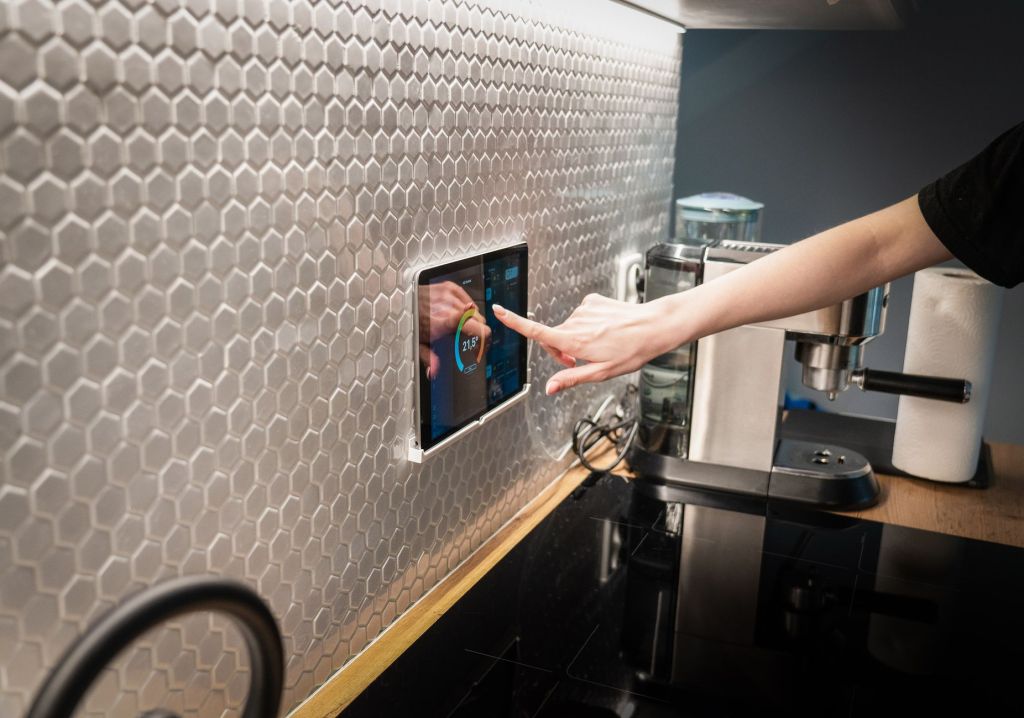
The smart home is increasingly moving beyond convenience. While connected lights, thermostats, speakers and security systems were once primarily marketed as ways to automate everyday tasks, a growing area of home technology is focusing on wellbeing — using connected devices to create living environments designed around sleep, comfort, relaxation and daily routines.
This shift reflects a broader change in how technology is being incorporated into the home. Rather than simply asking what a device can do, manufacturers are increasingly considering how technology can interact with the environment around us.
Technology Designed Around Sleep
Sleep has become one of the most prominent areas of interest in the smart-home sector.
Connected lighting systems can automatically adjust brightness and colour temperature throughout the day. In the evening, warmer and dimmer lighting can help create a more relaxing environment, while brighter light in the morning can support a clearer distinction between daytime and nighttime routines.
Smart thermostats can also contribute to a more comfortable sleeping environment by automatically adjusting temperature according to schedules or individual preferences.
Sleep-focused technology can include connected mattresses, sleep trackers, smart speakers and environmental sensors. These products can monitor or respond to factors such as temperature, movement, noise and other environmental conditions.
However, technology cannot replace established sleep habits, and sleep-tracking devices should not be treated as medical diagnostic equipment unless specifically designed and approved for that purpose.
Creating More Comfortable Living Spaces
Comfort is another major component of the wellbeing-focused smart home.
Smart heating and cooling systems allow households to establish different temperatures for different rooms and times of day. Some systems can learn household routines, while others use sensors to detect occupancy and adjust settings accordingly.
Connected blinds and curtains can also be programmed to open and close according to schedules, daylight or other conditions. This can help households manage natural light, privacy and indoor temperatures without having to manually operate window coverings.
Air-quality monitors are another increasingly visible part of the connected-home ecosystem. Depending on the device, sensors can monitor factors such as particulate matter, carbon dioxide, humidity and volatile organic compounds.
The information can help occupants identify changes in indoor environmental conditions and, where appropriate, respond through ventilation, air filtration or changes in household routines.
Lighting and Mood
Lighting has a particularly important role in the wellbeing-focused home.
Smart lighting allows users to change brightness, colour temperature and, with some systems, colour. This makes it possible to create different lighting environments for working, relaxing, entertaining or preparing for sleep.
The technology is increasingly being connected to automated routines. A household might, for example, programme lights to gradually become softer during the evening before switching off at bedtime.
While lighting can influence the atmosphere of a room, claims that smart lighting directly improves mental health should be treated carefully. The technology can alter the environment and support routines, but it is not a substitute for professional healthcare or treatment.
The Rise of Automation
Automation is arguably one of the most important developments in the smart-home wellbeing trend.
Instead of controlling individual devices separately, users can create routines that combine several functions. A single evening routine could lower the thermostat, dim the lights, close the blinds and reduce notifications from connected devices.
Morning routines could perform the opposite functions by gradually increasing lighting, adjusting the temperature and activating selected household devices.
The objective is not necessarily to add more technology to the home, but to make existing technology less intrusive.
A More Personalised Home
Artificial intelligence and machine learning are also beginning to influence the development of smart-home systems.
Connected devices can use data about schedules, preferences and household behaviour to automate certain functions. In theory, this can create homes that respond more closely to individual routines.
However, greater personalisation also raises questions about privacy and data security. Smart-home devices can collect significant amounts of information about when people are at home, how they use rooms and their daily routines.
Consumers therefore need to consider what information devices collect, where it is stored, who can access it and how long it is retained.
The Wellbeing Smart Home
The evolution of the smart home reflects a wider shift in consumer technology. Convenience remains important, but the focus is increasingly expanding towards creating homes that feel comfortable, adaptable and supportive of everyday routines.
From intelligent lighting and heating to air-quality monitoring and automated sleep environments, technology is becoming more closely integrated with the physical spaces in which people live.
The most useful development may ultimately be the simplest: technology that works quietly in the background rather than demanding constant attention.
The wellbeing-focused smart home is therefore less about filling a property with gadgets and more about using connected technology thoughtfully — creating an environment that supports comfort, routines and quality of everyday life.









Leave a Reply