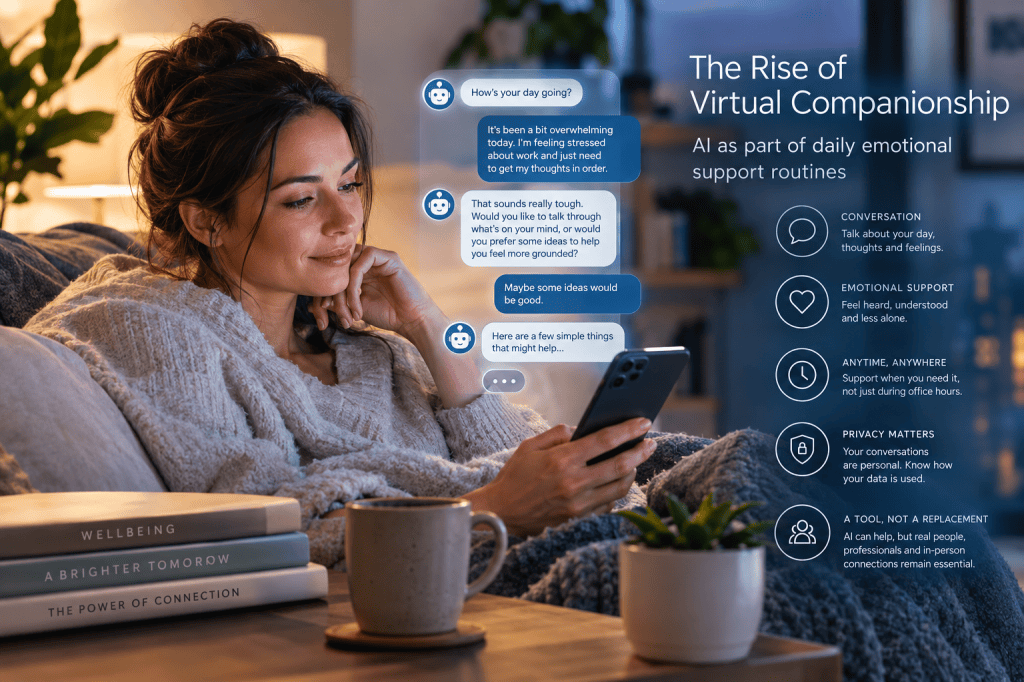
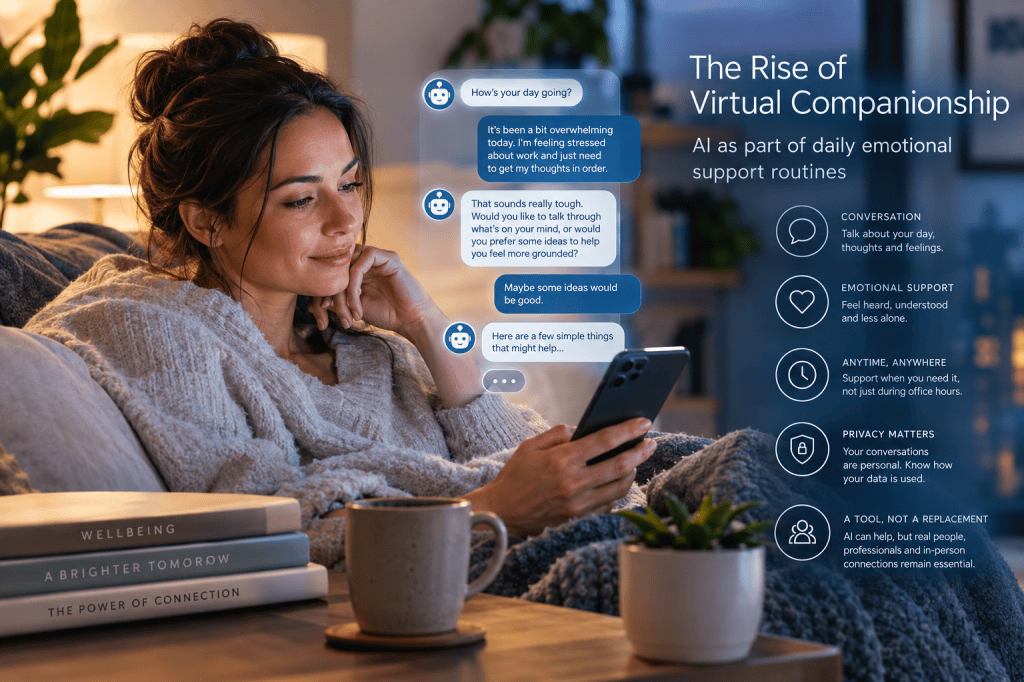
Artificial intelligence is increasingly becoming part of everyday life, and one of the more noticeable developments is the growth of virtual companionship. AI-powered chatbots and digital assistants are no longer used solely for searching for information, writing documents or completing practical tasks. For some people, they are also becoming part of daily routines centred around conversation, reflection and emotional support.
Virtual companionship generally refers to using an AI system for ongoing conversation and interaction. Unlike traditional digital assistants, some AI applications are specifically designed to maintain conversational relationships, remember aspects of previous interactions and respond in ways intended to feel supportive or personable.
A New Kind of Everyday Conversation
People have always used technology to maintain social connections, from telephone calls and text messages to social media and video chats. AI introduces a different form of interaction because the conversation can be available at almost any time.
Someone might use an AI companion to talk through the events of their day, organise their thoughts, practise a difficult conversation, write in a journal-like format or simply have a conversation when other people are unavailable.
For some users, this can become part of a regular routine. A morning conversation might help someone organise their priorities, while an evening interaction could provide an opportunity to reflect on the day’s events.
Emotional Support Rather Than Professional Care
AI can provide conversational support, but there is an important distinction between emotional assistance and professional healthcare.
An AI system can listen to what a person types, respond conversationally and offer general suggestions. However, it does not replace a qualified mental-health professional, doctor, counsellor or trusted personal relationship.
This distinction is particularly important when someone is experiencing serious or persistent emotional difficulties. AI can be one tool within a wider support network, but it should not become the sole source of support for significant mental-health concerns.
Why People Are Turning to AI Companionship
Several factors may contribute to the growing interest in virtual companionship. AI is accessible, conversational and available outside conventional working hours. It can also offer a private-feeling environment in which users may feel more comfortable expressing thoughts they might hesitate to share elsewhere.
For people who live alone, work unusual hours or simply want somewhere to organise their thoughts, conversational AI can provide an additional outlet.
There is also an element of convenience. Unlike arranging an appointment or waiting for someone to become available, an AI conversation can begin immediately.
The Importance of Healthy Boundaries
As AI becomes more conversational, questions about emotional attachment and dependency are becoming increasingly important.
Users may begin to regard an AI system as more than a practical tool, particularly when interactions are frequent and personalised. Researchers and technology companies are therefore examining questions surrounding emotional reliance, privacy, transparency and the psychological effects of prolonged interaction with AI.
Healthy boundaries can include remembering that an AI system is software rather than a human friend, maintaining real-world relationships and avoiding reliance on AI for decisions that require professional expertise.
Privacy and Personal Information
Virtual companionship also raises questions about personal data. Conversations with AI can contain highly personal information, including details about relationships, emotions, family circumstances, work and everyday life.
Users should therefore understand how a particular service handles conversation data and consider carefully what information they choose to share. Privacy policies and data controls can vary considerably between different AI services.
A Developing Part of Digital Culture
The rise of virtual companionship reflects a broader change in how people interact with technology. AI is moving beyond traditional productivity applications and becoming part of activities that were once almost exclusively human, including conversation, reflection and social interaction.
Whether virtual companionship becomes a long-term part of everyday life remains a developing question. What is clear is that conversational AI is creating a new category of digital interaction, one that sits somewhere between traditional technology and human-like conversation.
For some people, AI may simply be a convenient place to organise their thoughts. For others, it may become a regular part of their daily emotional-support routine. The challenge will be finding a healthy balance in which technology can provide useful companionship and reflection without replacing the human relationships and professional support that remain fundamental to wellbeing.









Leave a Reply