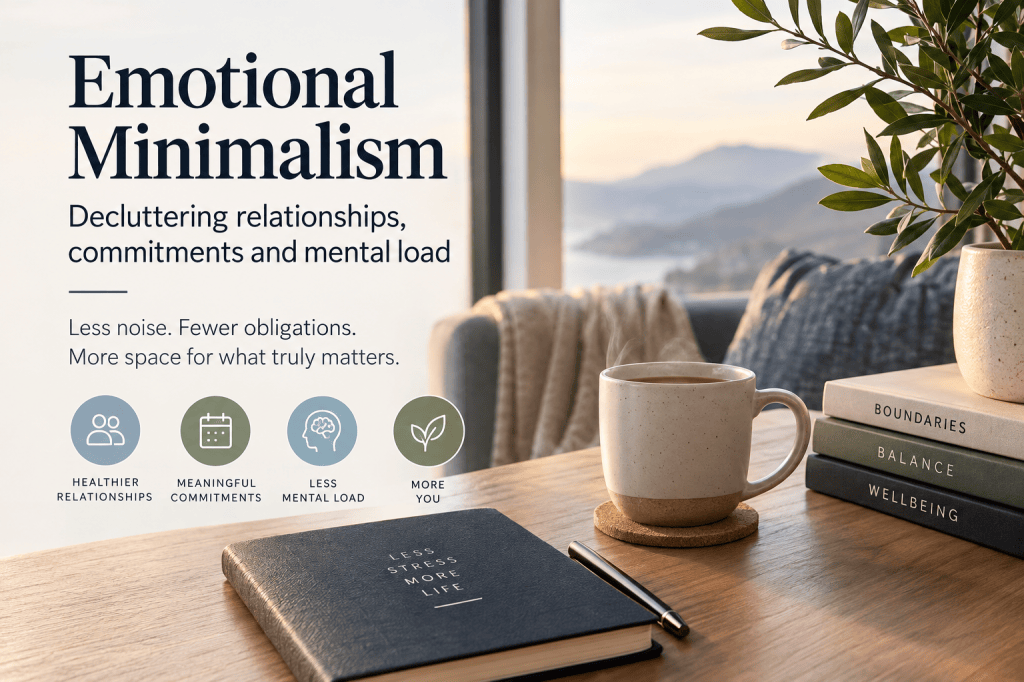
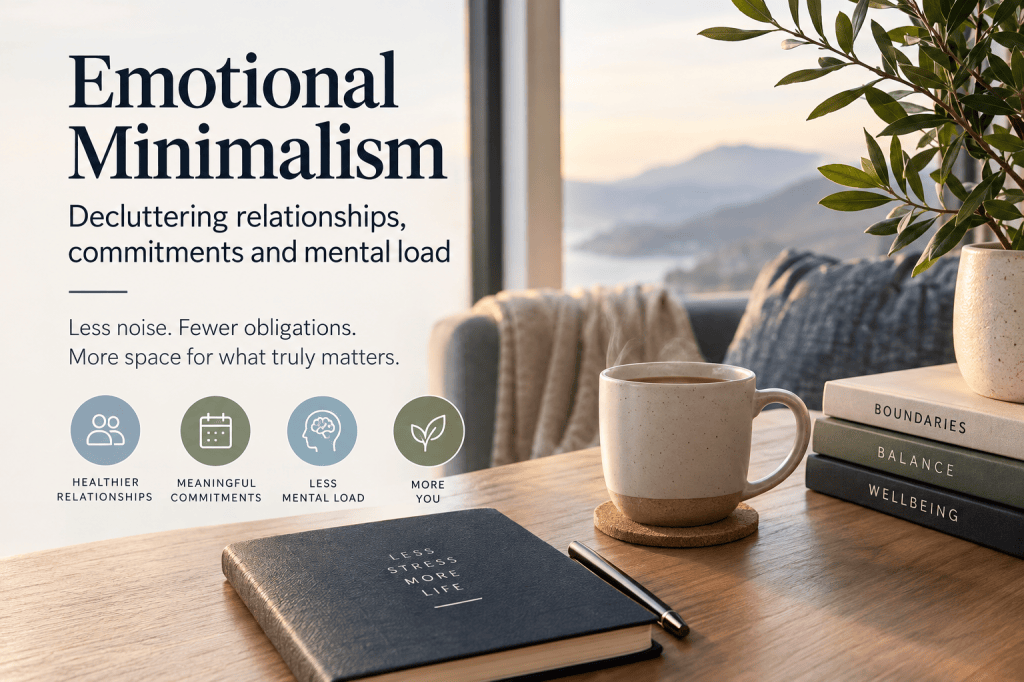
Minimalism has traditionally been associated with physical possessions: fewer clothes, less clutter and more deliberate consumption. But a broader interpretation of the idea is increasingly being applied to something less tangible — the demands placed on people’s time, attention and emotional energy.
Known as emotional minimalism, the concept focuses on reducing unnecessary commitments, managing relationship boundaries and creating more space for rest, reflection and meaningful connections.
Rather than encouraging people to withdraw from others, emotional minimalism is about becoming more selective about where time and emotional energy are invested.
Moving Beyond Physical Clutter
Modern life can involve a constant stream of demands. Work, family responsibilities, social commitments, digital communication and household tasks can compete for attention throughout the day.
Research into stress and wellbeing has repeatedly highlighted the importance of managing demands and allowing opportunities for recovery. When responsibilities accumulate without sufficient downtime, people can experience feelings of being overwhelmed or mentally overloaded.
Emotional minimalism approaches this problem by asking a simple question: Does this commitment genuinely need my time and attention?
That could mean reconsidering social events that have become obligations, reducing unnecessary digital communication or learning to decline requests without feeling obliged to provide lengthy explanations.
The Growing Importance of Boundaries
One of the central ideas associated with emotional minimalism is the establishment of healthier boundaries.
Boundaries can involve deciding when to respond to messages, protecting personal time, separating work from home life or communicating clearly about what someone is and is not comfortable doing.
This does not necessarily mean becoming less caring. Instead, boundaries can make relationships more sustainable by reducing resentment and unrealistic expectations.
In practical terms, this might involve turning off notifications during certain hours, declining an invitation when already overcommitted or reserving part of the week for uninterrupted personal time.
Rethinking Relationships
Emotional minimalism can also encourage people to examine the relationships in their lives.
Not every relationship carries the same level of closeness, responsibility or emotional investment. Friendships and social connections naturally change over time, while some relationships may become less active without necessarily ending in conflict.
The approach encourages people to distinguish between relationships that provide genuine connection and those maintained primarily through habit, guilt or perceived obligation.
However, simplifying relationships does not mean abruptly cutting people out. Communication, compassion and consideration remain important, particularly when relationships involve family members, long-term friends or professional connections.
Reducing the Mental Load
The phrase mental load is often used to describe the cognitive effort involved in organising everyday life — remembering appointments, planning meals, managing household responsibilities, responding to messages and anticipating future needs.
For some people, reducing mental load can be as valuable as physically organising their surroundings.
Simple strategies can include using calendars and reminders, creating recurring routines, sharing household responsibilities more evenly and making decisions in advance where possible.
The objective is not to eliminate every responsibility. Instead, it is to reduce the number of unnecessary decisions competing for attention.
Digital Minimalism and Constant Availability
Technology has also changed expectations surrounding availability.
Smartphones and messaging platforms make it possible to remain connected almost continuously. While this can provide convenience and social connection, constant notifications can also fragment attention.
Emotional minimalism therefore overlaps with digital minimalism, an approach that encourages people to consider whether particular technologies genuinely support their priorities.
Turning off non-essential notifications, creating phone-free periods and resisting the expectation of immediately answering every message are relatively simple ways of creating greater separation between connected and offline time.
Saying No Without Guilt
Perhaps the most difficult aspect of emotional minimalism is learning that saying no does not automatically represent selfishness.
People may accept commitments because they are worried about disappointing someone, missing out or appearing unhelpful. Over time, however, repeatedly agreeing to things that cannot realistically fit into an already busy schedule can contribute to stress.
A polite refusal can sometimes be more sustainable than accepting an obligation and subsequently struggling to fulfil it.
The same principle applies to work, social activities and personal projects. Not every opportunity has to become a commitment.
Making Space for What Matters
At its heart, emotional minimalism is less about having fewer relationships or responsibilities and more about making deliberate choices.
For one person, that could mean spending more time with close friends rather than maintaining a large social calendar. For another, it might mean protecting evenings from work-related communication or finally creating time for a long-neglected hobby.
The approach also recognises that priorities change. What felt important several years ago may no longer fit someone’s circumstances, while new responsibilities can require different boundaries.
A More Deliberate Approach to Modern Life
Emotional minimalism is not a clinical treatment or a formally defined psychological therapy. Rather, it is a contemporary lifestyle concept built around familiar principles: prioritisation, boundaries, intentional commitments and reducing unnecessary sources of stress.
Its appeal reflects a wider cultural interest in slower living, digital boundaries and more intentional approaches to work and personal life.
In an environment where people can be reachable almost constantly and where commitments can accumulate easily, emotional minimalism offers a straightforward question worth considering: What deserves my attention, and what can I reasonably let go?
The answer will be different for everyone. But creating more space does not necessarily require changing everything. Sometimes, it begins with recognising that not every demand deserves an immediate response.









Leave a Reply