For many people, home is more than simply a place to live. It is where we rest, spend time with family and friends, pursue hobbies and create a sense of personal identity. Increasingly, interior design is reflecting this wider role, with comfort, atmosphere and wellbeing becoming important considerations alongside appearance.
The idea of the home as a sanctuary has helped encourage a more thoughtful approach to interior design. Rather than focusing exclusively on trends or creating spaces designed primarily to impress visitors, comfort-driven interiors place greater emphasis on how a room feels to the people who use it.
Comfort at the Centre of Interior Design
Comfort has always been an important part of residential interiors, but contemporary design increasingly treats it as a central principle rather than an afterthought.
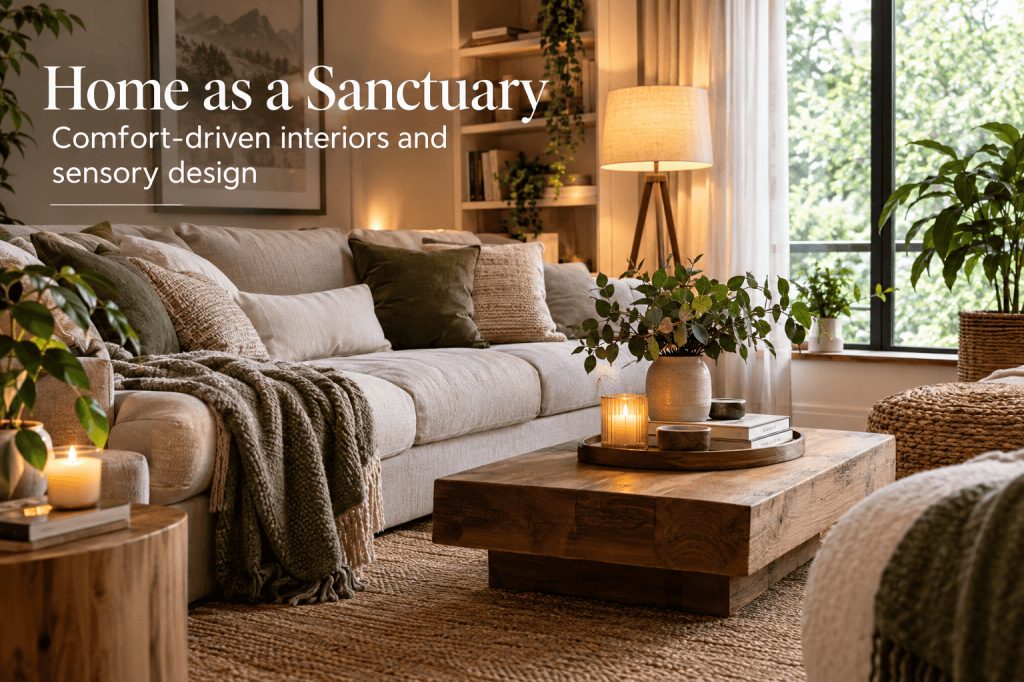
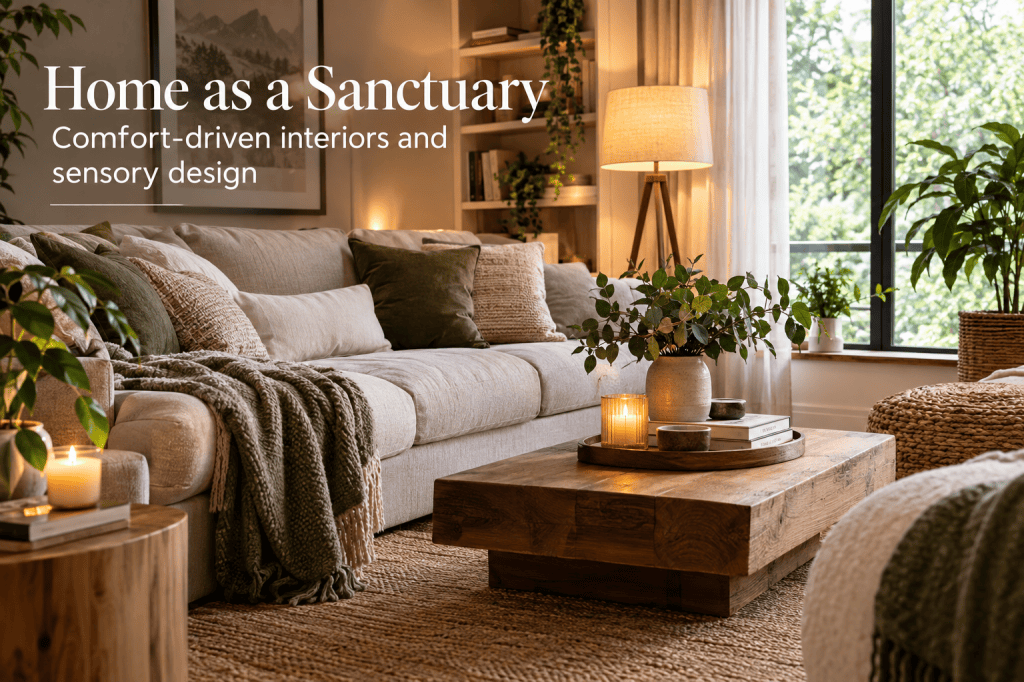
Soft furnishings, comfortable seating, practical layouts, warm textures and carefully considered lighting can all contribute to making a room feel welcoming. The objective is not necessarily to create an expensive or highly styled interior, but to create an environment that supports everyday living.
This can mean choosing a sofa that encourages relaxation, incorporating rugs and textiles to soften a room, or arranging furniture to make conversation easier. Practicality and aesthetics do not have to compete; when they are considered together, a room can be both attractive and genuinely useful.
The Rise of Sensory Design
Sensory design takes this concept a step further by considering the different ways people experience their surroundings.
Sight is naturally important in interior design, but sound, touch, smell and even temperature can influence how comfortable a space feels.
Natural materials such as wood, stone, cotton, wool and linen can introduce different textures. Curtains, rugs and upholstered furniture can also influence the acoustic character of a room by helping to soften echoes and background noise.
Lighting is another particularly important consideration. Bright, uniform lighting may be useful for certain activities, while softer and more layered lighting can create a calmer atmosphere during the evening. Table lamps, floor lamps and carefully positioned accent lighting can therefore provide both practical illumination and ambience.
Colour and Atmosphere
Colour can also play an important role in creating the character of a home.
Neutral and natural palettes are often associated with calm and simplicity, while warmer tones can create a feeling of intimacy and depth. However, there is no universally relaxing colour scheme. Personal preference, cultural associations, natural light and the purpose of the room all influence how colours are experienced.
The most successful sanctuary-style interiors are therefore not necessarily those that follow a particular colour trend. They are spaces that reflect the people who live in them.
Bringing Nature Indoors
The relationship between the home and the natural world has also become an important feature of contemporary interior design.
Houseplants, natural materials, daylight and views of outdoor spaces can help create a stronger visual connection with nature. Even in homes without large gardens, smaller touches such as indoor plants, timber finishes or natural textiles can introduce organic elements into the interior.
This approach is often associated with biophilic design, a broader concept that explores ways of incorporating connections to nature into the built environment.
Creating Spaces for Different Moods
A sanctuary does not have to mean that every room looks or feels the same.
Different areas of a home can serve different emotional and practical purposes. A living room might be designed around conversation and relaxation, while a bedroom may prioritise quietness and low lighting. A reading corner can provide a dedicated space for concentration, while a kitchen can combine social interaction with practical functionality.
This approach recognises that comfort is personal and that people use their homes in different ways.
Technology With a Lighter Touch
Technology is another consideration in the modern home.
Smart lighting, heating controls, speakers and other connected devices can make everyday life more convenient. However, comfort-driven interiors can also involve creating spaces where technology becomes less visually dominant.
Concealing cables, reducing unnecessary visual clutter and creating areas away from screens can help maintain a sense of calm. The goal is not necessarily to remove technology, but to ensure that it supports the home rather than overwhelming it.
The Beauty of Personalisation
Perhaps the most appealing aspect of the sanctuary approach is that it does not require a particular style.
A comfortable home can be minimalist, traditional, contemporary, rustic, eclectic or highly individual. Personal photographs, books, artwork, treasured possessions and objects with sentimental value can give a space character that cannot be achieved through following a showroom trend alone.
Interior design becomes less about creating a perfect image and more about creating an environment that feels authentic to the people who live there.
A More Considered Future for Interiors
The growing interest in comfort-driven interiors reflects a broader understanding of what our homes mean in everyday life.
A well-designed home does not simply look good in photographs. It should function effectively, accommodate the routines of its occupants and provide an environment in which people can feel comfortable.
Sensory design adds another dimension by encouraging us to consider the complete experience of a room — from the softness of a fabric and the quality of the lighting to the sound of the space and the presence of natural materials.
Ultimately, the sanctuary approach to interior design is refreshingly human. It places comfort, individuality and experience alongside visual appeal, creating homes that are not merely designed to be admired, but designed to be lived in.
In an increasingly busy world, there is something particularly appealing about the idea that home can provide a place to slow down, switch off and simply feel comfortable.









Leave a Reply